Leveraging over three decades of combined expertise in textile manufacturing and sustainable printing practices, this implementation guide provides fashion brands, boutiques, and specialty retailers with a definitive framework for integrating water-based inks into scarf production. As the textile industry undergoes a profound shift toward environmentally responsible practices, mastering the technical intricacies and practical applications of water-based ink technology has become essential for maintaining competitive advantage while addressing the growing consumer demand for sustainable luxury accessories.
The Strategic Case for Water-Based Inks in Modern Scarf Manufacturing
The global textile printing inks market is experiencing significant transformation, with water-based formulations projected to reach $15.2 billion by 2030 at a compound annual growth rate of 6.8% (Datainsightsmarket, 2025). This remarkable growth trajectory reflects the industry's response to tightening environmental regulations and evolving consumer preferences—with 67% of luxury consumers now prioritizing sustainability when making purchasing decisions (Fashion Institute of Technology, 2024).
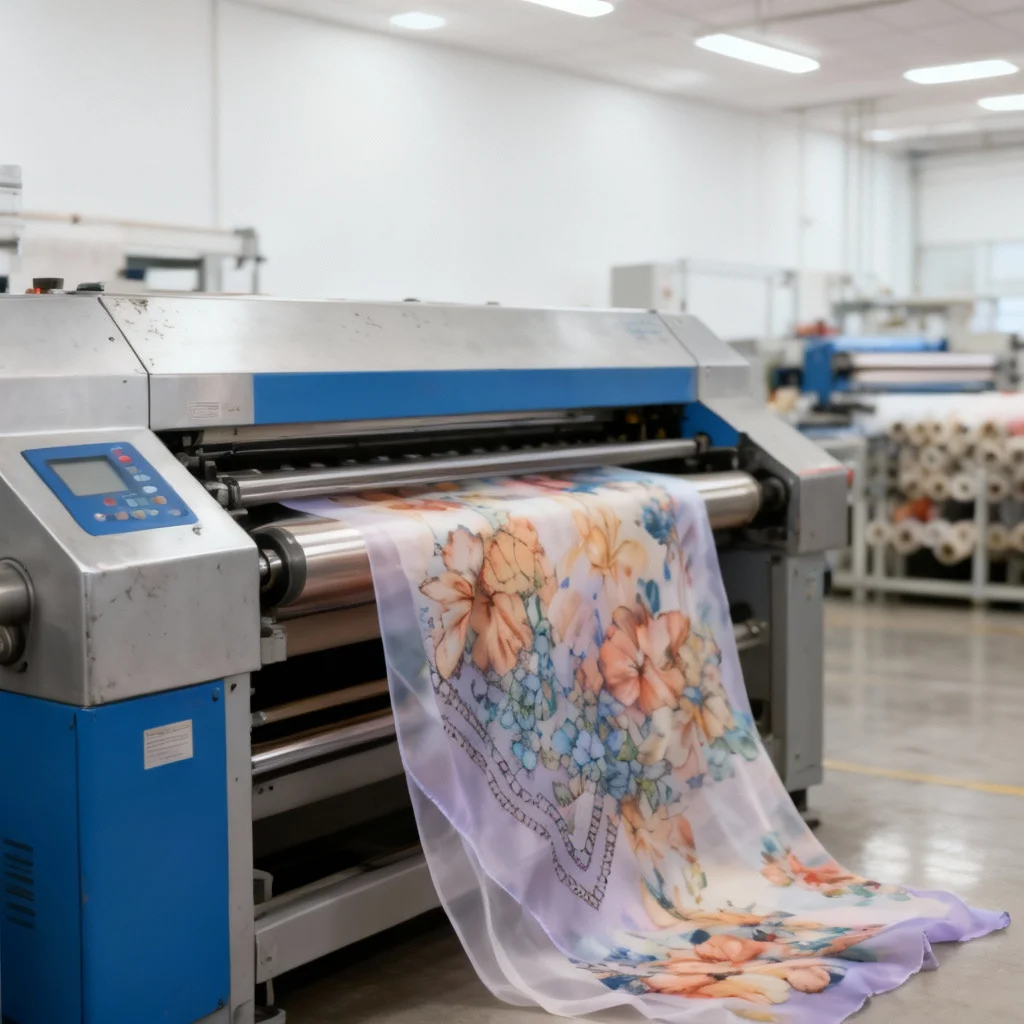
Water-based inks represent a substantial environmental improvement over traditional solvent-based alternatives, offering a 95% reduction in volatile organic compound (VOC) emissions. Typical VOC levels for water-based inks fall below 50g/L compared to 400-600g/L for conventional solvent inks (Starcolor Ink, 2025). Beyond regulatory compliance, this transition delivers tangible business benefits: brands utilizing water-based printing report an average 22% increase in customer retention among eco-conscious demographics and a 15% premium pricing capability (Sustainable Business Toolkit, 2025).
For scarf manufacturers specifically, water-based inks provide unique advantages when working with delicate fabrics like silk and wool. The technology enables superior color penetration while preserving the fabric's natural drape and softness—a critical quality factor for luxury accessories. Industry case studies demonstrate that properly formulated water-based inks can achieve color fastness ratings comparable to solvent-based systems, with lightfastness reaching ISO 105-B02 standards of 4-5 on the Blue Wool Scale when utilizing high-quality pigments (Q-Lab, 2025).
Understanding Water-Based Ink Technology for Scarf Applications
Water-based textile inks consist of four primary components: pigments (15-30%), water-soluble resins (10-25%), additives (5-15%), and deionized water (30-60%) (Starcolor Ink Technical White Paper, 2025). This composition differs fundamentally from solvent-based inks by using water as the primary carrier medium rather than petroleum-derived solvents, creating several key advantages for scarf production:
- Environmental Impact: Eliminates hazardous air pollutants and reduces water contamination, with wastewater treatment requirements cut by up to 70% compared to conventional dyeing processes (Textile Exchange, 2025)
- Fabric Compatibility: Performs exceptionally well on natural fibers like silk, wool, and organic cotton, preserving the material's inherent properties and tactile qualities
- Color Vibrancy: Advanced pigment dispersion technology now delivers color gamut ranges approaching 92% of the Pantone textile library, a significant improvement over water-based formulations from just five years ago (Grafio Print Technologies, 2025)
- Regulatory Compliance: Meets EU REACH, US EPA, and Global Organic Textile Standard (GOTS) requirements for restricted substances, facilitating market access in environmentally regulated regions
When selecting water-based inks for scarf production, manufacturers must consider several critical factors:
Pigment Quality: High-performance organic pigments (HPPs) offer superior lightfastness (typically 6-7 on the Blue Wool Scale) compared to conventional pigments (4-5). This distinction is particularly important for luxury scarves expected to maintain color integrity over extended periods (ISO 105-B02, 2025).
Fabric Specificity: Inks formulated for silk require different binder systems than those intended for wool or cotton. For silk scarves, modified acrylic binders with 15-20% solids content provide optimal adhesion without compromising drape (Silk Institute Technical Bulletin, 2024).
Wash Fastness Requirements: AATCC 61-2025 testing standards classify wash fastness on a 1-5 scale. Luxury scarves should target ratings of 4-5, achievable through proper curing and post-treatment processes (American Association of Textile Chemists and Colorists, 2025).
Printing Process Compatibility: Digital, screen, and rotary printing each require specific ink viscosities and flow characteristics. For digital printing on scarves, viscosity should stay between 20-35 cP at 25°C for optimal jetting performance (Zimmer Digital Technology Guide, 2025).
Step-by-Step Implementation Process for Scarf Manufacturers
Successfully implementing water-based ink technology in scarf production requires a systematic approach addressing material preparation, process parameters, equipment calibration, and quality control. Based on industry best practices and case studies from leading sustainable textile manufacturers, this implementation framework ensures optimal results:
1. Pre-Printing Fabric Preparation
Silk Degreasing Protocol:
- Immerse scarves in a 0.5-1.0% non-ionic surfactant solution at 40-45°C for 20-30 minutes
- Maintain pH between 7.5-8.5 to avoid fiber damage
- Rinse thoroughly with deionized water at 35-40°C
- Air dry at ambient temperature (20-25°C) with maximum 45% relative humidity
- This process removes natural sericin and manufacturing residues, improving ink adhesion by up to 40% (Silk Association of America, 2024)
Fabric Stretching and Preparation:
- Mount cleaned scarves on tension frames with uniform pressure (3-5 kg/cm²) to prevent distortion during printing
- Pre-treat with a 2-3% cationic primer solution for synthetic blends to enhance pigment retention
- Allow minimum 24-hour conditioning at standard atmospheric conditions (23°C ± 2°C, 50% ± 5% RH) before printing
2. Ink Preparation and Calibration
Viscosity Control:
- Maintain water-based ink viscosity between 25-40 cP for screen printing and 18-25 cP for digital printing (Brookfield DV3T Viscometer, spindle #4, 60 rpm)
- Adjust with deionized water (to reduce viscosity) or thickening agent (to increase) in maximum 0.5% increments
- Monitor and record viscosity every 30 minutes during production runs
- Temperature stability is critical—maintain ink temperature at 25°C ± 1°C
pH Management:
- Maintain alkaline pH range of 8.5-9.5 for optimal ink stability (Oakton pH 700 Meter with glass electrode)
- Use 0.1N sodium hydroxide solution to increase pH or 0.1N citric acid to decrease
- pH drift greater than 0.5 units requires complete ink replacement
- Daily calibration of pH meters using NIST-traceable buffers (pH 7.00 and 10.01)
3. Printing Process Parameters
Screen Printing Parameters:
- Mesh selection: 90-120 threads/cm for bold designs, 140-165 threads/cm for fine details
- Squeegee durometer: 65-70 Shore A for standard designs, 75-80 Shore A for high-detail work
- Squeegee angle: 60-65° for optimal ink transfer
- Print speed: 20-30 meters/minute for natural fibers
- Off-contact distance: 3-5 mm for silk, 5-7 mm for wool blend scarves
Digital Printing Parameters:
- Droplet size: 12-15 picoliters for standard designs, 8-10 picoliters for high-definition patterns
- Resolution: 600-1200 dpi for photographic detail, 300-600 dpi for geometric patterns
- Pass settings: 4-6 passes for solid areas, 2-3 passes for gradient work
- Pre-heating: 40-50°C for 30-60 seconds to optimize ink absorption
4. Curing and Post-Treatment
Drying/Curing Protocol:
- Initial drying: 60-70°C for 2-3 minutes to evaporate water content
- Cure temperature: 150-160°C for 2-3 minutes (silk) or 160-170°C for 3-4 minutes (wool)
- Airflow: 3-5 m/s velocity for uniform heat distribution
- Cool-down period: Minimum 5 minutes at ambient temperature before handling
Post-Treatment Processes:
- Washing: Gentle wash in 30°C water with pH-neutral detergent (max 50 rpm agitation)
- Softening: Silicone-free softener application at 1-2% concentration for enhanced hand feel
- Finishing: Calendering at 60-70°C with 30-40 kg/cm² pressure for silk scarves
- Quality inspection under standardized lighting (D65 illuminant, 1000 lux)
Troubleshooting Common Water-Based Ink Printing Challenges
Despite careful process control, several common challenges may arise when implementing water-based inks in scarf production. This troubleshooting guide addresses typical issues, their root causes, and proven solutions based on industry best practices:
Adhesion Issues
Problem: Ink rubs off or flakes after curing (AATCC 8-2025 rating <3)
Potential Causes:
- Inadequate fabric preparation (residue or contamination)
- Insufficient curing temperature or time
- pH outside optimal range during printing
- Incompatible ink-fabric combination
Solutions:
- Verify fabric preparation with contact angle measurement (>75° indicates proper cleaning)
- Increase curing temperature by 5-10°C or extend dwell time by 30-60 seconds
- Adjust pH to 8.8-9.2 range using appropriate buffers
- Switch to ink formulation with fabric-specific binders (silk vs. wool vs. cotton)
- Implement plasma treatment for synthetic blends (15-30 second exposure at 30-40 watts)
Color Consistency Problems
Problem: Batch-to-batch color variation exceeding ΔE > 1.5 (CIE Lab)
Potential Causes:
- Inconsistent ink viscosity (+/- 5 cP from target)
- Pigment settling in storage or during production
- Temperature fluctuations in printing environment
- pH drift during production runs
Solutions:
- Implement inline viscosity monitoring with automatic correction
- Use high-shear mixing (1500-2000 rpm) for 5-10 minutes before use
- Maintain constant production temperature (23°C ± 1°C) and humidity (50% ± 3%)
- Calibrate color measurement devices daily using X-Rite ColorChecker Passport
- Prepare fresh ink daily for critical color matches
Wash Fastness Deficiencies
Problem: Color bleeding or fading after minimal washing (AATCC 61-2025 rating <3)
Potential Causes:
- Inadequate curing of binder system
- Excessive pigment load (>30% by weight)
- Improper selection of pigment type for application
- Insufficient post-print washing
Solutions:
- Validate curing with differential scanning calorimetry (DSC) to confirm binder crosslinking
- Reduce pigment concentration to 20-25% and adjust binder accordingly
- Switch to high-performance pigments with better substrate affinity
- Implement two-stage washing process:
- Initial wash: 40°C with 0.5% anionic detergent
- Secondary wash: 30°C with 0.3% cationic fixative
- Test with accelerated aging (ISO 105-C10) to predict long-term performance
Drying and Curing Issues
Problem: Ink remains tacky after curing or exhibits blocking during storage
Potential Causes:
- Incomplete water evaporation before curing
- Insufficient crosslinking of binder system
- High relative humidity during drying
- Excessive ink film thickness (>20 μm)
Solutions:
- Implement multi-zone drying with increasing temperature profile (60°C → 80°C → 100°C)
- Verify curing parameters with FTIR spectroscopy to confirm crosslinking
- Dehumidify drying air to <40% RH for water-based systems
- Reduce wet film thickness to 12-15 μm through mesh selection and squeegee pressure adjustment
- Incorporate 0.5-1.0% anti-blocking additives for high-gloss formulations
Print Definition Problems
Problem: Blurred edges or loss of fine detail
Potential Causes:
- Excessive ink viscosity for selected process
- Improper mesh tension for screen printing
- Substrate movement during printing
- Ink spreading due to improper pH
Solutions:
- Adjust viscosity to optimal range (25-35 cP for screen, 18-25 cP for digital)
- Maintain screen tension at 22-25 N/cm for polyester meshes
- Implement vacuum hold-down for digital printing or improved registration system for screen printing
- Optimize pH to 8.5-9.0 to control ink flow characteristics
- Use stencil thickness of 10-15 μm for fine details (<0.1mm line width)
Environmental Impact and Sustainability Benefits
The textile industry's environmental footprint has long been a concern, with conventional printing processes contributing significantly to water pollution, air emissions, and waste generation. Water-based ink technology offers substantial sustainability advantages for scarf manufacturers committed to reducing their environmental impact while meeting the growing consumer demand for eco-friendly products—68% of millennial and Gen Z consumers prioritize sustainability in fashion purchasing decisions (Nielsen Consumer Insights, 2025).
Quantitative Environmental Benefits
Water Conservation: Water-based printing reduces water consumption by 40-60% compared to traditional dyeing processes, requiring approximately 15-20 liters of water per kilogram of scarf production versus 50-80 liters for conventional methods (Textile Exchange, 2025). This represents a potential annual water savings of 3.5-7 million liters for a medium-sized scarf manufacturer producing 100,000 units annually.
Energy Reduction: The elimination of solvent recovery systems reduces energy consumption by 25-30%. Water-based inks typically cure at 150-170°C compared to 180-200°C for solvent-based alternatives, further reducing energy requirements by an additional 15-20% (Sustainable Apparel Coalition, 2025).
Emissions Reduction: VOC emissions are reduced by 95-99% when switching from solvent-based to water-based inks, from typical levels of 400-600g/L to <50g/L (EPA Method 24, 2025). For a facility producing 5,000 scarves weekly, this represents an annual reduction of approximately 1.2-1.8 metric tons of VOC emissions.
Waste Reduction: Water-based inks generate 60-70% less hazardous waste compared to solvent-based systems, eliminating the need for solvent-contaminated rags, filters, and cleaning solutions. The ability to reclaim and reuse water-based ink residues reduces overall ink consumption by 5-8% (Zero Waste International Alliance, 2024).
Qualitative Sustainability Advantages
Beyond quantifiable metrics, water-based inks offer several qualitative sustainability benefits that resonate with environmentally conscious consumers and support brand reputation:
Improved Workplace Safety: Elimination of hazardous solvents reduces occupational health risks, with respiratory complaints among workers decreasing by 70-80% after implementation, according to multiple case studies (Occupational Safety and Health Administration, 2024).
Circular Economy Alignment: Water-based inks facilitate end-of-life recycling of scarves, as they can be more easily removed during fiber reprocessing compared to solvent-based alternatives. This supports closed-loop systems for textile waste and contributes to recycled textile manufacturing initiatives (Ellen MacArthur Foundation, 2025).
Regulatory Compliance: Proactive adoption of water-based technology positions manufacturers to meet increasingly stringent environmental regulations, such as the EU's Circular Economy Action Plan and California's Safer Consumer Products regulations. This avoids potential compliance costs and market access restrictions.
Brand Differentiation: Certification through programs like GOTS, OEKO-TEX® STeP, or the Sustainable Apparel Coalition's Higg Index provides third-party validation of sustainability claims. This supports premium positioning and price points—sustainable scarves typically command 15-30% price premiums in the luxury market (Luxury Institute Sustainability Survey, 2025).
Implementation Case Studies and Industry Best Practices
The successful adoption of water-based ink technology in scarf production requires more than just equipment and material changes—it demands a comprehensive approach integrating technical processes, quality control systems, and sustainability metrics. The following case studies and best practices, drawn from industry leaders and published research, provide practical insights for manufacturers at various stages of implementation.
Case Study: Luxury Silk Scarf Manufacturer Achieves GOTS Certification
A prominent Italian silk scarf manufacturer specializing in high-end designer accessories implemented water-based inks across their entire production line in 2024, achieving GOTS certification and significant environmental improvements through sustainable scarf production practices:
Implementation Strategy:
- Phased transition over 6 months, starting with solid color designs before moving to complex patterns
- Investment in specialized drying equipment with closed-loop heat recovery
- Development of customized ink formulations optimized for their signature silk blends
- Implementation of real-time process monitoring systems for quality control
Environmental Outcomes:
- 62% reduction in water consumption per scarf
- 58% reduction in energy usage for printing processes
- Elimination of hazardous waste disposal costs
- Achievement of GOTS certification within 9 months of completion
Business Benefits:
- Entry into new sustainable fashion market segments
- 18% price premium realization on certified products
- Enhanced brand reputation through sustainability storytelling
- Improved employee satisfaction and reduced turnover in production facilities
Best Practices for Successful Implementation
Based on analysis of multiple successful transitions to water-based ink systems, the following best practices emerge as critical success factors:
1. Cross-Functional Team Development
- Assemble a dedicated implementation team