In the competitive landscape of luxury accessories production, high-speed digital textile printing machines represent the intersection of technological precision and artistic expression. As an industry specialist with extensive experience in textile manufacturing, I've witnessed firsthand how seemingly minor technical anomalies can escalate into significant production disruptions and quality compromises. This comprehensive troubleshooting manual synthesizes practical insights from real-world production environments to help fashion brands, boutique manufacturers, and specialty producers navigate the unique challenges of digital textile printing for scarves.
The global digital textile printing market is projected to reach $19.44 billion by 2025, driven by increasing demand for customization and sustainable production methodologies. Within this rapidly evolving sector, scarf manufacturers face distinct technical hurdles due to the delicate nature of luxury fabrics and the intricate designs characteristic of high-end accessories. By addressing technical issues proactively, brands can minimize material waste, reduce production downtime, and maintain the exceptional quality standards expected by discerning consumers.
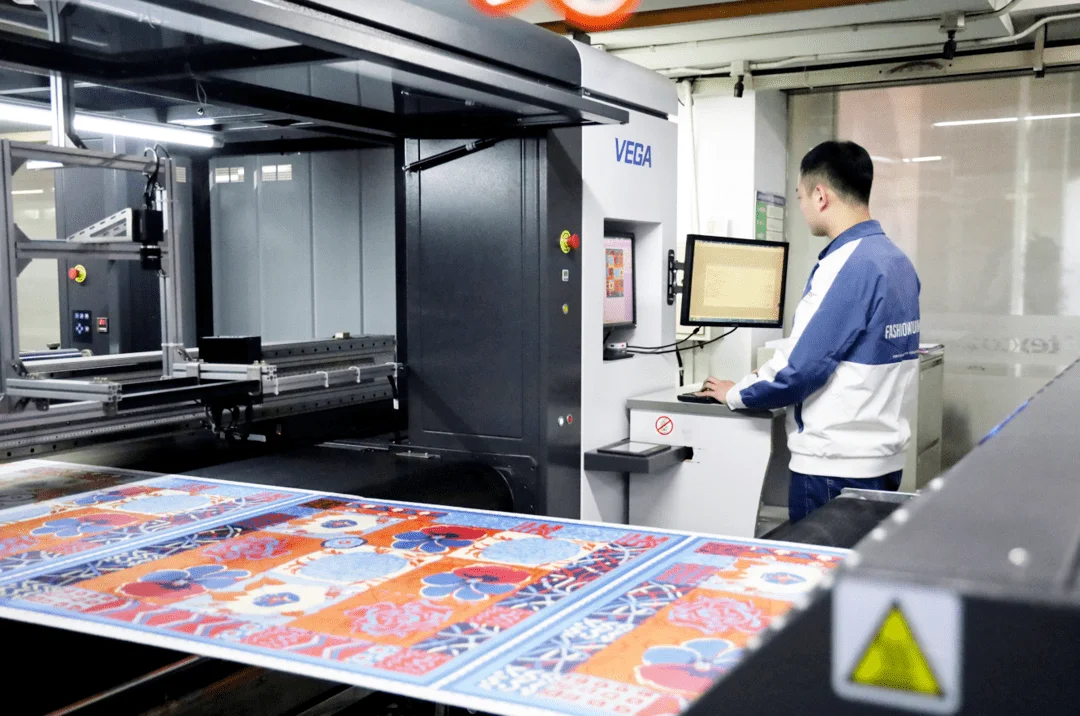
Understanding High-Speed Scarf Printing Technology
Effective troubleshooting begins with a foundational understanding of modern scarf production technology. High-speed digital textile printing machines operate at velocities exceeding 1,000 meters per hour, depositing nano-ink particles directly onto fabrics with picoliter precision. This direct-to-fabric printing technology reproduces complex designs with remarkable color accuracy when operating within optimal parameters.
These sophisticated systems comprise several critical components: precision printheads containing thousands of microscopic nozzles, advanced ink circulation systems for color consistency, precision fabric transport mechanisms, and sophisticated drying units. All elements must function in harmonious synchronization, particularly when handling delicate materials like silk and cashmere. Even minor deviations from optimal conditions can result in visible defects that diminish product quality and market value.
Nano-ink technology represents a significant advancement in textile printing, with pigments measuring just 50-200 nanometers in diameter. This innovation delivers superior color saturation and fabric penetration compared to traditional inks but introduces unique challenges for viscosity control and nozzle maintenance. Mastery of these specialized inks is fundamental to effective troubleshooting and preventive maintenance protocols.
Diagnosing Common Technical Issues
Color Inconsistency and Registration Problems
Color inconsistency ranks among the most prevalent challenges in high-speed scarf printing, manifesting as visible variations in hue, saturation, or density across production runs or within individual scarves. Three primary sources typically contribute to this issue: ink circulation anomalies, printhead alignment irregularities, or substrate preparation inconsistencies.
Field data indicates that temperature fluctuations as small as 2°C can significantly affect nano-ink viscosity, leading to measurable color density variations. Implementing a closed-loop temperature control system for both ink circulation and printhead environment can reduce this issue by up to 85%. Regular calibration using spectrophotometric tools such as X-Rite ensures consistent color standards across production batches.
Registration errors—misalignment of color separations—become increasingly problematic at production speeds exceeding 60 meters per minute. These issues typically stem from worn drive rollers or inconsistent fabric tension. Industry best practices recommend implementing dual encoder systems that continuously monitor and adjust fabric position, reducing registration errors to less than 0.1mm even at maximum production velocities.
Ink Adhesion and Bleeding Challenges
Ink adhesion problems on luxury fabrics create costly defects and customer returns, a challenge that has intensified as the industry transitions to sustainable, water-based nano-inks with reduced binding agents. This issue becomes particularly acute when printing on untreated or delicate fabrics that cannot withstand high-temperature post-treatment processes.
Industry collaborations have yielded several practical solutions. Plasma surface treatment systems modify fabric surfaces at the molecular level without compromising material integrity, increasing surface energy and improving ink adhesion by up to 40% on natural fibers. Adjusting pre-treatment parameters by fabric type—utilizing 8-10% concentration for silk versus 12-15% for wool—effectively prevents both bleeding and adhesion issues.
Production facilities experiencing persistent bleeding problems benefit significantly from spectrophotometric monitoring systems that analyze color boundaries in real-time, enabling immediate adjustments before defects accumulate. This technology outperforms traditional visual inspection methods, especially for intricate scarf designs where preservation of fine details is paramount.
Mechanical and Operational Issues
High-speed scarf printing machines contain thousands of moving parts operating in synchronized precision. Despite rigorous maintenance protocols, mechanical issues inevitably arise. The most commonly reported problems include printhead clogging, substrate feeding irregularities, and drying system inefficiencies.
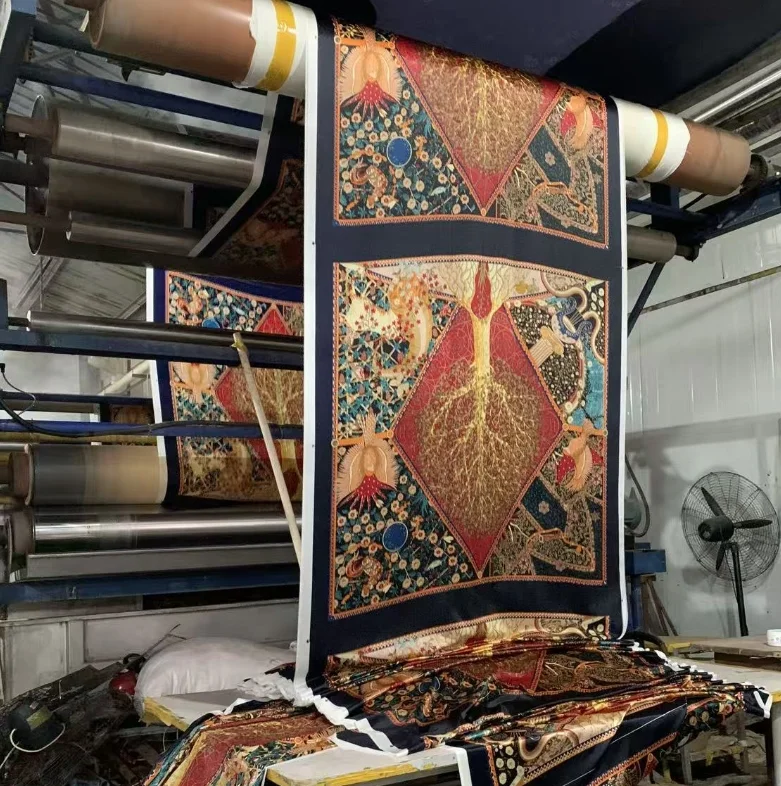
Printhead maintenance has been revolutionized by automated cleaning systems that perform ultrasonic cleaning during production breaks, reducing nozzle clogging by approximately 70% compared to manual cleaning methods. For facilities utilizing water-based nano-inks, implementing a recirculation system that maintains ink temperature between 20-22°C and filters particles down to 1-micron size further minimizes printhead complications.
Substrate feeding problems specific to scarf production often relate to the delicate nature of luxury materials. Vacuum transport systems with variable suction zones effectively handle lightweight fabrics without distortion or stretching. Vision systems that detect fabric edges and automatically adjust guide rollers reduce material waste by up to 30% during setup and material transitions.
Drying system inefficiencies can cause smudging, color shifting, or extended production times. For scarf production where maintaining fabric hand feel is critical, combining infrared pre-drying with air flotation drying systems delivers optimal results. This hybrid approach ensures complete ink curing at lower temperatures, preserving fabric quality while maintaining production speeds.
Advanced Troubleshooting Techniques
Predictive Maintenance Systems
IoT sensors and machine learning algorithms have transformed troubleshooting from a reactive to a predictive discipline. Modern high-speed printing systems equipped with vibration, temperature, and pressure sensors can identify potential component failures before they manifest as production issues.
Industry metrics demonstrate that facilities implementing predictive maintenance reduce unplanned downtime by 35-45% compared to traditional maintenance schedules. For scarf manufacturers managing high-value production runs, this technology delivers substantial return on investment by preventing costly defects and production interruptions.
Key monitoring points include printhead health metrics, drive system vibrations, and environmental conditions throughout the production area. These sophisticated systems detect anomalies such as developing bearing failures or subtle temperature variations that precede print quality degradation.
Material-Specific Troubleshooting Protocols
Different scarf materials present unique printing challenges requiring specialized troubleshooting approaches. Silk's smooth surface and delicate nature often create issues with ink laydown uniformity and drying, while wool and cashmere can exhibit fiber shedding and absorption inconsistencies.

For silk scarves, maintaining precise humidity levels between 45-55% in the printing environment proves critical for consistent results. Adjusting platen vacuum settings to 12-15 kPa prevents material movement during printing while avoiding fabric distortion. When issues arise, systematic testing of pre-treatment concentration, ink temperature, and drying parameters typically identifies root causes with minimal test prints.
Wool and cashmere scarves benefit from specialized pre-treatment processes that optimize fiber preparation for ink absorption. Troubleshooting color inconsistency on these materials often involves adjusting ink droplet size and laydown density to accommodate natural variations in fiber structure. Fabric-specific print profiles that automatically adjust these parameters reduce setup time and material waste during production changeovers.
Preventive Maintenance and Best Practices
Establishing comprehensive preventive maintenance protocols tailored for high-speed scarf printing operations represents the most effective strategy for minimizing production issues. Industry benchmarks indicate that facilities with structured maintenance programs experience 30-50% fewer printing defects and 25% higher overall equipment effectiveness (OEE) compared to those with ad-hoc maintenance approaches.
Daily maintenance activities should include printhead cleaning and alignment verification, substrate transport system inspection, and environmental condition validation. Weekly tasks involve more detailed examinations of ink delivery systems, filter replacements, and calibration verification. Monthly maintenance focuses on mechanical systems such as drive components and drying system efficiency validation.
Maintaining stringent filtration standards throughout the ink delivery system is particularly critical for nano-ink technology. A multi-stage filtration process with 1-micron final filtration prevents particle accumulation that can damage printheads and cause quality issues. Establishing precise ink recirculation parameters that maintain consistent pressure and temperature ensures stable printing conditions throughout production runs.
Facilities producing multiple scarf designs or materials benefit from structured changeover procedures that minimize setup-related issues. This includes storing material-specific print profiles, pre-treatment parameters, and drying recipes in the machine control system for quick recall. Proper documentation of setup parameters for each product type reduces changeover time by 40-50% while improving first-pass yield rates.
Conclusion and Future Developments
As digital textile printing technology continues to evolve, troubleshooting methodologies must advance in parallel to address emerging challenges and opportunities. The integration of artificial intelligence and machine vision systems is revolutionizing troubleshooting capabilities, with some manufacturers already implementing real-time defect classification systems that not only detect issues but also recommend corrective actions.
Fashion brands and scarf manufacturers evaluating new equipment investments should prioritize systems with integrated process analytical technology (PAT), which provides significant advantages for quality control and troubleshooting. These advanced systems continuously monitor critical process parameters and automatically adjust settings to maintain optimal production conditions, reducing the need for operator intervention.
The growing emphasis on sustainability in textile production introduces additional troubleshooting considerations, particularly regarding bio-based inks and recycled fabric substrates. Early adopters of these eco-friendly materials have identified unique challenges requiring specialized solutions, such as adjusting curing parameters for plant-based inks or modifying pre-treatment processes for recycled fabrics.
Effective troubleshooting in high-speed scarf printing demands technical expertise, systematic approaches, and advanced monitoring technologies. Implementing the preventive maintenance protocols, material-specific process controls, and predictive monitoring systems outlined in this guide enables fashion brands to minimize production disruptions while maintaining the exceptional quality standards that distinguish premium scarf products in the marketplace.
As the industry continues to advance, successful manufacturers will recognize troubleshooting not merely as a reactive process for addressing problems but as an integral component of overall process optimization and quality management. This proactive approach not only reduces costs associated with defects and downtime but also enables consistent production of high-quality scarves that meet the evolving expectations of discerning consumers worldwide.