In today's rapidly evolving textile landscape, artificial intelligence has transitioned from experimental technology to essential infrastructure, particularly for fashion accessories manufacturers serving boutiques and specialty stores. As a seasoned industry professional with years of experience in textile technology integration, I've witnessed firsthand how AI-powered solutions reshape production paradigms—delivering unprecedented efficiency gains, quality improvements, and sustainability benefits. The global AI in textile market, valued at $2.64 billion in 2024 and projected to grow at a 41% CAGR through 2034, underscores the transformative impact of these technologies. For fashion brands and specialty retailers evaluating manufacturing partners, understanding these AI applications isn't merely advantageous—it's critical for maintaining competitive advantage in an industry where speed-to-market and product differentiation determine success.
1. AI-Driven Predictive Maintenance Systems
The textile industry has long grappled with unplanned downtime, which historically accounts for 15-20% of total production hours in traditional manufacturing facilities. AI-powered predictive maintenance represents a paradigm shift in addressing this challenge by transforming reactive equipment management into a proactive discipline within modern textile automation frameworks. These systems leverage machine learning algorithms to analyze vibration, temperature, and operational data from textile machinery—identifying subtle performance degradation patterns that precede equipment failure.
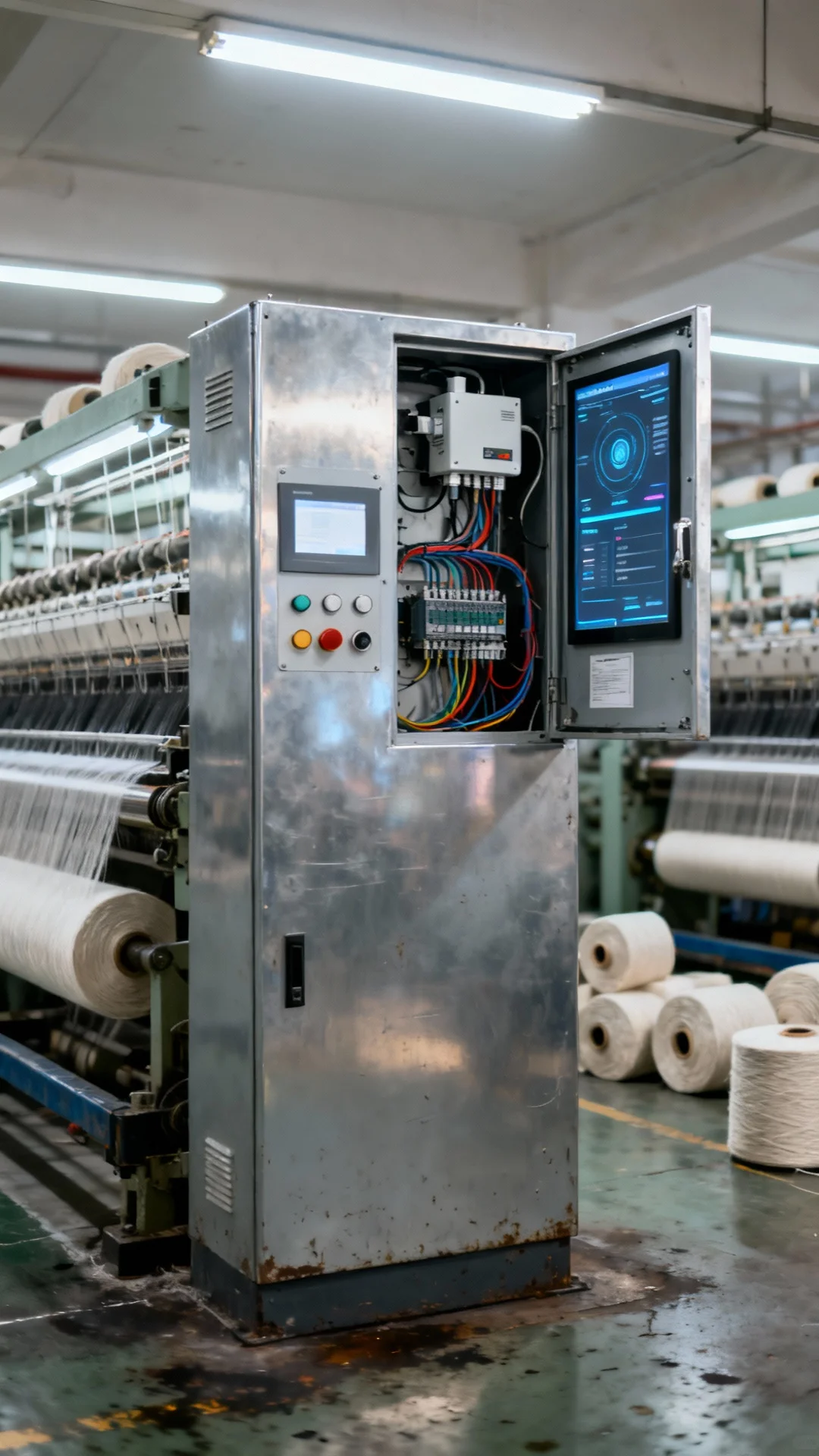
Industry implementation case studies, such as the IoT-enabled solution deployed by Welspun India, demonstrate how predictive maintenance reduces unplanned downtime by an average of 35-45% while extending equipment lifespan by 20-25%. The technology works by continuously monitoring critical production assets—from spinning frames to weaving looms—and generating actionable insights through intuitive dashboards. Maintenance teams receive precise notifications about potential issues, including recommended repair procedures and parts inventory requirements, enabling scheduled interventions during planned production breaks.
Beyond operational benefits, these systems deliver substantial financial returns. Textile manufacturers implementing AI predictive maintenance typically report a 25-30% reduction in maintenance costs and a 15-20% increase in overall equipment effectiveness (OEE). For fashion accessories producers working with complex Jacquard looms and specialized knitting equipment, this translates to more consistent production schedules and significantly reduced waste from interrupted runs—particularly valuable for high-value scarf and accessory production where material costs represent 40-50% of total expenses.
2. Computer Vision Quality Control Systems
Quality inspection has historically been one of the most labor-intensive and error-prone aspects of textile manufacturing, with manual inspectors typically identifying only 70-80% of defects while maintaining throughput rates of 20-30 meters per minute. AI-powered computer vision systems have revolutionized this critical function by achieving defect detection rates exceeding 99.5% at speeds up to 100 meters per minute—delivering a transformative combination of accuracy and efficiency previously thought impossible in textile automation.
These advanced inspection systems utilize high-resolution cameras and deep learning algorithms trained on millions of textile images to identify even the most subtle defects, including yarn irregularities, weaving errors, and color variations. What distinguishes leading solutions like those developed by Ultralytics and Svegea is their ability to continuously learn and adapt to new fabric types, patterns, and defect types—making them particularly valuable for fashion accessories manufacturers producing diverse product ranges with varying materials and designs.
Implementation results from major textile producers demonstrate compelling ROI. A case study published by the Textile Institute showed that a mid-sized scarf manufacturer achieved a 40% reduction in quality control labor costs within six months of implementation, while simultaneously reducing customer returns by 65%. The system's ability to provide real-time feedback to production machinery also enabled process adjustments that reduced defect generation by 30%, significantly lowering material waste. For boutique retailers and fashion brands sourcing premium accessories, these quality assurance advancements translate to more consistent product quality and enhanced brand reputation.
3. Generative AI Design and Pattern Creation
The traditional textile design process—from initial concept to production-ready patterns—typically spans 4-8 weeks, involving multiple iterations between designers, technical teams, and manufacturing partners. Generative AI has fundamentally transformed this creative workflow by enabling designers to generate, refine, and optimize patterns in real-time while ensuring manufacturing feasibility from the earliest design stages.
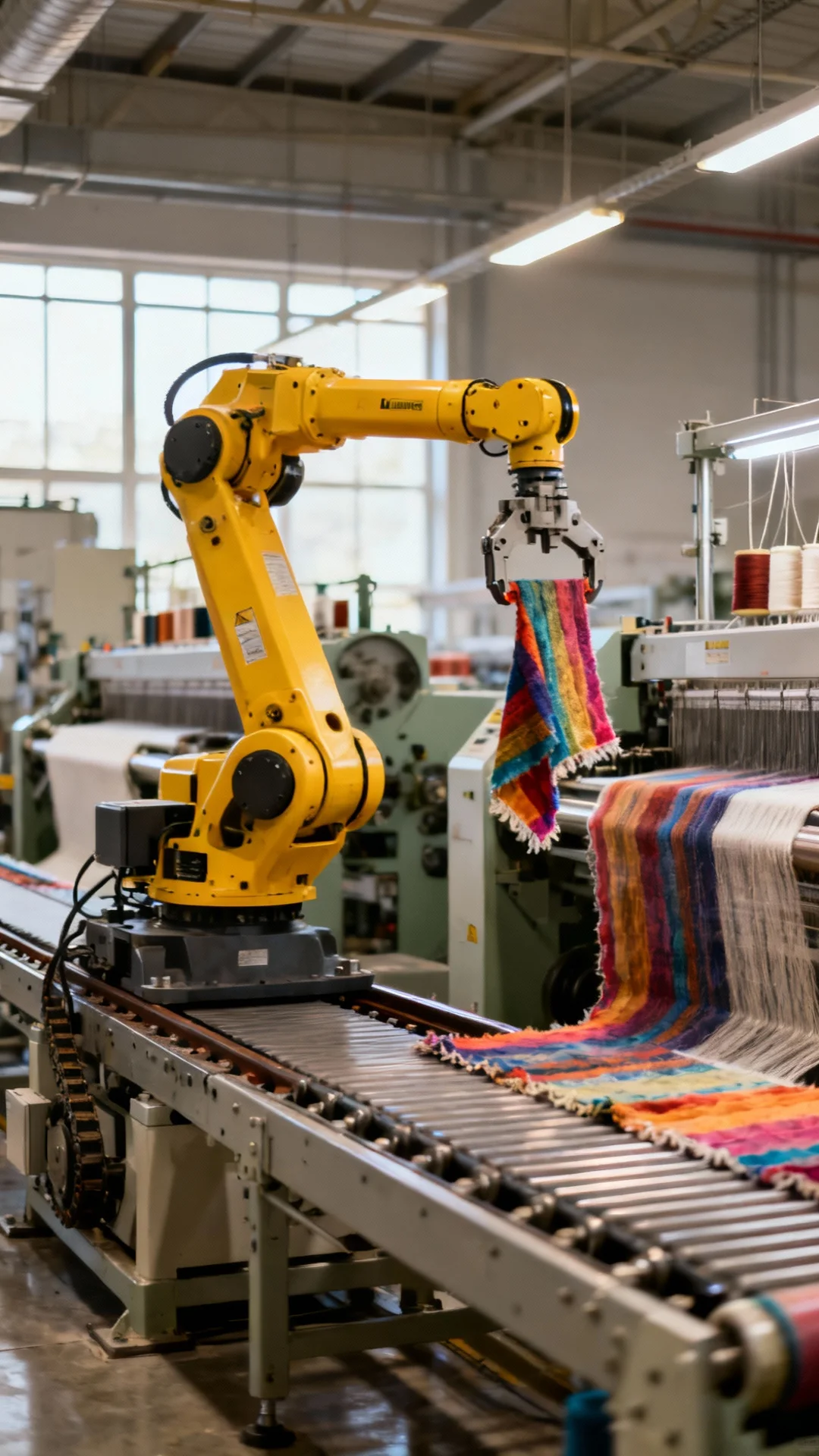
Leading generative AI platforms for textile design leverage advanced diffusion models and generative adversarial networks (GANs) trained on extensive databases of textile patterns, textures, and manufacturing constraints. Designers input parameters including style preferences, color palettes, motif themes, and technical specifications—receiving dozens of unique, production-ready designs within minutes. These systems consider fabric type, printing method, and production equipment capabilities during generation, eliminating the common problem of design concepts that cannot be efficiently produced.
Case studies from 2023 implementations highlight the transformative impact on time-to-market and design diversity. Major textile manufacturers report reducing design development cycles by 60-70%, enabling seasonal collection expansions from 4-6 per year to 8-12. For fashion accessory brands and boutiques, this accelerated timeline creates opportunities for more frequent design refreshes and rapid response to emerging trends—particularly valuable in the fast-paced scarf and accessories market. Additionally, generative AI systems facilitate unprecedented customization capabilities, allowing even small-batch productions to feature unique designs tailored to specific retail partners or geographic markets without significant cost premiums.
4. IoT-Enabled Smart Factory Integration
The vision of the smart textile factory—where production processes, inventory management, and supply chain operations function as a seamlessly integrated ecosystem—has become reality through the convergence of AI, IoT, and cloud computing technologies. These comprehensive systems connect every aspect of manufacturing operations through sensor networks, edge computing devices, and centralized AI platforms—delivering unprecedented visibility, control, and optimization capabilities.
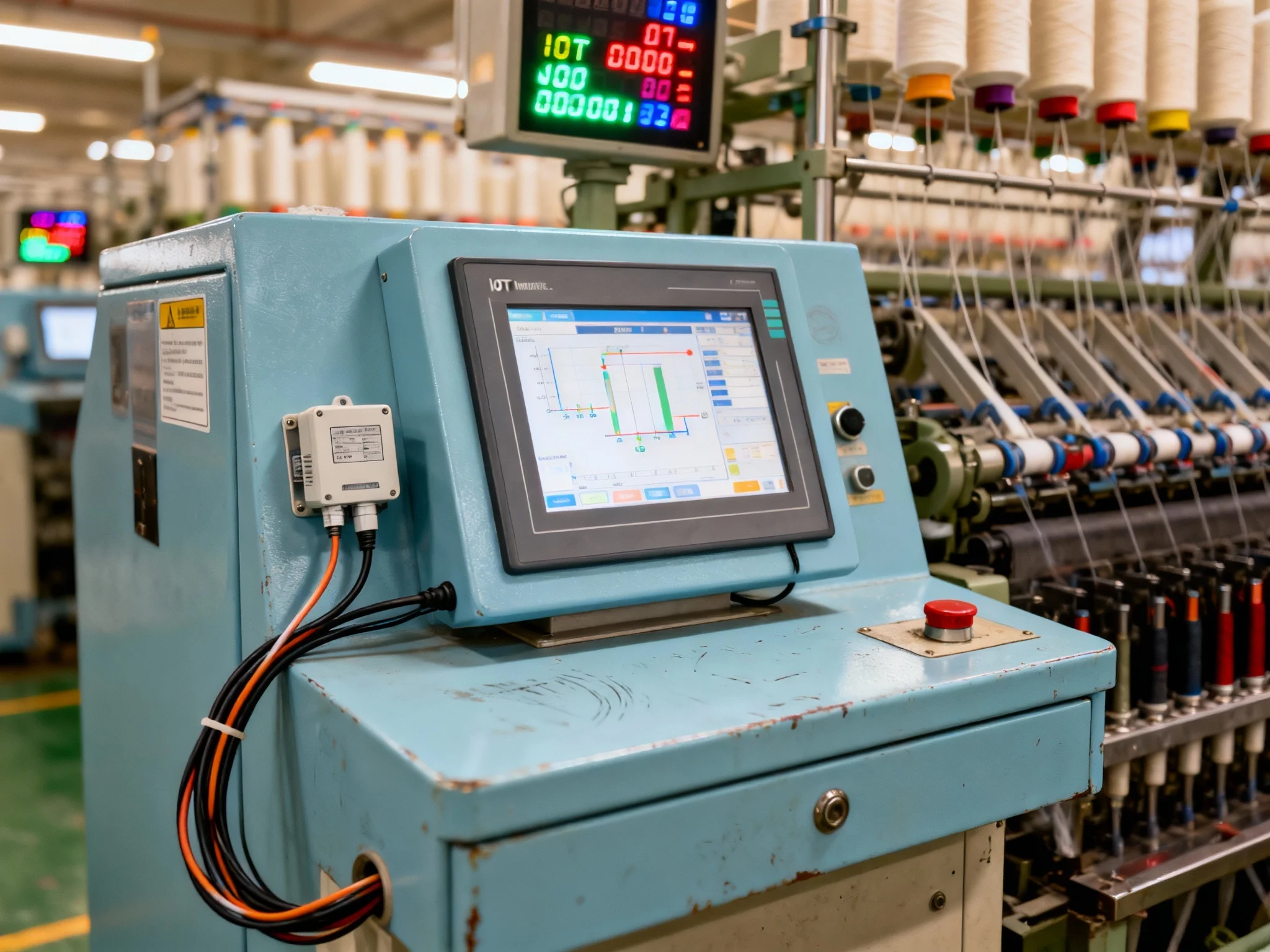
At the core of these implementations is a unified data architecture that collects, analyzes, and actionizes information from across the production environment. Raw material inventory systems automatically trigger replenishment orders based on production schedules and consumption rates. Energy management systems optimize power usage across facilities, shifting non-critical processes to off-peak hours while maintaining production targets. Order management systems prioritize and schedule production runs based on multiple variables including material availability, machine capacity, and delivery deadlines—all while providing customers with real-time production status updates.
Jagatjit Cotton Textiles (JCT) provides a compelling implementation example, having transformed their Punjab manufacturing facility into a connected smart factory. The results speak volumes: a 28% reduction in energy consumption, a 35% decrease in raw material inventory holding costs, and a 40% improvement in order fulfillment cycle times. For fashion accessory manufacturers, these integrated systems enable more agile response to market demands—quickly shifting production between scarf styles, materials, and design variations while maintaining optimal inventory levels of specialized fabrics and finished goods.
5. AI-Optimized Supply Chain and Demand Forecasting
Textile manufacturers have long struggled with demand volatility and supply chain complexity, with traditional forecasting methods typically achieving accuracy rates of only 60-70%. This uncertainty leads to costly inefficiencies—from excess inventory and markdowns to stockouts and missed sales opportunities. AI-powered demand forecasting and supply chain optimization systems have transformed this critical business function by analyzing vast datasets and generating precise predictions with accuracy rates exceeding 90%.
These advanced systems consider multiple variables including historical sales data, seasonal trends, market demand signals, weather patterns, and even social media sentiment to generate nuanced demand forecasts at multiple levels—from overall category trends to specific product variations. Machine learning algorithms continuously refine predictions based on actual sales performance and market developments, enabling dynamic adjustment of production plans and inventory levels.
The benefits extend throughout the supply chain. AI optimization algorithms determine optimal raw material sourcing strategies, balancing factors including cost, lead times, sustainability credentials, and supplier reliability. Production scheduling systems automatically adjust to demand changes while minimizing changeover times and material waste. Logistics optimization modules determine most efficient shipping routes and methods based on delivery deadlines, transportation costs, and sustainability metrics.
Fashion accessory brands implementing these AI supply chain systems typically report a 20-30% reduction in inventory carrying costs, a 15-25% improvement in forecast accuracy, and a 25-35% reduction in stockouts. For boutique retailers and specialty stores, this translates to more reliable product availability, reduced markdowns on seasonal accessories, and enhanced ability to capitalize on emerging fashion trends with rapid replenishment.
Implementation Considerations and Best Practices
While the benefits of these AI-powered solutions are compelling, successful implementation requires careful planning and consideration of several critical factors. Based on industry best practices and lessons learned from hundreds of textile manufacturing digital transformations, organizations should approach AI adoption with a strategic framework addressing four key dimensions: technology readiness, operational integration, skill development, and change management.
Technology readiness assessment involves evaluating existing infrastructure—including machinery connectivity, data management capabilities, and IT systems—to identify necessary upgrades and integration requirements. Many textile manufacturers find that implementing edge computing devices alongside legacy machinery provides a cost-effective path to connectivity without premature equipment replacement. Cloud-based AI platforms offer scalability advantages, particularly for smaller to mid-sized manufacturers producing fashion accessories, enabling access to enterprise-grade analytics without substantial upfront investment.
Operational integration requires detailed mapping of existing processes to identify optimal AI application points and potential bottlenecks. Successful implementations typically begin with clearly defined use cases addressing specific pain points—such as quality control for printed scarves or predictive maintenance for specialized knitting equipment—before expanding to broader applications. Cross-functional implementation teams including production, maintenance, quality, and IT personnel ensure comprehensive requirements gathering and solution customization.
Skill development represents a critical success factor, as AI systems fundamentally change job roles and responsibilities. Textile manufacturers should develop comprehensive training programs addressing both technical skills—such as data analysis and system configuration—and softer skills including data-driven decision making and process optimization. Partnerships with technology providers often include training components, but forward-thinking organizations supplement these with internal knowledge sharing programs and cross-training initiatives.
Change management strategies address the human element of AI adoption, ensuring workforce engagement and buy-in. Transparent communication about implementation goals, expected benefits, and potential challenges helps alleviate concerns and build enthusiasm. Identifying and empowering "AI champions" within operational teams accelerates adoption by providing peer-to-peer support and practical application examples. Recognizing and rewarding employees who effectively leverage AI tools reinforces desired behaviors and creates a culture of continuous improvement.
Future Trends and Strategic Recommendations
As AI continues to evolve from emerging technology to essential business tool in textile manufacturing, several key trends are reshaping its application in fashion accessory production. The convergence of generative design AI with 3D visualization technologies is creating virtual sampling capabilities that reduce development cycles from weeks to days while eliminating the material waste associated with physical prototypes—particularly valuable for scarf and accessory manufacturers producing multiple design variations.
Edge AI deployment is enabling real-time decision making at the machine level, with intelligent sensors and processing units analyzing data locally before sending aggregated insights to central systems. This approach reduces latency, improves system reliability, and minimizes data transmission requirements—particularly beneficial for quality control applications where milliseconds matter in identifying and addressing production issues.
The integration of AI with circular economy principles is creating new opportunities for sustainable manufacturing. Advanced analytics optimize material usage to minimize waste, while AI-powered sorting systems improve textile recycling efficiency. For fashion accessory brands increasingly focused on sustainability credentials, these capabilities provide both environmental and marketing advantages.
For boutique retailers, specialty stores, and fashion brands evaluating manufacturing partners, several key questions should guide due diligence: What specific AI technologies has the manufacturer implemented, and how have they impacted production metrics? What is the typical ROI timeline for these implementations? How are AI-driven insights integrated into production planning and quality control processes? What training programs ensure employees effectively leverage these advanced systems?
When selecting AI-enabled manufacturing partners, prioritize those demonstrating not just technology adoption but measurable business outcomes—including consistent quality improvements, production efficiency gains, and supply chain agility. Request specific metrics from recent implementations, including defect reduction percentages, production throughput improvements, and inventory optimization results. Visit manufacturing facilities to observe AI systems in operation and discuss implementation challenges and solutions with operational leaders.
The textile manufacturing landscape is undergoing a profound transformation driven by AI innovation. For fashion accessory brands and retailers, understanding these technological advancements and their practical applications is essential for making informed sourcing decisions, optimizing product development cycles, and ultimately delivering exceptional value to customers. By embracing AI-powered manufacturing partners, boutique and specialty retailers can access unprecedented levels of quality consistency, design customization, and supply chain responsiveness—creating sustainable competitive advantage in an increasingly demanding market environment.