In today's rapidly evolving fashion landscape, where consumer demands shift overnight and sustainability concerns continue to rise, fashion brands face increasing pressure to optimize production processes while maintaining product quality and reducing environmental impact. As a seasoned industry practitioner with years of experience in textile manufacturing and technology integration, I've witnessed firsthand how Internet of Things (IoT) monitoring systems transform how fashion accessories—particularly scarves and similar products—are produced, monitored, and delivered to market. The emergence of the smart textile factory represents not just an evolution but a revolution in how we approach textile production.
The textile industry stands at a digital crossroads. Recent digital transformation statistics show 52% of manufacturers plan to enhance automation with AI and IoT by 2025. This shift isn't just about keeping up with technology trends—it's about fundamentally improving operational efficiency and bottom-line results. For fashion brands and accessory manufacturers evaluating IoT investments, understanding concrete return on investment (ROI) has become paramount in justifying these technological upgrades in textile automation.
Understanding IoT Textile Monitoring in Modern Fashion Manufacturing
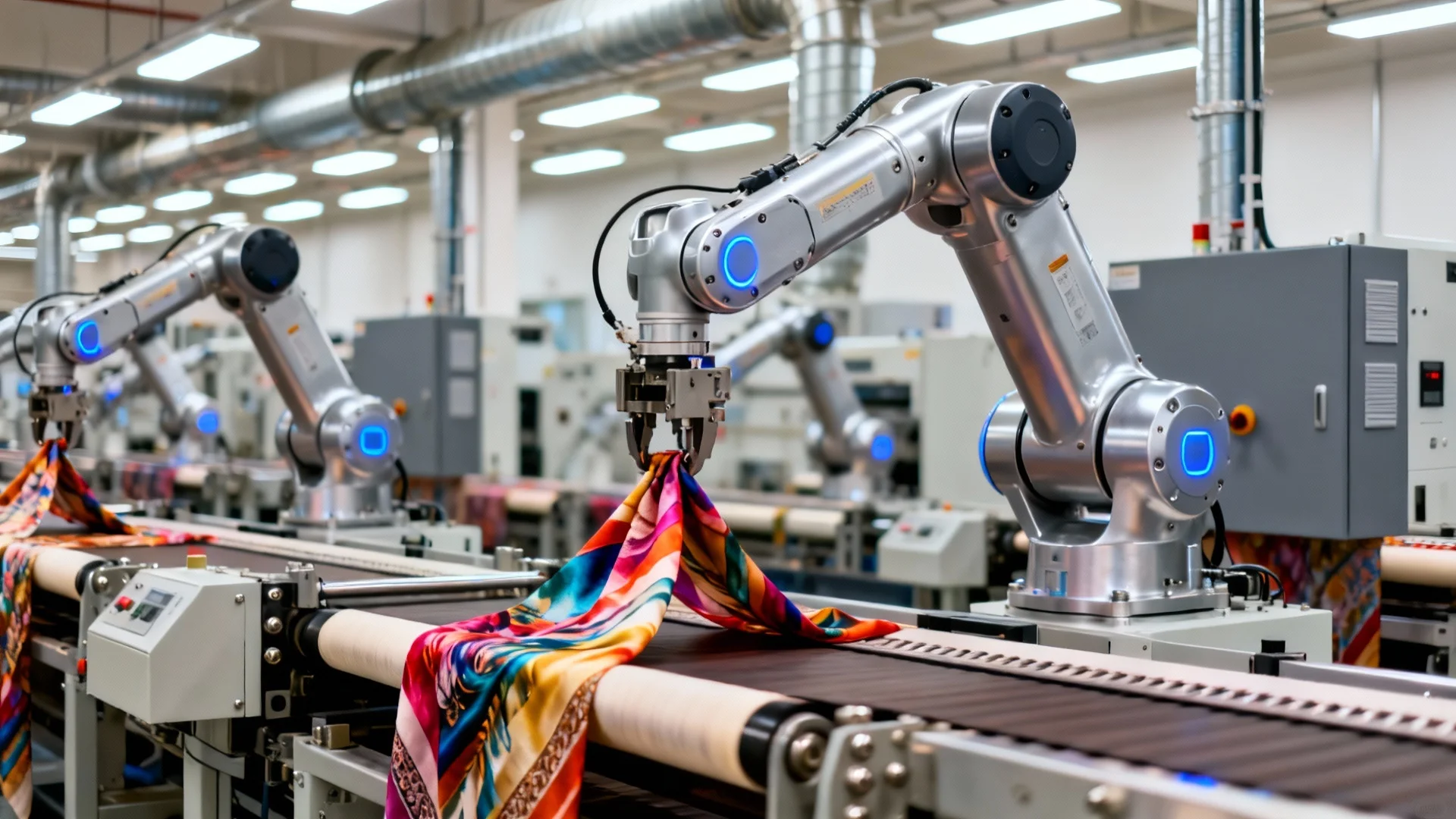
IoT textile monitoring integrates smart sensors, connected devices, and data analytics platforms throughout the textile production process. In scarf manufacturing specifically, this technology enables real-time tracking of everything from fiber quality and dyeing processes to weaving tension and finished product inspection. This level of connectivity forms the backbone of the smart textile factory, where data-driven decision making replaces traditional manufacturing guesswork.
Effective IoT monitoring systems typically incorporate several key components:
- Smart Sensors: Embedded in machinery and production lines to collect real-time data on temperature, humidity, pressure, and machine performance
- Connectivity Infrastructure: Secure networks that transmit data from sensors to central analytics platforms
- Data Analytics Software: AI-powered tools that process sensor data to identify patterns, predict issues, and generate actionable insights
- Visualization Dashboards: Intuitive interfaces that present critical production metrics to decision-makers
- Alert Systems: Automated notifications for异常 conditions requiring attention
The application of these systems in textile manufacturing has accelerated dramatically. The smart textile market is projected to reach $5.55 billion by 2030, driven largely by IoT integration and sustainability trends. This growth reflects the industry's recognition that IoT textile monitoring is no longer an optional luxury but a strategic necessity for competitive advantage in an era of textile automation.
Quantifying the ROI: Key Metrics and Industry Benchmarks
When evaluating the ROI of IoT textile monitoring systems, fashion brands should consider both quantitative and qualitative benefits. Based on analysis of industry case studies and manufacturing data, the most impactful metrics include:
Operational Efficiency Improvements Through AI in Manufacturing
Industry data consistently shows that IoT implementation leads to significant efficiency gains. A 2025 study on textile manufacturing automation found that 70% of manufacturers reported measurable cost savings within three years of implementation. These savings typically stem from:
- Reduced Downtime: Predictive maintenance enabled by IoT sensors reduces unplanned downtime by an average of 35-45%, according to manufacturing technology reports. For scarf producers, this translates to more consistent production schedules and fewer missed delivery deadlines.
- Increased Throughput: Real-time monitoring optimizes production flow, increasing overall equipment effectiveness (OEE) by 15-25% in most textile applications.
- Labor Optimization: Automated data collection reduces manual inspection requirements by up to 60%, allowing skilled workers to focus on more value-added tasks.
Quality Control and Waste Reduction in Robotic Production Systems
For fashion accessories like scarves, where material quality and aesthetic perfection are paramount, IoT monitoring delivers substantial quality improvements:
- Defect Reduction: Continuous monitoring identifies quality issues early, reducing defect rates by 20-30% compared to traditional inspection methods.
- Material Savings: Precise process control minimizes material waste, with industry averages showing 10-15% reduction in raw material consumption after IoT implementation.
- Rework Reduction: Early defect detection cuts rework costs by an average of 25-35%, according to textile industry benchmarks.
Sustainability and Compliance Benefits in Smart Textile Factories
As sustainability becomes a competitive differentiator in fashion, IoT monitoring provides measurable environmental benefits:
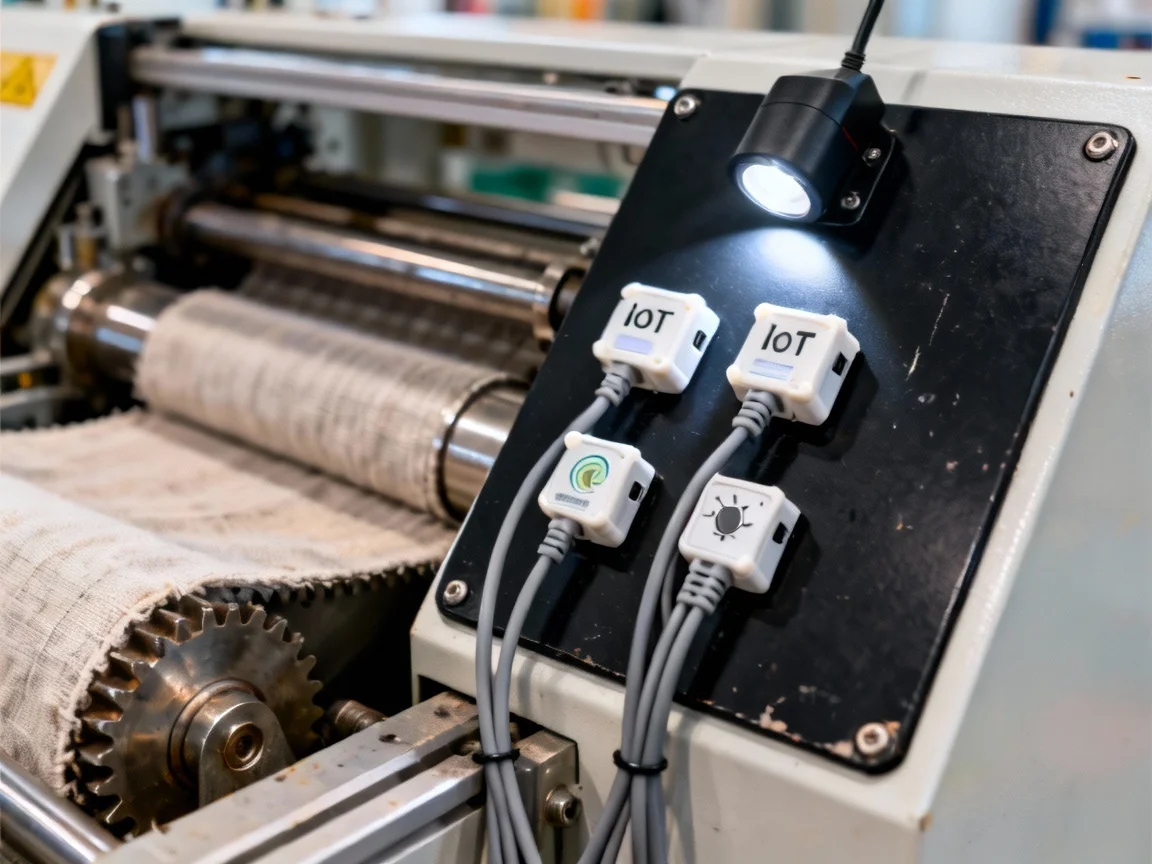
- Energy Efficiency: Smart monitoring optimizes energy usage, typically reducing consumption by 10-20% in textile production facilities.
- Water Conservation: Precise process control in dyeing and finishing reduces water usage by 15-25%, a critical metric for sustainable fashion brands.
- Compliance Automation: Real-time data collection simplifies compliance reporting for environmental and labor standards, reducing administrative overhead by 30-40%.
Implementation Costs and Investment Timeline for Textile Automation
Understanding the cost structure of IoT textile monitoring systems is essential for accurate ROI projections. Based on current market analysis, typical implementation costs break down as follows:
Initial Investment
- Hardware: $15,000-$40,000 for sensor installation and network infrastructure, depending on facility size
- Software and Platform: $8,000-$25,000 for analytics software and dashboard implementation
- Integration: $10,000-$30,000 for system integration with existing production equipment
- Training: $5,000-$15,000 for staff training and change management
Ongoing Costs
- Maintenance: 5-10% of initial hardware cost annually
- Software Subscriptions: $2,000-$8,000 per year for cloud-based platforms
- Data Storage and Analytics: $1,000-$5,000 monthly depending on data volume
Industry benchmarks indicate a typical payback period of 12-36 months for textile manufacturers, with total ROI ranging from 150-300% over a five-year period. For fashion accessory producers with higher margin products like scarves, these returns often materialize more quickly due to the premium placed on quality and design consistency.
Case Studies: IoT Textile Monitoring in Action
While specific case studies on scarf manufacturers remain limited, broader textile industry implementations provide valuable insights into IoT monitoring benefits:
Predictive Maintenance Success Story
A leading textile manufacturer implemented IoT vibration and temperature sensors on weaving machines, enabling predictive maintenance scheduling. The results included:
- 42% reduction in unplanned downtime
- 28% decrease in maintenance costs
- Extended equipment lifespan by 33%
- 18-month payback on initial investment
For scarf producers using specialized looms, similar results would directly translate to more consistent production quality and reduced waste.
Quality Control Transformation
A luxury textile producer implemented IoT-enabled visual inspection systems for printed fabrics, achieving:
- 98.7% defect detection rate compared to 82% with manual inspection
- 31% reduction in customer returns
- 22% increase in on-time deliveries
- Enhanced brand reputation for quality
This example is particularly relevant for scarf manufacturers, where print quality and pattern consistency are critical brand differentiators.
Supply Chain Visibility Implementation
A global fashion brand implemented end-to-end IoT tracking across its supply chain, resulting in:
- 35% reduction in inventory holding costs
- 27% improvement in order fulfillment accuracy
- 40% faster identification of supply chain disruptions
- Significant enhancement in sustainability reporting capabilities
Strategic Implementation Considerations for Smart Textile Factory Transformation
Based on industry best practices, fashion brands considering IoT textile monitoring should follow a structured implementation approach:
Phased Rollout Strategy
Rather than attempting full-scale implementation at once, successful adopters typically follow a phased approach:
- Pilot Project: Implement monitoring on a single production line or specific process (e.g., dyeing for scarf production)
- Measurement and Analysis: Collect baseline data and establish clear KPIs for success
- Expansion: Scale to additional processes based on initial results
- Integration: Connect production monitoring with other business systems (ERP, CRM) for end-to-end visibility
Technology Selection Criteria
When evaluating IoT solutions, textile manufacturers should prioritize:
- Compatibility: Ensure new systems integrate with existing machinery and software
- Scalability: Choose platforms that can grow with your business needs
- Data Security: Select providers with robust cybersecurity protocols
- User Experience: Prioritize intuitive interfaces that minimize training requirements
- Analytics Capabilities: Look for AI-powered insights rather than just data collection
Change Management Approach
Technology implementation success depends heavily on people. Best practices include:
- Involving production staff in system design and selection
- Providing comprehensive training and ongoing support
- Establishing clear ownership of data-driven decision making
- Creating incentive programs tied to new performance metrics
- Celebrating quick wins to build momentum for broader adoption
Future Trends: AI in Manufacturing and the Evolution of Textile Automation
Looking ahead to 2025 and beyond, several emerging trends will further enhance the ROI of IoT textile monitoring:
AI-Driven Process Optimization
The integration of advanced artificial intelligence with IoT data will enable autonomous process adjustments, further improving quality and efficiency. Industry experts predict AI-enhanced textile production will increase throughput by an additional 10-15% over basic IoT implementations.
Sustainability Metrics and Circular Economy Integration
IoT systems will increasingly track materials throughout their lifecycle, enabling:
- More accurate carbon footprint calculations
- Enhanced reverse logistics for recycling
- Improved traceability for sustainable sourcing claims
- Data-driven material innovation for circular fashion models
Digital Twin Technology
The development of digital twins—virtual replicas of physical production systems—will allow manufacturers to:
- Test process changes virtually before implementation
- Optimize production parameters in real-time
- Simulate the impact of design changes on production efficiency
- Train operators in virtual environments
For fashion accessory producers, these advancements will enable more agile response to trend changes and consumer preferences, a critical capability in the fast-paced fashion industry.
Conclusion: Making the Business Case for IoT Textile Monitoring
For fashion brands and scarf manufacturers evaluating IoT textile monitoring, the cumulative evidence points to compelling ROI across multiple dimensions:
- Financial Returns: Typical payback within 12-36 months with 150-300% five-year ROI
- Quality Improvements: 20-30% reduction in defects and rework
- Operational Benefits: 15-25% increase in overall equipment effectiveness
- Sustainability Gains: 10-25% reduction in resource consumption
- Strategic Advantages: Enhanced agility, better decision making, and improved competitive positioning
As with any significant technology investment, success requires careful planning, appropriate technology selection, and effective change management. The growing body of industry evidence makes clear that IoT textile monitoring is no longer an experimental technology but a proven method for fashion manufacturers to improve quality, reduce costs, and enhance sustainability.
For boutique scarf brands and large fashion manufacturers alike, the question is increasingly not whether to implement IoT monitoring, but how quickly and comprehensively. Those who move decisively will gain significant advantages in an industry where margins are tight, quality expectations are high, and sustainability is becoming a defining competitive factor.
The future of textile manufacturing belongs to data-driven operations, and IoT textile monitoring represents the essential foundation for that future. By making the strategic decision to invest in these systems today, fashion brands can position themselves for success in the rapidly evolving marketplace of tomorrow, where smart textile factories and robotic production systems will define industry leadership.