In the rarefied world of luxury fashion accessories, quality isn't merely a benchmark—it's the very foundation of brand identity. As discerning consumers increasingly demand transparency, sustainability, and uncompromising craftsmanship, premium scarf quality control has evolved into a sophisticated discipline that harmonizes traditional artisanal expertise with cutting-edge technological innovation. This comprehensive guide explores the seven critical inspection processes that distinguish exceptional luxury scarf production from ordinary manufacturing, setting the standard for excellence in the global marketplace.
The Strategic Imperative of Rigorous Quality Control in Luxury Textile Production
Valued at approximately $4.92 billion in 2024, the global luxury scarf market operates within an ecosystem where even microscopic imperfections can dramatically diminish perceived value. In this context, robust quality control has transcended its traditional role as a final checkpoint to become a strategic imperative that permeates every stage of luxury textile production. Today's luxury consumers—particularly millennials and Gen Z—possess sophisticated knowledge of textile quality and manufacturing processes, making transparent quality assurance not just a selling point but a fundamental purchasing criterion.
The consequences of inadequate quality control extend far beyond customer dissatisfaction. Industry data reveals that a single defective batch can result in return costs exceeding 20% of production expenses, while recurring quality issues can erode decades of carefully cultivated brand equity. Conversely, brands that consistently deliver exceptional quality build enduring customer loyalty and benefit from organic word-of-mouth referrals—the most influential marketing channel in the luxury segment.
Process 1: Raw Material Authentication and Fiber Quality Analysis
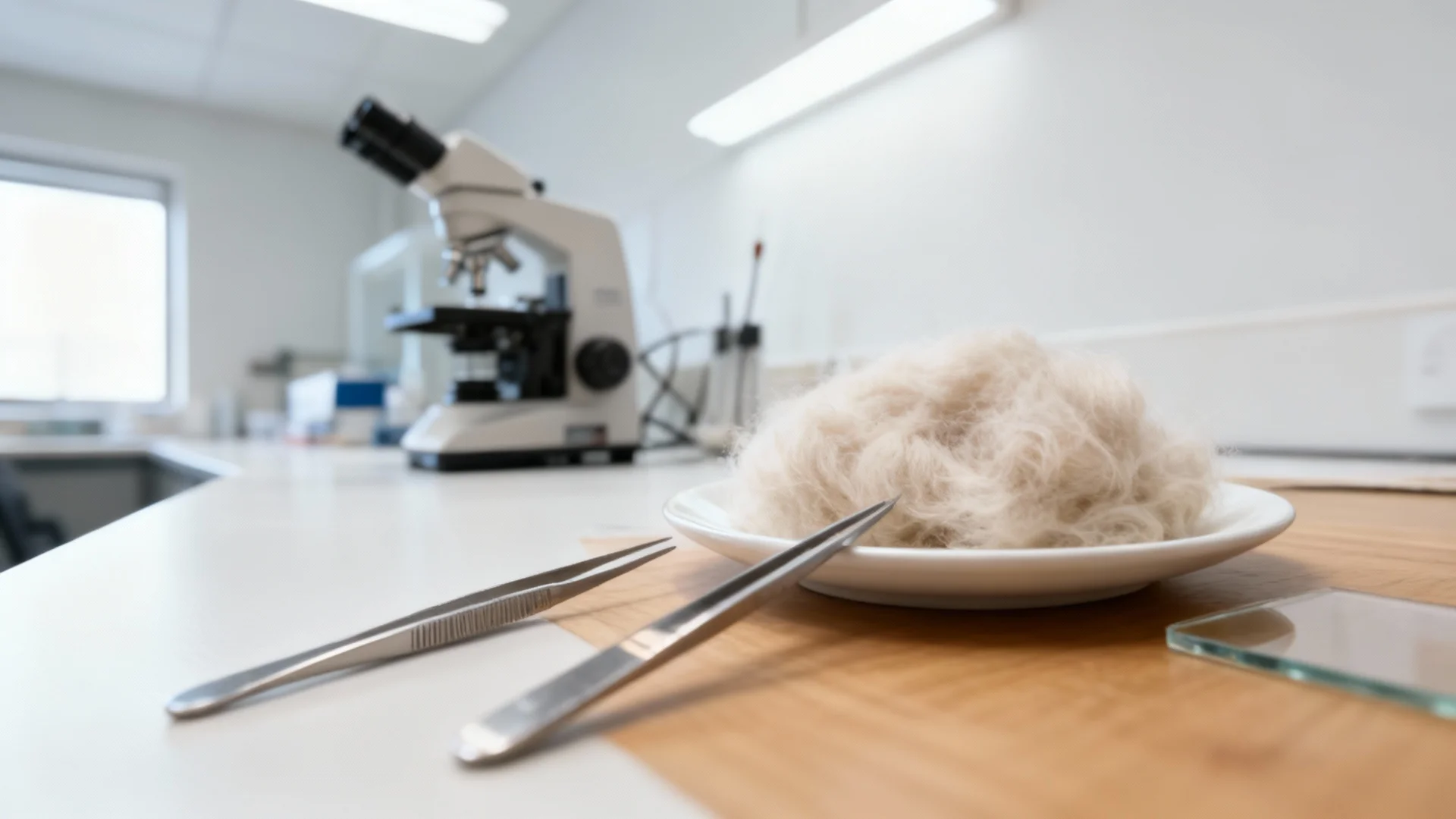
Exceptional scarves begin with extraordinary raw materials, making material authentication the critical first inspection checkpoint in high-end scarf techniques. For luxury textile production utilizing precious natural fibers such as cashmere or silk, authentication protocols have become increasingly sophisticated to combat prevalent fiber misrepresentation. Industry analyses indicate that up to 30% of products labeled as "pure cashmere" contain less than the required 85% cashmere content, underscoring the vital importance of rigorous authentication processes.
Cashmere Authentication employs advanced microscopic fiber analysis to verify essential characteristics:
- Precise fiber diameter measurement (strictly under 19 microns for premium grade classification)
- Detailed scale structure examination to definitively distinguish cashmere from wool variants
- Comprehensive strength testing to ensure optimal fiber integrity
- Systematic color consistency assessment across production batches
For silk scarves, authentication protocols focus on:
- Fiber length and uniformity verification through digital imaging analysis
- Natural protein content quantification using specialized spectrometry
- Sericin coating assessment to determine optimal processing requirements
- Light refraction property analysis unique to genuine silk fibers
Pioneering luxury textile production leaders now integrate blockchain technology to create immutable records of fiber provenance, offering customers unprecedented transparency. This technological integration enables real-time verification of material journeys—from the Mongolian cashmere steppes to the renowned silk mills of Como—reinforcing the authenticity of premium claims and fostering consumer trust.
Process 2: Pre-Production Testing and Colorfastness Verification
Before full-scale manufacturing commences, pre-production testing establishes critical quality benchmarks that guide subsequent stages of artisanal scarf manufacturing. Artificial intelligence-powered predictive analytics have revolutionized this phase, enabling manufacturers to identify potential quality issues before they manifest in large production runs, thereby minimizing waste and ensuring consistency.
Colorfastness testing remains among the most critical pre-production assessments, utilizing both time-honored methodologies and state-of-the-art technology:
- Multi-source light exposure testing to simulate diverse environmental conditions
- Perspiration resistance evaluation using standardized artificial sweat solutions
- Rub fastness assessment with precision crockmeter testing (minimum rating of 4/5 for luxury scarves)
- Washing fastness verification through controlled laundering protocols with spectrophotometric analysis
Modern spectrophotometers provide precise color measurement down to delta E values of 0.5 or lower, ensuring remarkable consistency across production runs and batches. This level of precision has become indispensable as luxury brands expand their global manufacturing footprint while maintaining unwavering quality standards.
Chemical safety testing represents another crucial aspect of pre-production assessment, with particular emphasis on compliance with EU REACH regulations that restrict over 200 substances in textile production. For luxury scarves marketed in Europe and other regulated markets, this includes comprehensive testing for:
- Heavy metal concentrations (lead, cadmium, mercury, and arsenic)
- Formaldehyde levels (strictly below 75 ppm for direct skin contact)
- Azo dye content and aromatic amine presence
- Phthalate plasticizers and flame retardant chemicals
Process 3: Weaving and Knitting Quality Inspection
The manufacturing process itself presents numerous quality control challenges, especially in artisanal scarf manufacturing where traditional craftsmanship methods merge with contemporary technology. For woven scarves, inspection begins with the preparation of warp and weft threads, ensuring uniform tension, proper alignment, and consistent thread preparation.
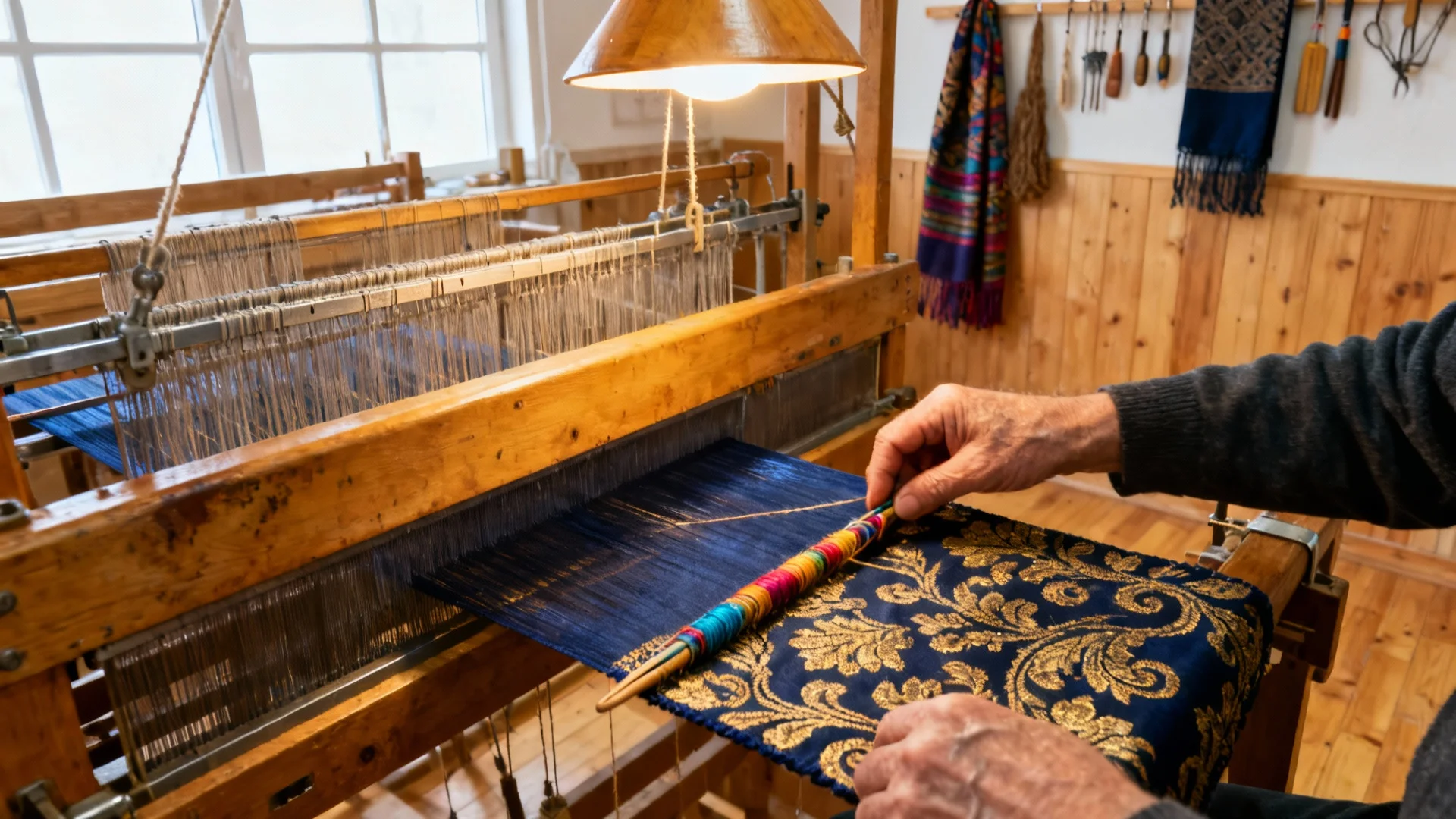
Key inspection points during the weaving process include:
- Thread density verification (both ends per inch and picks per inch against specifications)
- Pattern alignment and repeat accuracy across the entire textile width
- Selvage quality assessment for strength, uniformity, and aesthetic integrity
- Weave consistency monitoring across the entire production run
High-end scarf techniques for knitted luxury scarves demand specialized inspection protocols:
- Stitch uniformity analysis using computerized pattern recognition
- Tension consistency measurement across the entire surface area
- Loop formation verification for structural integrity
- Pattern integrity assessment during and after production
Computer vision systems have transformed this inspection process, with AI-powered cameras capable of identifying defects as small as 0.1mm with over 99% accuracy. These sophisticated systems not only detect existing flaws but predict potential quality issues through advanced pattern recognition, enabling real-time production adjustments and process optimization.
Process 4: Dimension and Symmetry Verification
Precision dimensions represent a defining characteristic of luxury scarf production, distinguishing it fundamentally from mass-market alternatives. Three-dimensional scanning technology has revolutionized this inspection process, providing comprehensive dimensional data that far exceeds the capabilities of traditional manual measurements.
Critical dimensional checks include:
- Overall dimensions verification against design specifications (maintaining a tolerance of ±2mm for luxury scarves)
- Shape consistency analysis across the entire production run
- Border width uniformity assessment (with maximum variance restricted to 1mm)
- Corner angle verification for square scarves (90° ±0.5° for perfect geometric precision)
Technological advancements have similarly elevated symmetry inspection capabilities. Specialized software analyzes high-resolution digital images to detect even the most subtle asymmetries that might escape the human eye. For patterned scarves, this involves:
- Pattern alignment verification across seams and panel joins
- Motif centering assessment with precise coordinate measurement
- Repeat pattern consistency analysis throughout the design
- Mirror image accuracy verification for symmetrical designs
These exacting dimensional controls ensure each scarf meets the meticulous standards of luxury consumers who often display these accessories as art pieces as much as wear them as fashion statements.
Process 5: Finishing and Edge Treatment Inspection
Finishing processes represent the final opportunity to ensure premium quality before market release, receiving meticulous inspection attention that combines traditional craftsmanship assessment with technological precision. This stage often determines the tactile experience and aesthetic perfection that define luxury scarves.
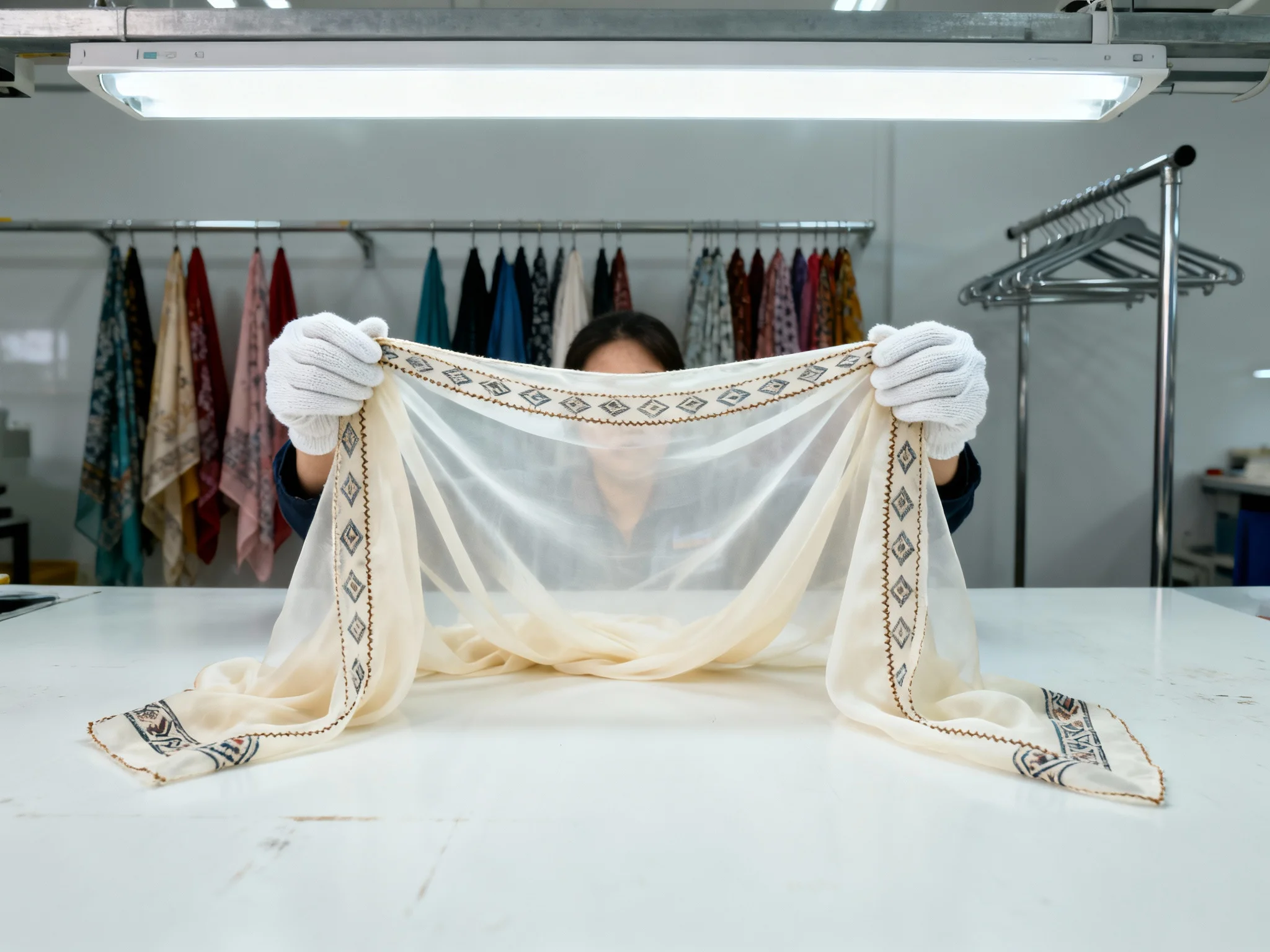
Edge treatment inspection focuses on:
- Hem stitching uniformity (typically 10-12 stitches per inch for hand-rolled edges)
- Thread tension consistency throughout the entire perimeter
- Knot security and hidden finishing techniques that demonstrate master craftsmanship
- Edge thickness uniformity for optimal drape and appearance
For fringed scarves, specialized inspection criteria include:
- Fringe length consistency (maintaining a tolerance of ±3mm)
- Fringe density verification according to design specifications
- Fiber shedding assessment through standardized agitation testing
- Tassel formation integrity and secure attachment
Leading luxury manufacturers now employ tactile sensors to evaluate the nuanced hand feel of finished scarves, detecting minute surface texture variations that might escape human inspection. This technological enhancement ensures every scarf meets the brand's signature tactile standard, a crucial element of perceived luxury.
Process 6: Final Aesthetic and Defect Inspection
The final aesthetic inspection represents the culmination of the quality control process, combining automated defect detection with expert human assessment in a multi-tiered approach that ensures no imperfections escape detection before a scarf earns its luxury designation.
Automated defect detection systems utilize high-resolution imaging and advanced AI algorithms to identify:
- Fabric irregularities (slubs, neps, thin places, and density variations)
- Color variations and streaks that deviate from standard
- Printing defects (misregistration, smudging, missing elements, and bleeding)
- Foreign matter contamination and microscopic debris
Following automated screening, master inspectors conduct detailed visual assessments under standardized lighting conditions that simulate various retail and environmental scenarios. Their expert evaluation encompasses:
- Overall drape and hand feel assessment through tactile examination
- Luster and surface appearance under different lighting conditions
- Pattern clarity and definition verification
- Subtle color harmony evaluation across the entire design palette
The industry widely utilizes the Acceptable Quality Level (AQL) standard, with luxury scarf manufacturers typically operating at AQL 1.0 or lower—meaning less than 1% of products can contain even minor defects. This standard significantly exceeds the AQL 2.5 common in mid-tier fashion production, reflecting the uncompromising quality expectations of the luxury market.
Process 7: Compliance Verification and Certification
In today's increasingly regulated global marketplace, compliance verification has become an essential component of premium scarf quality control. This critical process ensures products meet both internal quality standards and the growing array of international regulations governing luxury textiles.
Key compliance areas include:
- Fiber content labeling accuracy (adhering to FTC requirements in the US, EU Textile Labeling Regulation, and other regional standards)
- Country of origin marking compliance with customs regulations worldwide
- Care instruction validation for accuracy and clarity
- Sustainability certification verification (including organic, fair trade, and responsible sourcing credentials)
The European Union's Ecodesign for Sustainable Products Regulation (ESPR), adopted in April 2025, has introduced new compliance requirements focusing on:
- Extended product lifespan considerations and durability standards
- Recyclability assessment and circular economy compatibility
- Restriction of hazardous substances beyond previous regulations
- Digital Product Passport implementation for complete supply chain transparency
Forward-thinking luxury brands are developing comprehensive compliance management systems to track requirements across global markets, ensuring their scarves meet the diverse regulatory demands of different regions while maintaining consistent quality standards worldwide.
Technological Advancements in Modern Quality Control
The landscape of luxury textile production has been transformed by technological innovation, elevating quality control from a final inspection process to an integrated system spanning the entire manufacturing lifecycle. These advancements have not replaced artisanal expertise but rather enhanced human capabilities, creating a powerful synergy between traditional craftsmanship and modern technology.
Computer vision systems now form the backbone of contemporary quality control, offering capabilities such as:
- 360° product scanning in ultra-high resolution detail
- Multi-spectral imaging to detect sub-surface defects invisible to the human eye
- Automated measurement with micrometer precision
- Advanced defect classification and root cause analysis for process improvement
AI-powered predictive quality systems represent the next frontier in quality assurance, analyzing production data in real-time to identify quality trends and potential process improvements before defects occur. These sophisticated systems correlate variables such as environmental conditions, machine calibration parameters, and operator techniques with quality outcomes, enabling continuous process optimization and waste reduction.
Blockchain technology has emerged as a critical component of quality assurance in the luxury sector, providing immutable records of:
- Material provenance and certification documentation
- Production process parameters and quality checkpoints
- Comprehensive inspection results and quality scores
- Supply chain transparency documentation for ethical sourcing verification
These technological innovations have fundamentally transformed quality control from a reactive process to a proactive system that ensures consistent excellence in every luxury scarf that reaches the market.
The Business Case for Uncompromising Quality Control
Implementing these seven critical inspection processes requires substantial investment in technology, infrastructure, and specialized expertise—but delivers compelling returns for luxury scarf manufacturers. Beyond ensuring product excellence, rigorous quality control creates tangible business value through multiple channels:
- Reduced returns and warranty claims – Premium quality control protocols typically reduce return rates below 1%, compared to industry averages of 8-10% for mid-tier fashion accessories, significantly impacting profitability.
- Enhanced brand reputation – Consistently high quality builds intangible brand equity and fosters deep customer loyalty, driving repeat purchases and generating valuable word-of-mouth referrals in the exclusive luxury market.
- Premium pricing justification – Transparent quality control processes provide objective validation for premium price points in an increasingly competitive marketplace, supporting brand positioning and profit margins.
- Regulatory compliance assurance – Proactive quality control minimizes compliance risks and potential legal exposure in complex global markets, avoiding costly penalties and reputation damage.
- Sustainability benefits – By reducing waste, ensuring durability, and optimizing production processes, rigorous quality control aligns with the growing consumer demand for sustainable luxury and responsible manufacturing practices.
As the luxury scarf market continues to evolve, quality control remains a critical differentiator between fleeting trends and enduring luxury brands. The most successful brands recognize quality not as a production cost, but as a strategic investment in long-term brand value and customer relationships that yields compounding returns over time.
For fashion houses and retailers seeking premium scarf manufacturing partners, these seven inspection processes provide a comprehensive framework for evaluating potential suppliers. Understanding and verifying these quality control protocols ensures that scarf offerings meet the exacting standards of luxury consumers worldwide, reinforcing brand reputation and driving sustainable growth in the competitive global marketplace.