In today's rapidly evolving fashion accessories market, digital printing technology has transformed the landscape of luxury scarf design, production, and market delivery. With years of hands-on experience in textile manufacturing, I've witnessed firsthand how digital printing has revolutionized production workflows—unlocking unprecedented design possibilities while simultaneously reducing environmental impact. This comprehensive guide explores the complete production journey of digitally printed scarves, equipping fashion brands, boutiques, and specialty retailers with the technical expertise required to make informed decisions when selecting manufacturing partners and production methodologies.
Understanding Digital Scarf Printing Technology
Digital printing represents a paradigm shift from traditional screen printing methods, offering unparalleled flexibility and precision specifically tailored for scarf production. Unlike conventional techniques that require physical screens for each color separation, digital printing utilizes advanced inkjet technology to apply dye-based inks directly to fabric. This innovative approach eliminates numerous setup procedures, resulting in significant reductions in both production time and material waste.
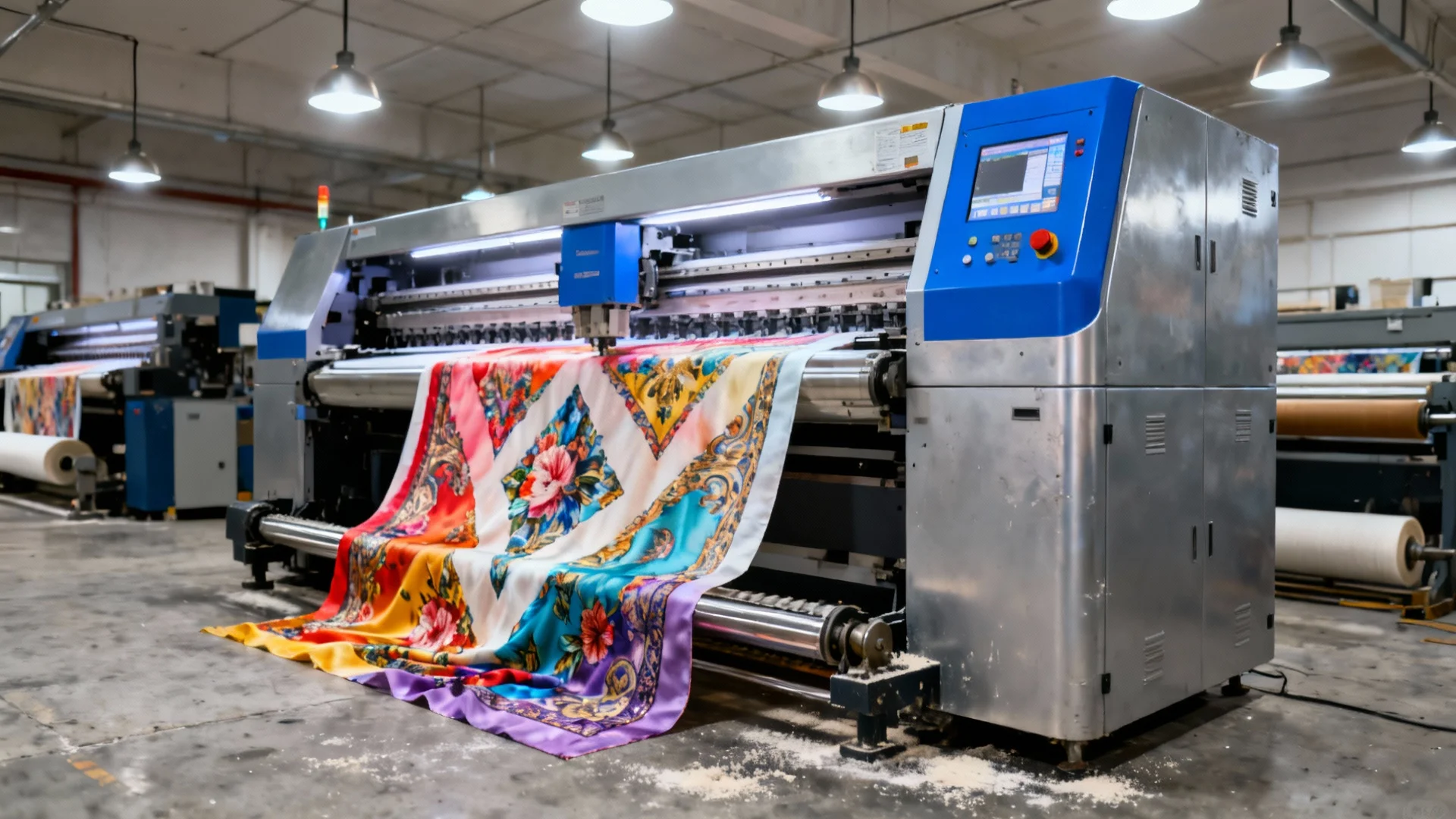
The foundation of digital scarf printing rests upon three essential components: specialized printers equipped with textile-specific print heads, pigmented or dye-based inks formulated explicitly for fabric applications, and sophisticated RIP (Raster Image Processor) software that converts digital designs into print-ready formats. Contemporary systems, such as those incorporating Epson's Monna Lisa series print heads, achieve resolutions up to 1200 dpi—capturing intricate details that remain beyond the capabilities of traditional methods.
The true transformative power of this technology lies in its ability to reproduce complex designs with unlimited color variations. Unlike screen printing, which becomes cost-prohibitive with more than 8-10 colors, digital printing seamlessly handles gradient transitions, photorealistic images, and elaborate patterns without incurring additional setup costs. This capability has revolutionized luxury scarf design, empowering creators to translate their most ambitious creative visions into wearable art without technical compromise.
The Production Workflow: From Design to Finished Product
The creation of a digitally printed scarf involves a meticulously coordinated sequence of steps, each exerting a critical influence on the final product's quality and aesthetic appeal. Based on industry best practices and workflow analysis, this process can be categorized into four primary phases: pre-production preparation, digital printing execution, post-printing treatments, and quality control inspection.
Pre-Production Preparation
Exceptional digital scarf printing begins long before ink meets fabric. This preparatory phase encompasses design refinement, material selection, and specialized pre-treatment processes—all essential for ensuring optimal ink adhesion and color vibrancy in the final product.
Design files require careful attention to specific technical parameters. Industry standards recommend a minimum resolution of 300 DPI for scarf designs, paired with color profiles optimized for textile printing (typically CMYK with additional spot colors for specialty inks). Professional design software such as Adobe Illustrator or Photoshop facilitates the creation of print-ready files, enabling designers to adjust scale, color saturation, and detail density based on the unique characteristics of the target fabric.
Fabric selection significantly impacts the final outcome, with silk, cashmere, and high-quality cotton each demanding distinct handling approaches. Premium mulberry silk, prized for its smooth surface and exceptional dye absorption properties, undergoes specialized pre-treatment to remove natural oils and prepare fibers for optimal ink retention. More delicate materials like cashmere benefit from advanced pre-treatment solutions containing acrylic polymers, which prevent fiber damage while ensuring superior colorfastness.
The pre-treatment process involves applying a specialized coating to the fabric that creates an optimal bonding surface for inks. This coating formulation varies according to fabric type—silk may utilize starch-based solutions, while synthetic blends often benefit from polymer-based treatments. Proper pre-treatment ensures color accuracy, prevents ink bleeding, and enhances wash durability, with modern formulations reducing water consumption by up to 95% compared to traditional methods.
Digital Printing Execution
Following meticulous preparation, state-of-the-art textile printers transform digital designs into physical products. These specialized machines differ fundamentally from standard office printers, featuring larger format capabilities (typically up to 1.8 meters wide), industrial-grade print heads, and precision feeding systems engineered to handle delicate fabrics without tension damage.
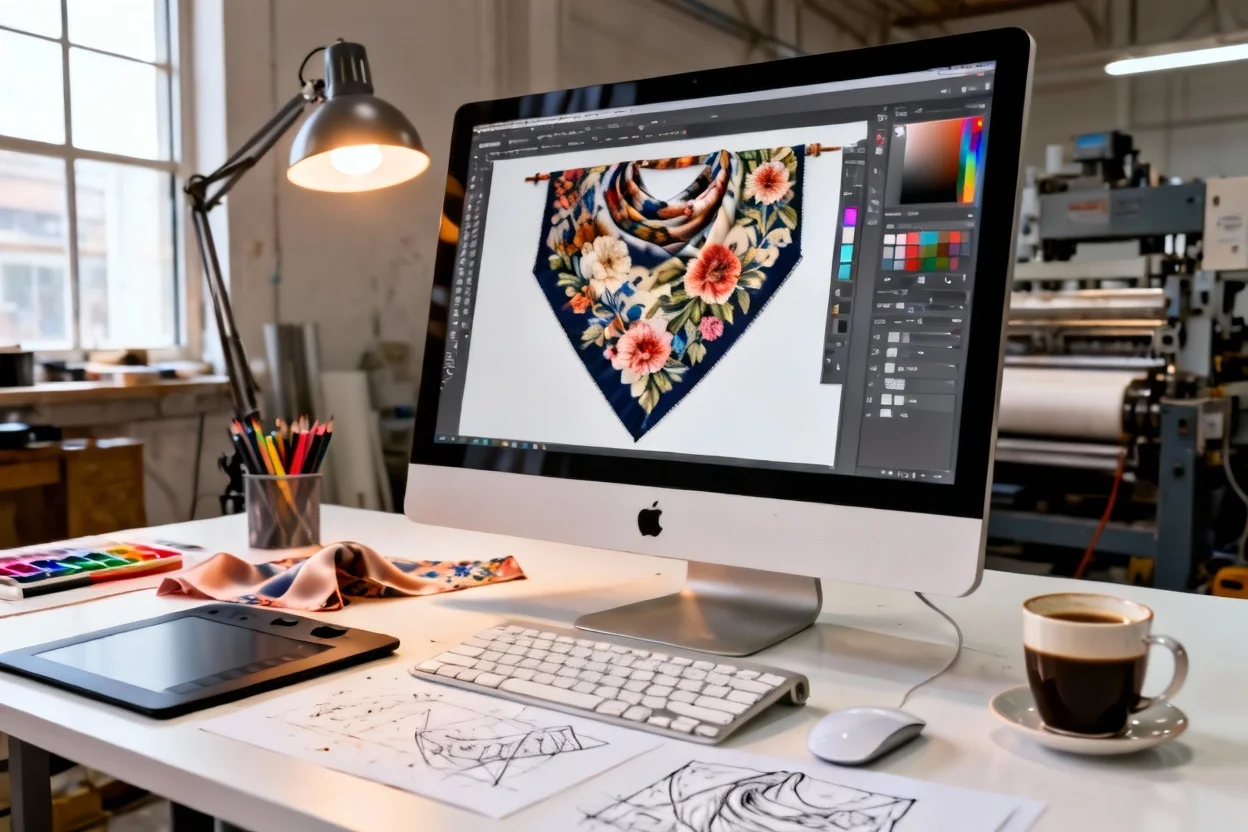
The printing process commences with loading pre-treated fabric onto the printer's transport system, where vacuum technology or electrostatic hold mechanisms prevent shifting during printing. RIP software processes the design file, optimizing color separation and ink deposition based on fabric type and ink formulation—ensuring consistent results across production runs. Advanced systems incorporate sophisticated color management tools that maintain accuracy within Delta E < 1.0, a difference imperceptible to the human eye.
Ink technology has undergone remarkable advancements in recent years. Water-based pigment inks now deliver exceptional color saturation and washfastness previously achievable only with solvent-based alternatives. These eco-friendly formulations contain significantly fewer volatile organic compounds (VOCs) and require less energy for curing, perfectly aligning with the fashion industry's growing sustainability imperatives.
Printing speed varies according to design complexity and quality settings, with industrial systems capable of producing up to 50 linear meters per hour at production quality. However, luxury scarf production typically prioritizes precision over speed, with run speeds adjusted to ensure optimal ink penetration and color development—particularly critical for intricate designs featuring fine details and complex color gradients.
Post-Printing Treatments
After the printing process, scarves undergo several post-processing steps designed to set inks, enhance durability, and prepare the fabric for its final form. These treatments vary according to ink type and fabric composition but generally follow a consistent sequence: fixation, washing, drying, and finishing.
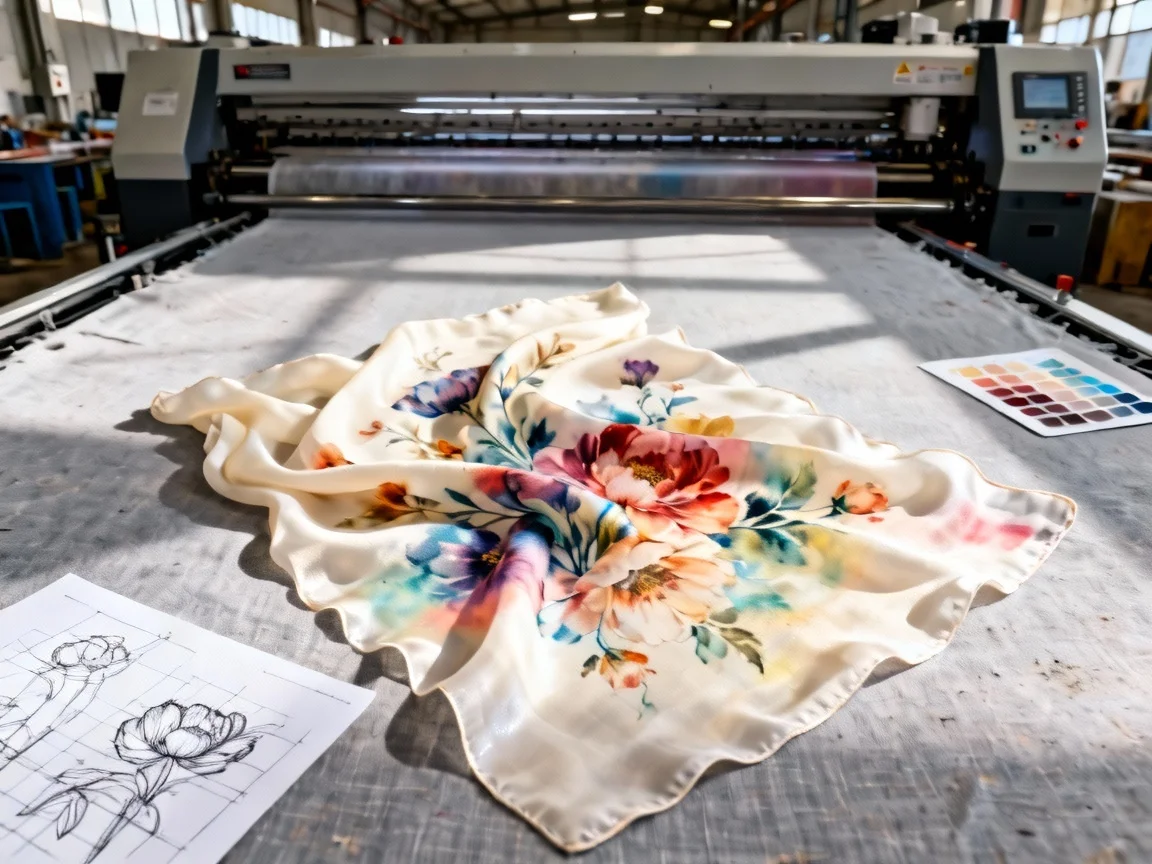
Fixation represents perhaps the most critical post-printing step, ensuring that inks permanently bond with fabric fibers. This process typically involves heat treatment utilizing specialized ovens or calendering machines that apply controlled temperature (140-160°C for silk) and pressure. For reactive inks, steam fixation may be employed, exposing the printed fabric to saturated steam for 10-15 minutes to activate the dye molecules' chemical bonding properties.
Following fixation, gentle washing removes unfixed ink, pre-treatment residues, and excess chemicals. Modern closed-loop washing systems recycle water and chemicals, reducing consumption by up to 90% compared to traditional open-bath methods. Washing parameters—including temperature, duration, and pH level—are precisely controlled based on fabric type, with silk requiring cooler temperatures (30-40°C) and shorter cycles than cotton or synthetic blends.
Drying must be carefully managed to prevent fabric distortion or shrinkage. Vacuum dryers or low-tension air dryers represent the optimal solution for delicate scarves, maintaining consistent tension while removing moisture efficiently. Drying temperatures are typically lower than fixation temperatures to preserve the fabric's structural integrity and tactile qualities.
Final finishing steps may include mechanical softening to enhance hand feel, edge rolling for a clean luxury appearance, and optional specialized treatments such as water repellency or antimicrobial coatings. Each scarf undergoes careful inspection at this stage, with loose threads trimmed and minor imperfections addressed before progressing to quality control.
Quality Control and Inspection
Consistent quality standards are paramount in luxury scarf production, necessitating rigorous inspection protocols throughout the manufacturing process. The industry typically adheres to ISO 2859-1 standards, with most manufacturers implementing an AQL (Acceptable Quality Level) of 2.5% for major defects and 4.0% for minor imperfections.
Quality control begins with incoming material inspection, verifying fabric weight, weave consistency, and pre-treatment quality before printing commences. During production, statistical process control monitors key parameters such as ink density, color consistency, and print alignment, with automated systems flagging deviations from established tolerances.
Post-production inspection employs both automated and manual checks. Advanced vision systems equipped with high-resolution cameras scan each scarf for printing defects including misregistration, ink starvation, or color variation, comparing physical products against digital design files. This technology can detect defects as small as 0.1mm, ensuring consistent quality across production runs.
Manual inspection focuses on tactile qualities and aesthetic details that automated systems might overlook, including hand feel, edge finishing, and overall drape. Each inspector follows a standardized checklist covering over 20 quality parameters, with specialized lighting highlighting potential issues such as uneven dye penetration or fabric imperfections.
Luxury scarves often undergo wear testing as part of final inspection, with samples subjected to simulated use conditions to verify colorfastness, durability, and performance. This may involve rub testing, wash testing, and light exposure testing—ensuring the product meets brand durability standards and customer expectations throughout its intended lifespan.
Technical Specifications and Performance Parameters
Optimal digital scarf printing requires precise control of technical parameters that influence everything from color accuracy to production efficiency. Understanding these specifications empowers brands to select appropriate manufacturing partners and establish realistic expectations for custom scarf projects.
Resolution and print quality represent primary considerations, with most luxury scarf producers utilizing printers capable of 600-1200 dpi resolution. While higher resolution theoretically produces finer detail, fabric type imposes practical limitations—silk's smooth surface effectively reproduces 1200 dpi designs, whereas textured fabrics may only benefit from 600 dpi due to surface irregularities. Pixel density relative to viewing distance ultimately matters most, with scarves intended for close viewing requiring higher resolution than those designed for distant appreciation.
Color gamut and reproduction accuracy have improved dramatically with recent ink technology advancements. Modern digital textile printers can reproduce approximately 90% of the Pantone Fashion, Home + Interiors color system, with specialized ink sets expanding this range further. Color management systems utilizing ICC profiles ensure consistent reproduction across different production runs and printer models, with luxury applications typically setting color difference tolerances at Delta E < 2.0.
Production speed varies significantly based on quality settings and design complexity, with industrial systems ranging from 10 to 50 linear meters per hour. Custom scarves featuring intricate designs tend toward the lower end of this spectrum, as slower printing allows for superior ink layering and color development. Lead times for digital scarf production typically range from 5-10 days for small batches (50-100 pieces) and 15-20 days for larger orders—significantly shorter than the 30-45 days required for traditional screen printing.
Material compatibility represents a critical consideration, as digital printing systems optimize for specific fabric types. While silk and cotton work universally well, specialty materials like cashmere or wool require specialized pre-treatment and ink formulations. Synthetic fabrics may necessitate heat-activated inks or plasma surface treatment for adequate adhesion. Manufacturers should clearly communicate their material specialties, as process expertise varies widely between facilities.
Sustainability Considerations in Digital Printing
Environmental consciousness increasingly influences consumer purchasing decisions, making the sustainability advantages of digital scarf printing the preferred method for eco-conscious brands. Compared to traditional screen printing, digital technology delivers significant reductions in resource consumption and environmental impact across multiple metrics.
Water usage demonstrates the most dramatic difference between digital and conventional printing methods. Traditional screen printing consumes approximately 20-40 liters of water per meter of fabric for setup, production, and cleanup, while digital printing reduces this to just 0.5-1 liter per meter—a 95% reduction. Closed-loop water recycling systems further minimize consumption, with advanced facilities achieving near-zero liquid discharge through evaporation and filtration technologies.
Energy efficiency has improved substantially with modern digital printing systems. Implementation of ISO 20690 energy efficiency standards has led to machines consuming up to 57% less power than models from just five years ago. Variable speed drives, intelligent drying systems, and sleep mode capabilities contribute to this efficiency, with some manufacturers reporting over 40% energy savings compared to traditional production methods.
Ink and chemical usage benefit significantly from digital printing's precise deposition capabilities, applying only the necessary ink volume to achieve desired color intensity. This targeted approach reduces ink consumption by approximately 30% compared to screen printing, where excess ink is inevitable. Water-based pigment inks have also eliminated many hazardous volatile organic compounds (VOCs) traditionally associated with textile printing, improving workplace safety while reducing environmental impact.
Waste reduction extends beyond consumables to encompass fabric utilization and production planning. Digital printing's minimal setup requirements make short runs economically viable, reducing overproduction and inventory waste. On-demand production models enable brands to respond to actual demand rather than speculative forecasts, minimizing excess inventory. When waste does occur, digital printing inks are generally easier to reclaim and recycle than traditional pigments, with some manufacturers achieving material recovery rates of up to 85%.
Comparing Digital and Traditional Printing Methods
Understanding the advantages and limitations of digital versus traditional printing methods enables brands to select the optimal production approach for their specific needs. While digital technology has transformed textile printing, traditional methods continue to offer benefits in specific applications.
Screen printing—the most established traditional method—remains popular for large production runs of simple designs with limited colors. The process involves creating physical screens for each color separation, which apply ink layers sequentially to fabric. This setup-intensive approach becomes cost-effective for runs exceeding several hundred pieces, as fixed screen production costs amortize across more units. Screen printing typically achieves higher ink opacity than digital methods, making it preferable for bold, solid colors and opaque coverage over dark backgrounds.
Digital printing excels where screen printing faces limitations: complex designs, variable customization, and short production runs. By eliminating physical screens, digital printing enables unlimited color variations without additional setup costs—ideal for intricate patterns, photorealistic images, and gradient effects. The digital workflow also facilitates easy design modifications and versioning, supporting personalized scarf programs where each piece may feature unique elements like monograms or individual names.
Cost structures differ significantly between methods, with digital printing offering lower per-unit costs for small batches and screen printing becoming more economical at scale. As a general guideline, the break-even point between screen and digital printing typically falls between 300-500 pieces for a standard scarf design with 4-6 colors. Below this threshold, digital printing generally represents better value; above it, screen printing may offer economic advantages. This calculation must account for additional factors including design complexity, color count, and turnaround time requirements.
Quality characteristics impact aesthetic outcome and performance differently. Digital printing generally produces finer detail resolution with superior reproduction of subtle gradients and tonal variations. Screen printing typically delivers more vibrant color saturation and better colorfastness for certain ink types—particularly when using plastisol or discharge inks. Tactile quality also differs significantly: screen printing creates a noticeable ink layer that can be felt on the fabric surface, while digital printing inks penetrate more fully, resulting in a softer hand feel that preserves the original fabric's characteristics.
Environmental impact represents one of the most significant differences between methods. As discussed earlier, digital printing consumes dramatically less water and energy while generating less waste than traditional screen printing. For sustainability-focused brands, these environmental advantages often outweigh other considerations—particularly true for limited-edition or seasonal scarf collections where short runs make digital printing the more economical choice regardless of other factors.
Advanced Applications and Specialized Techniques
Digital printing technology continues to evolve at a rapid pace, enabling innovative applications that push the boundaries of traditional scarf design and production. These advanced techniques empower brands to create distinctive products with unique selling propositions in an increasingly competitive market.
Photo-realistic reproduction has reached new heights with high-resolution digital printing, allowing scarf designs to capture intricate details with remarkable clarity. Fashion photographers and artists regularly collaborate with scarf manufacturers to translate their work into wearable art, with the technology capturing subtle tonal variations and fine textures previously impossible to reproduce on fabric. This capability has expanded creative possibilities for scarf designers, who can now incorporate photographic elements, detailed illustrations, and complex patterns into collections with confidence that the final product will match their artistic vision.
Customization and personalization have emerged as key differentiators in luxury scarf markets, with digital printing enabling efficient one-off production and variable data printing. Brands can now offer monogramming services, custom color variations, and even completely unique designs for individual customers—all without the setup costs associated with traditional customization methods. Some manufacturers have developed sophisticated online design tools that allow clients to upload artwork, adjust colors, and preview final products before placing orders—streamlining the customization process while ensuring accurate results.
Special effect inks and finishes add dimensionality and sensory appeal to digitally printed scarves. Metallic inks create subtle shimmer effects that catch light beautifully on silk and satin substrates, while pearlized finishes add depth and luminosity to solid color areas. Thermochromic inks that change color with temperature variation offer interactive elements that prove particularly popular in children's scarf collections and novelty designs. Flock and textured inks can be applied selectively using digital printing technology, creating tactile contrast that enhances the design's visual impact and consumer appeal.
Hybrid approaches combining digital printing with traditional craftsmanship techniques are emerging as a luxury niche, with some manufacturers using digital printing for complex base designs before adding hand-applied embellishments like embroidery, beading, or hand-painted details. This fusion of technology and artisanal skill enables brands to leverage digital efficiency for repeatable elements while maintaining the exclusivity and craftsmanship associated with luxury accessories. The result is scarves that offer the best of both worlds—intricate digital designs enhanced by unique hand-finished details that appeal to discerning consumers.
Case Studies: Complex Design Implementation
Real-world applications of digital scarf printing demonstrate the technology's capabilities and limitations across different design scenarios. These case studies highlight successful implementations while providing practical insights for brands considering digital production for their scarf collections.
Photo-realistic portrait scarves present unique challenges in color gradation and skin tone accuracy. A celebrity fashion brand recently collaborated with a digital printing specialist to create a limited-edition collection featuring high-resolution portraits of iconic figures. The project required meticulous color matching to ensure accurate reproduction of skin tones across multiple fabric types, with the final products achieving remarkable similarity to the original photographic references. The success of this collection demonstrated digital printing's ability to transform fine art into wearable accessories while maintaining artistic integrity.
Another notable application involved a luxury fashion house that required precise color matching across multiple product categories, including scarves, apparel, and accessories. By implementing a standardized color management system across its digital printing partners, the brand achieved consistent color reproduction within Delta E < 1.5 across all product lines—a level of consistency previously unattainable with traditional production methods. This case study underscores the importance of technical collaboration between brands and manufacturers in achieving optimal results from digital printing technology.
A sustainable fashion label leveraged digital printing's environmental advantages to create a zero-waste scarf collection, utilizing on-demand production to eliminate inventory waste and closed-loop manufacturing processes to minimize resource consumption. The brand reported a 92% reduction in water usage and 85% reduction in textile waste compared to previous collections produced using traditional methods. This case demonstrates how digital printing can align with sustainability goals while maintaining commercial viability and product quality.
These examples illustrate the transformative potential of digital scarf printing technology when applied thoughtfully to diverse design challenges. By understanding both technical capabilities and creative possibilities, brands can leverage digital printing to create innovative scarf collections that stand out in today's competitive marketplace.