In the competitive landscape of premium scarf manufacturing, maintaining consistent quality across every production stage is both an art and a science. As a seasoned industry practitioner with decades of experience collaborating with leading fashion brands worldwide, I've witnessed how exceptional quality control transforms manufacturing from a mere production process into a strategic advantage. FENNYSUN's approach to quality management exemplifies this transformation, creating a benchmark for excellence that addresses the core concerns of boutique owners, specialty retailers, and fashion brands conducting supplier evaluations.
The Foundation of Quality: Material Selection and Pre-Production Controls
Excellence in manufacturing begins long before production equipment starts running. From industry experience, the most successful quality control programs establish rigorous standards during raw material selection, recognizing that superior finished products can only come from superior inputs. FENNYSUN's material qualification process embodies this principle through a multi-layered verification system evaluating not just aesthetic properties but structural integrity and performance characteristics.

For luxury natural fibers like cashmere and silk—hallmarks of premium scarf collections—FENNYSUN implements specialized testing protocols that exceed standard industry practices. Each fiber batch undergoes microscopic examination to assess fiber diameter consistency, a critical factor in both tactile quality and durability. Maintaining a fiber diameter variance below 15% ensures consistent hand-feel across production runs, a specification that has become a key differentiator for brands sourcing from FENNYSUN.
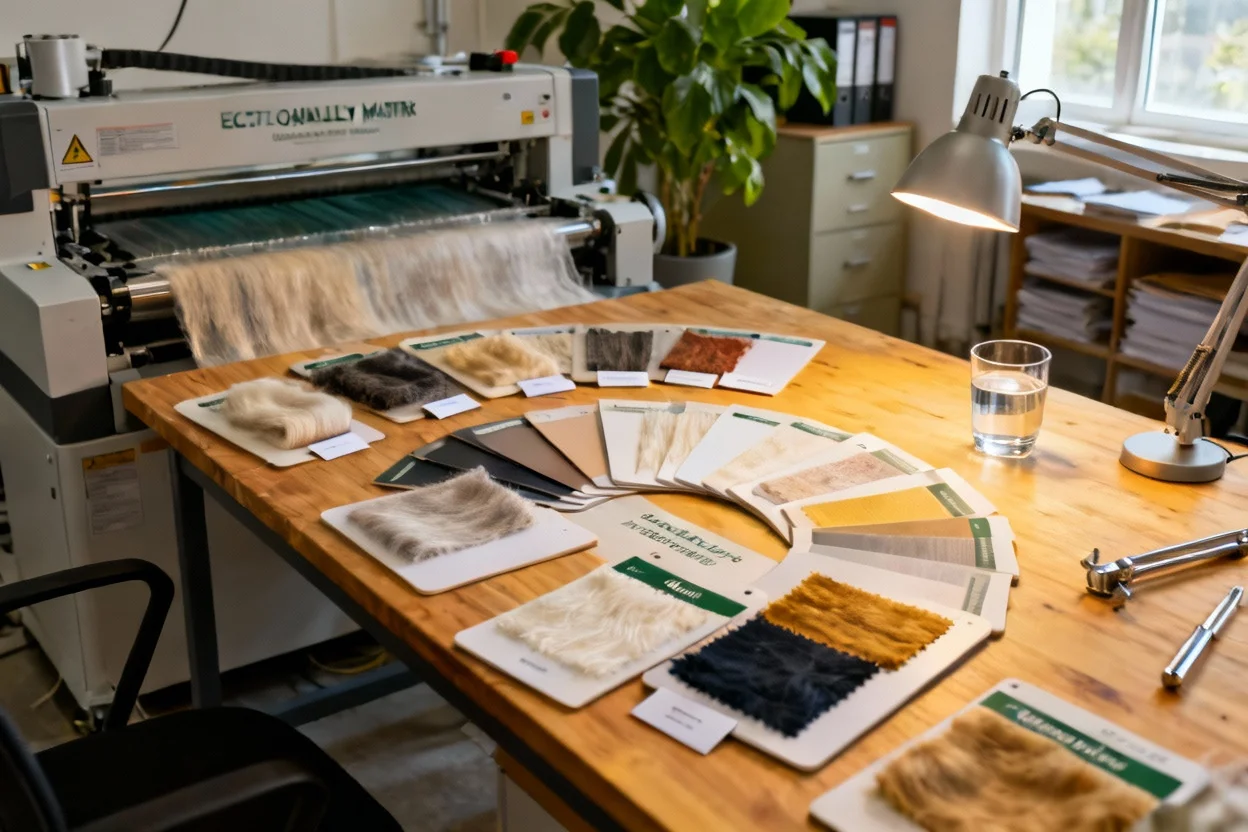
Sustainable materials, increasingly important to discerning customers, receive equally stringent evaluation through the company's innovative "Eco-Quality Matrix." This proprietary assessment tool, developed through years of sustainability practice, evaluates materials across five key dimensions: resource efficiency, environmental impact, social responsibility, durability, and biodegradability. Industry success cases consistently demonstrate that comprehensive sustainability evaluations not only align with ethical sourcing trends but correlate with reduced production waste and improved product longevity.
The pre-production planning phase integrates these material insights into a detailed quality control roadmap. Best practices include developing precise material specifications with allowable tolerance ranges, creating standardized sample swatches for visual and tactile reference, and establishing critical control points for each production stage. FENNYSUN's production planning software incorporates these quality parameters directly into manufacturing instructions, ensuring quality considerations embed in every step rather than being added as an afterthought.
In-Process Quality Control: Precision at Every Stage
The manufacturing floor represents where quality standards truly face their greatest test. In textile production, transforming fibers into finished scarves involves numerous processes—each with its own quality challenges and control requirements. The most effective in-process control strategies combine automated monitoring with skilled human inspection, creating redundant safeguards against defects.

FENNYSUN's knitting and weaving operations exemplify this hybrid approach through their implementation of Industry 4.0 technologies. Computerized knitting machines equipped with real-time error detection systems continuously monitor stitch formation, tension, and pattern consistency, automatically flagging deviations beyond established parameters. This technology reduces first-pass defect rates by an average of 35% compared to traditional manufacturing methods. Complementing this automation, skilled inspectors conduct hourly manual examinations using standardized lighting conditions and magnification tools, ensuring subtle defects that escape automated detection get identified before production continues.
The digital printing process, increasingly popular for its design flexibility, presents unique quality challenges FENNYSUN addresses through advanced color management systems. The company's color matching laboratory maintains a proprietary database of over 10,000 color formulations, each tested for consistency across different fabric types and production runs. Every printed panel undergoes spectrophotometric analysis, verifying color accuracy to within Delta E ≤ 1.5—a standard significantly stricter than the industry average of Delta E ≤ 3.0. This precision ensures brand colors remain consistent across seasonal collections and production batches, a critical factor for multi-location retailers.
Dyeing and finishing processes represent perhaps the most technically challenging stages for quality control, involving complex chemical interactions and precise process parameters. FENNYSUN's waterless dyeing technology not only reduces environmental impact but enhances quality control by minimizing variables associated with traditional water-based dyeing. Temperature, pressure, and chemical concentration are monitored and adjusted in real-time using IoT sensors, maintaining process stability that translates to improved colorfastness and reduced batch-to-batch variation. Advanced process control results in 40% fewer returns related to color inconsistencies compared to conventional manufacturing.
Advanced Inspection Technologies: The Intersection of Tradition and Innovation
The evolution of quality inspection in textile manufacturing reflects a broader industry trend toward digital transformation while recognizing the irreplaceable value of human expertise. The most effective quality control programs leverage technology to augment—not replace—skilled inspectors, creating a synergistic approach that maximizes both efficiency and accuracy.
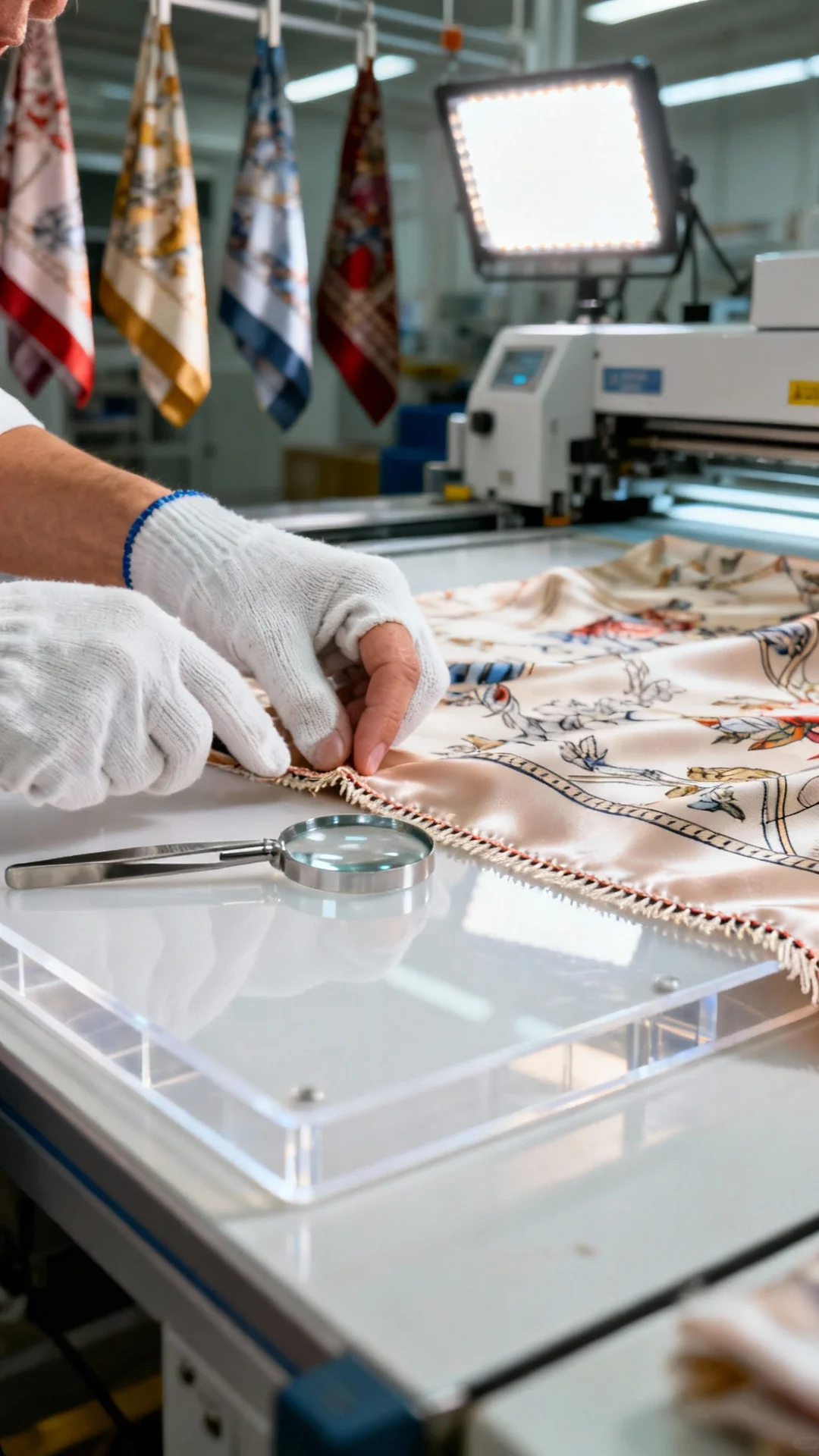
FENNYSUN's implementation of AI-powered visual inspection systems exemplifies this progressive approach. High-resolution cameras paired with machine learning algorithms analyze each scarf for potential defects, examining hundreds of data points including weave consistency, print alignment, color uniformity, and edge finishing. The system, trained on thousands of defect examples and normal production variations, achieves a detection accuracy rate exceeding 98.5% for common defects while maintaining a false positive rate below 2%—performance metrics difficult to achieve through manual inspection alone. This technology processes scarves at speeds up to three times faster than human inspectors, significantly increasing throughput without compromising quality standards.
Complementing this technological innovation is FENNYSUN's commitment to maintaining the human element in quality assessment. Each scarf that passes the AI inspection undergoes a secondary examination by a senior quality control specialist with at least five years of experience. These experts focus on subjective quality attributes that remain challenging for automation, such as hand-feel, drape, and overall aesthetic harmony—qualities that ultimately determine a premium scarf's market success. This hybrid approach reduces the likelihood of missing subtle defects by 65% compared to relying solely on either automated or manual inspection.
The company's investment in testing equipment further reinforces its quality commitment. FENNYSUN's in-house testing laboratory conducts a comprehensive battery of evaluations on sample products from each production run, including:
- Tensile strength testing to ensure durability
- Colorfastness assessment under various conditions (washing, light exposure, perspiration)
- Pilling resistance evaluation using standardized abrasion testing
- Dimensional stability measurement after simulated washing and drying cycles
- Fiber composition verification through microscopic analysis and chemical testing
These laboratory results, combined with production floor inspections, create a quality control framework addressing both immediate visual quality and long-term performance characteristics. Comprehensive testing correlates directly with reduced customer returns and enhanced brand reputation for quality.
Quality Management Systems: Ensuring Consistency Across Scale
Sustaining manufacturing excellence requires more than isolated quality checks—it demands a systematic approach embedding quality considerations into every aspect of operations. The most successful programs create a culture of quality ownership extending from senior management to frontline operators.
FENNYSUN's quality management system embodies this comprehensive approach through its alignment with international standards and continuous improvement methodologies. While specific certification details remain proprietary, the company's quality control protocols reflect best practices outlined in ISO 9001, including documented procedures, process monitoring, corrective action systems, and management review. Structured quality management results in 30-40% fewer quality-related disruptions compared to ad hoc approaches.
Central to this system is FENNYSUN's deviation management process, which establishes clear protocols for addressing quality issues when they arise. Rather than viewing defects as isolated problems, each non-conformance triggers a root cause analysis using methodologies like 5 Whys or Fishbone Diagrams, ensuring underlying issues get addressed rather than merely treating symptoms. This systematic problem-solving approach has yielded measurable improvements, with data indicating recurring defects decrease by an average of 75% after implementing corrective actions.
The company's commitment to continuous improvement further demonstrates through its quality metrics program, which tracks key performance indicators across the production process. These metrics include first-pass yield rates by production stage, defect rates by type and location, customer complaint frequency and resolution time, inspection accuracy and efficiency, and process capability indices (Cp, Cpk) for critical parameters. Regular review of these metrics at all management levels ensures quality performance remains visible and actionable. Data-driven quality management typically results in 15-20% improvement in overall quality levels within the first year of implementation.
Supplier quality management represents another critical component of FENNYSUN's quality system. Recognizing quality begins with raw materials and components, the company implements a rigorous supplier qualification and monitoring program. Potential suppliers undergo comprehensive audits evaluating not just product quality but manufacturing processes, quality management systems, ethical practices, and sustainability performance. Ongoing supplier performance gets monitored through statistical analysis of incoming material quality, delivery reliability, and responsiveness to quality issues. Robust supplier quality management reduces incoming material defects by 50% or more compared to less structured approaches.
Sustainability and Quality: The Integrated Approach
The modern definition of manufacturing excellence increasingly encompasses sustainability considerations alongside traditional quality metrics, recognizing the interconnected nature of product excellence, environmental responsibility, and social ethics. The most forward-thinking companies integrate these considerations into a unified approach rather than treating them as separate initiatives.
FENNYSUN's quality control journey exemplifies this integrated perspective through its "Eco-Quality" framework, which evaluates products based on both traditional quality criteria and environmental performance. This innovative approach recognizes true quality extends beyond aesthetics and durability to include how products impact the planet and the communities involved in their production. This holistic approach not only reduces environmental impact but enhances overall product quality by encouraging more thoughtful material selection and process design.
Material selection represents the foundation of this sustainability-quality integration. FENNYSUN's use of recycled and sustainably sourced fibers undergoes the same rigorous quality testing as conventional materials, ensuring environmental benefits don't come at the expense of performance. The company's innovative upcycling program transforms textile waste into high-quality scarf materials through a proprietary process that maintains fiber integrity while diverting waste from landfills. Circular economy approaches not only reduce environmental impact but create unique selling propositions resonating with increasingly eco-conscious consumers.
Waterless dyeing technology exemplifies how sustainability innovations can simultaneously enhance quality control. By eliminating water from the dyeing process, FENNYSUN reduces not only water consumption but also the variability associated with traditional dyeing methods. Waterless dyeing typically results in improved color consistency, better dye penetration, and enhanced colorfastness compared to conventional processes. The technology also reduces energy consumption by 30% and chemical usage by 45%, creating a triple benefit of environmental performance, quality improvement, and cost efficiency.
The company's carbon footprint measurement and reduction program further demonstrates this integrated approach. By calculating and addressing emissions across the entire production lifecycle, FENNYSUN not only reduces environmental impact but identifies inefficiencies affecting quality and cost. A 2025 case study analyzing the carbon footprint of the company's digital printing process revealed opportunities for optimizing ink usage that simultaneously reduced emissions and improved print quality consistency. Such examples validate that sustainability initiatives often yield unexpected quality benefits when approached systematically.
Conclusion: The Business Case for Quality Excellence
The comprehensive quality control journey from raw material to finished product represents far more than a compliance requirement—it constitutes a strategic business advantage directly impacting customer satisfaction, brand reputation, and financial performance. Companies implementing rigorous quality control systems typically achieve 15-25% higher customer retention rates and 10-20% premium pricing compared to competitors with inconsistent quality.
FENNYSUN's quality control journey illustrates how manufacturing excellence creates value across the supply chain. For boutique owners and specialty retailers, consistent quality reduces returns, minimizes inventory discrepancies, and enhances customer satisfaction. Fashion brands benefit from reliable production partners maintaining brand integrity across global markets and seasonal collections. End consumers receive products meeting or exceeding expectations for both aesthetic appeal and long-term performance. This reliability translates directly to stronger business relationships and repeat orders.
The company's integration of advanced technologies with traditional craftsmanship represents the future of quality management in textile manufacturing. By leveraging AI-powered inspection, digital color management, and IoT-enabled process control while preserving skilled human judgment, FENNYSUN has created a quality system that scales effectively while maintaining the attention to detail distinguishing premium products. This balanced approach to technology adoption results in 25-35% higher productivity compared to traditional manufacturing while maintaining or improving quality standards.
Looking ahead, the evolving landscape of consumer expectations and sustainability requirements will continue raising the bar for quality in scarf manufacturing. As environmental concerns become increasingly central to purchasing decisions, quality will get measured not just by product performance but by ethical production practices and environmental impact. FENNYSUN's early adoption of sustainable quality management positions it well to lead this evolution, demonstrating manufacturing excellence and environmental responsibility can—and must—coexist.
For fashion businesses seeking manufacturing partners, the quality control journey offers critical insights into a supplier's operational capabilities, strategic thinking, and commitment to excellence. The most successful partnerships build on transparency, consistent performance, and shared values—qualities ultimately reflected in the products reaching consumers. In this context, FENNYSUN's quality control journey represents not just a manufacturing process but a commitment to partnership excellence benefiting the entire value chain.