In today's competitive fashion accessories market, quality control in scarf manufacturing has evolved from a basic requirement to a strategic differentiator. Brands and retailers increasingly prioritize product excellence, making it essential to understand the comprehensive quality control measures that define superior scarf production. Based on years of industry experience and 2025 manufacturing trends, this technical guide explores the systematic approaches that ensure consistent quality across every stage of scarf creation.
The Strategic Importance of Quality Control in Modern Scarf Production
Quality control in scarf production serves as the backbone of customer satisfaction, brand reputation, and operational efficiency. In an era where consumers demand both aesthetic appeal and functional durability, robust quality measures are imperative for manufacturers targeting discerning buyers in boutique and specialty retail sectors.
The consequences of inadequate quality control extend far beyond customer returns. A 2025 industry report shows fashion accessories with consistent quality issues face up to 40% higher return rates and significant brand reputation damage in today's social media-driven marketplace. Conversely, manufacturers maintaining stringent quality standards report 25% higher customer retention rates and stronger wholesale partnerships.
Modern quality control systems have transformed from reactive inspection processes to proactive, data-driven methodologies integrated throughout production cycles. This evolution responds to complex demands of contemporary scarf manufacturing, where customization, material diversity, and production scalability create unique quality challenges that require sophisticated management.
Pre-Production Quality Assurance: Establishing the Foundation for Excellence
Superior scarf quality is established long before production begins. Pre-production quality assurance identifies and mitigates potential issues early, preventing costly errors downstream and ensuring the scarf manufacturing steps proceed smoothly.
Rigorous Material Selection and Inspection Protocols
Material quality forms the cornerstone of exceptional scarf production. For luxury scarf manufacturers, this process starts with rigorous supplier qualification and material testing. Sustainable materials—increasingly important to 2025 consumers—require additional verification of both environmental claims and performance characteristics.
Industry best practices recommend a multi-stage material inspection process:
- Supplier Certification Verification: Ensuring compliance with international standards like ISO 9001 and textile certifications relevant to sustainable materials
- Physical Material Testing: Conducting tests for fiber composition, tensile strength, colorfastness, and dimensional stability according to ASTM textile standards
- Batch Consistency Checks: Comparing samples against approved standards for uniformity in weight, texture, and color
Specialized materials like silk and cashmere need advanced testing methodologies. Silk scarves undergo specific inspections for fiber length, sericin content, and weave integrity to ensure the luxurious drape and luster discerning customers expect.
Comprehensive Design and Pattern Validation
Before production starts, design files and pattern specifications must undergo meticulous validation. This critical quality control step ensures the final product matches the designer's vision while remaining technically feasible to produce at scale.
Modern validation processes increasingly use digital tools, including 3D simulation software that identifies potential production issues before cutting begins. For custom scarf manufacturing, this phase becomes even more critical, as unique designs often present unique production challenges requiring specialized quality control considerations.
In-Process Quality Control: Monitoring Every Stage of Production
In-process quality control represents the most dynamic phase of scarf manufacturing quality assurance. It requires constant vigilance and adaptive measures to address issues as they emerge throughout the scarf production workflow.
Precision Cutting and Material Preparation Inspection
The cutting phase establishes the foundation for scarf dimensions and symmetry, making precision absolutely critical. Quality control measures at this stage include:
- Digital pattern verification against original specifications
- Material grain alignment checks to ensure consistent drape and appearance
- Cut piece inspection for accuracy and uniformity across production batches
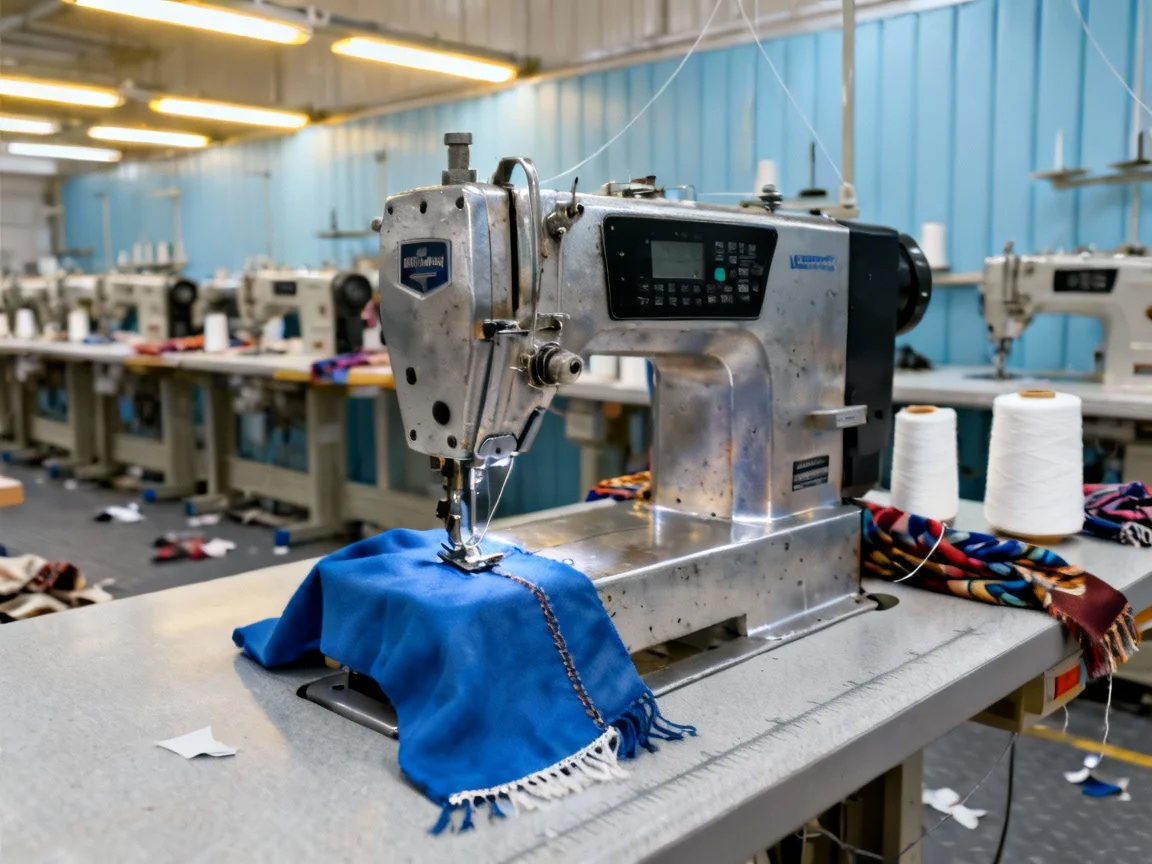
Advanced manufacturers have begun implementing computer vision systems that automatically verify cut piece dimensions against tolerances. This significantly reduces human error while increasing inspection speed by up to 60% compared to manual methods.
Exacting Stitching and Construction Quality Checks
Stitching quality directly impacts both aesthetic appeal and durability of finished scarves. In-process inspection protocols typically include:
- Regular stitch density verification (stitches per inch/cm)
- Seam strength testing at specified intervals
- Inspection for skipped stitches, thread tension inconsistencies, and seam alignment
For luxury scarves, specialized stitching techniques require equally specialized inspection approaches. Hand-rolled hems undergo meticulous examination to ensure consistent roll width, stitch invisibility, and overall uniformity.
Advanced Printing and Dyeing Quality Assurance
Color application represents one of the most visually impactful aspects of scarf production, demanding rigorous quality control measures:
- Color matching against Pantone or custom standards under standardized lighting conditions
- Colorfastness testing for both wet and dry rubbing
- Inspection for dye penetration, bleeding, and uniformity
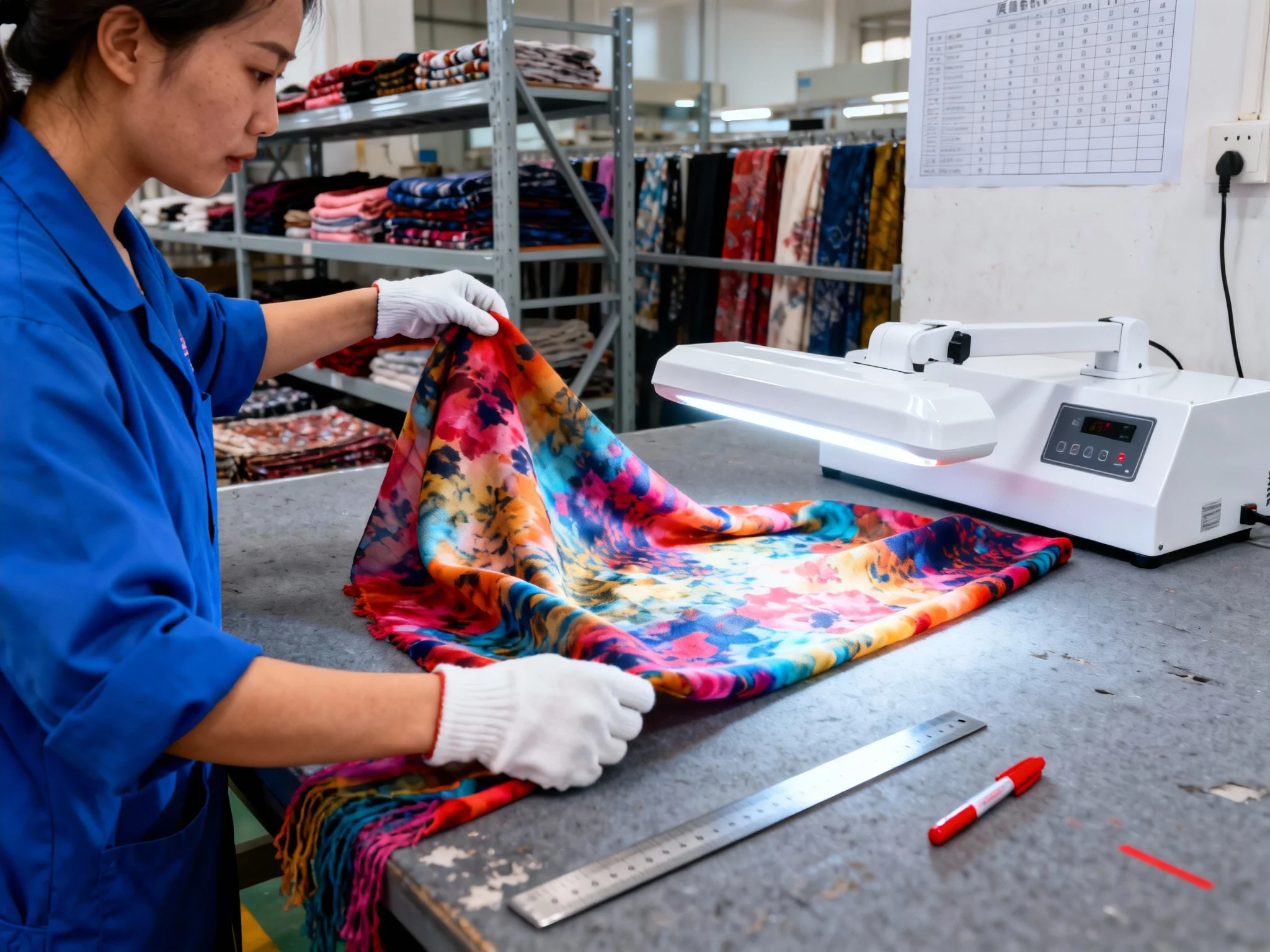
The rise of digital printing technology has introduced new quality control parameters, including resolution verification, color accuracy across production runs, and ink adhesion testing. These specialized processes require both automated inspection systems and trained human oversight to ensure optimal results.
Post-Production Quality Control: The Final Verification
Post-production quality control serves as the last line of defense before scarves reach customers. It represents the final opportunity to identify and address any issues that may have escaped earlier detection in the scarf making process.
Comprehensive Final Inspection Protocol
The final inspection process typically follows a detailed checklist that covers:
- Overall appearance evaluation under standardized lighting
- Dimension verification against specifications
- Finished edge inspection (rolled, hemmed, or fringed)
- Labeling accuracy and placement
- Packaging integrity
Many manufacturers have adopted a sampling methodology based on AQL (Acceptable Quality Limit) standards, with critical defects requiring 100% inspection. For high-end and custom scarf manufacturing, 100% inspection of all finished products remains the industry standard despite higher labor costs.
Rigorous Performance and Durability Testing
Beyond visual inspection, quality control programs increasingly include performance testing for key durability indicators:
- Pilling resistance testing (particularly important for wool and cashmere scarves)
- Dimensional stability verification after simulated washing
- Colorfastness to light, perspiration, and home laundering
These tests, while destructive in nature, provide critical quality assurance data that supports product claims and customer expectations. For luxury scarves, the cost of this testing represents a small fraction of potential costs associated with product failures or returns.
Advanced Technology Integration in Modern Quality Control
The scarf manufacturing industry has witnessed significant technological advancement in quality control processes. 2025 marks a turning point in the adoption of smart manufacturing technologies that enhance precision and efficiency throughout the scarf making process.
AI-Powered Visual Inspection Systems
Artificial intelligence has revolutionized quality control by enabling automated visual inspection that detects defects with greater accuracy and consistency than human inspectors. These systems, typically utilizing high-resolution cameras and machine learning algorithms, can identify:
- Subtle color variations that escape human perception
- Minute fabric imperfections
- Stitching irregularities
- Print alignment issues
Case studies from leading textile manufacturers demonstrate AI inspection systems reduce defect miss rates by up to 45% while increasing production throughput by eliminating bottlenecks associated with manual inspection.
IoT-Enabled Process Monitoring
Internet of Things (IoT) technology enables real-time quality control by providing continuous monitoring of production conditions that affect scarf quality:
- Environmental controls (temperature, humidity) during dyeing and drying
- Machine calibration verification
- Production speed adjustments based on material characteristics
This connectivity allows for immediate intervention when process variables drift outside optimal ranges, preventing production of defective scarves rather than simply detecting them after the fact.
Blockchain for Supply Chain Quality Transparency
Blockchain technology has emerged as a powerful tool for quality control by providing immutable records of:
- Material sourcing and certification
- Production processes and inspection results
- Testing data and compliance documentation
For sustainability-focused brands and consumers, this technology enables unprecedented transparency regarding the environmental impact of scarf production, from raw material extraction through manufacturing processes.
Sustainable Quality Control: Balancing Excellence and Environmental Responsibility
Modern quality control programs increasingly incorporate sustainability considerations alongside traditional quality metrics. They recognize the interconnected nature of product excellence and environmental responsibility throughout the scarf production workflow.
Eco-Friendly Material Verification
As sustainable materials gain market share, quality control processes have evolved to verify both environmental claims and performance characteristics of these innovative textiles:
- Certification verification for organic, recycled, and biodegradable materials
- Performance testing specific to sustainable fibers
- Environmental impact assessment throughout the production lifecycle
For manufacturers that prioritize sustainable materials, these verification processes ensure environmental claims are substantiated while maintaining quality standards customers expect.
Waste Reduction Through Quality Control
Effective quality control directly contributes to sustainability by minimizing production waste:
- In-process inspection reduces defective products requiring rework or disposal
- Precision cutting technologies minimize material waste
- Digital prototyping reduces need for physical samples
Industry data indicates manufacturers with robust quality control systems generate up to 35% less production waste than those with inadequate quality assurance processes, creating both environmental and economic benefits.
Best Practices for Implementing Effective Quality Control Systems
Implementing a comprehensive quality control program requires careful planning, resource allocation, and cultural commitment to excellence. Based on industry best practices and lessons learned from leading manufacturers, these approaches have proven most effective in optimizing scarf manufacturing steps.
Developing a Comprehensive Quality Control Manual
A well-documented quality control manual serves as the foundation for consistent implementation across all production facilities and shifts. This living document should include:
- Detailed inspection procedures with visual references
- Acceptance criteria and tolerance specifications
- Testing methodologies and frequency requirements
- Defect classification systems with examples
- Corrective action protocols
The most effective manuals incorporate visual references, including actual examples of acceptable and rejectable defects, to ensure consistent interpretation across all quality control personnel.
Training and Empowering Quality Control Personnel
Even the most sophisticated quality control systems depend on properly trained personnel to operate effectively. Comprehensive training programs should include:
- Technical training on inspection methodologies and equipment operation
- Product-specific knowledge for different scarf types and materials
- Communication skills for effectively reporting and addressing quality issues
- Continuous improvement principles and practices
Empowering quality control staff with authority to stop production when quality standards are compromised represents a critical cultural element of successful quality management systems.
Implementing Statistical Process Control
Statistical Process Control (SPC) methodologies enable manufacturers to:
- Monitor production processes in real-time
- Identify trends before they result in defects
- Make data-driven adjustments to maintain optimal quality
- Reduce variation in critical quality characteristics
By analyzing quality data from across the production process, manufacturers can identify root causes of issues and implement preventive measures that improve overall quality while reducing inspection costs.
Conclusion: Building a Culture of Quality Excellence
Quality control in scarf manufacturing represents far more than a series of inspection points. It reflects a comprehensive commitment to excellence that must permeate every aspect of the organization. Looking to the future of scarf production, integration of advanced technologies, sustainability considerations, and data-driven decision making will continue redefining what constitutes world-class quality control.
For fashion brands and retailers seeking to partner with manufacturers that prioritize quality, understanding these comprehensive quality control measures provides a valuable framework for evaluating potential suppliers. By prioritizing manufacturers implementing these rigorous protocols, brands can ensure their scarf offerings consistently meet highest standards of excellence, durability, and customer satisfaction.
The most successful scarf manufacturers recognize quality control represents an ongoing journey rather than a destination. In an industry with evolving customer expectations, material innovations, and production technologies, maintaining exceptional quality requires continuous improvement, adaptability, and unwavering commitment to excellence in every stitch, print, and inspection throughout the entire scarf making process.</think># Mastering Quality Control in Scarf Manufacturing: Comprehensive Standards for Superior Production
In today's competitive fashion accessories market, quality control in scarf manufacturing has evolved from a basic requirement to a strategic differentiator. Brands and retailers increasingly prioritize product excellence, making it essential to understand the comprehensive quality control measures that define superior scarf production. Based on years of industry experience and 2025 manufacturing trends, this technical guide explores the systematic approaches that ensure consistent quality across every stage of scarf creation.
The Strategic Importance of Quality Control in Modern Scarf Production
Quality control in scarf production serves as the backbone of customer satisfaction, brand reputation, and operational efficiency. In an era where consumers demand both aesthetic appeal and functional durability, robust quality measures are imperative for manufacturers targeting discerning buyers in boutique and specialty retail sectors.
The consequences of inadequate quality control extend far beyond customer returns. A 2025 industry report shows fashion accessories with consistent quality issues face up to 40% higher return rates and significant brand reputation damage in today's social media-driven marketplace. Conversely, manufacturers maintaining stringent quality standards report 25% higher customer retention rates and stronger wholesale partnerships.
Modern quality control systems have transformed from reactive inspection processes to proactive, data-driven methodologies integrated throughout production cycles. This evolution responds to complex demands of contemporary scarf manufacturing, where customization, material diversity, and production scalability create unique quality challenges that require sophisticated management.
Pre-Production Quality Assurance: Establishing the Foundation for Excellence
Superior scarf quality is established long before production begins. Pre-production quality assurance identifies and mitigates potential issues early, preventing costly errors downstream and ensuring the scarf manufacturing steps proceed smoothly.
Rigorous Material Selection and Inspection Protocols
Material quality forms the cornerstone of exceptional scarf production. For luxury scarf manufacturers, this process starts with rigorous supplier qualification and material testing. Sustainable materials—increasingly important to 2025 consumers—require additional verification of both environmental claims and performance characteristics.
Industry best practices recommend a multi-stage material inspection process:
- Supplier Certification Verification: Ensuring compliance with international standards like ISO 9001 and textile certifications relevant to sustainable materials
- Physical Material Testing: Conducting tests for fiber composition, tensile strength, colorfastness, and dimensional stability according to ASTM textile standards
- Batch Consistency Checks: Comparing samples against approved standards for uniformity in weight, texture, and color
Specialized materials like silk and cashmere need advanced testing methodologies. Silk scarves undergo specific inspections for fiber length, sericin content, and weave integrity to ensure the luxurious drape and luster discerning customers expect.
Comprehensive Design and Pattern Validation
Before production starts, design files and pattern specifications must undergo meticulous validation. This critical quality control step ensures the final product matches the designer's vision while remaining technically feasible to produce at scale.
Modern validation processes increasingly use digital tools, including 3D simulation software that identifies potential production issues before cutting begins. For custom scarf manufacturing, this phase becomes even more critical, as unique designs often present unique production challenges requiring specialized quality control considerations.
In-Process Quality Control: Monitoring Every Stage of Production
In-process quality control represents the most dynamic phase of scarf manufacturing quality assurance. It requires constant vigilance and adaptive measures to address issues as they emerge throughout the scarf production workflow.
Precision Cutting and Material Preparation Inspection
The cutting phase establishes the foundation for scarf dimensions and symmetry, making precision absolutely critical. Quality control measures at this stage include:
- Digital pattern verification against original specifications
- Material grain alignment checks to ensure consistent drape and appearance
- Cut piece inspection for accuracy and uniformity across production batches
Advanced manufacturers have begun implementing computer vision systems that automatically verify cut piece dimensions against tolerances. This significantly reduces human error while increasing inspection speed by up to 60% compared to manual methods.
Exacting Stitching and Construction Quality Checks
Stitching quality directly impacts both aesthetic appeal and durability of finished scarves. In-process inspection protocols typically include:
- Regular stitch density verification (stitches per inch/cm)
- Seam strength testing at specified intervals
- Inspection for skipped stitches, thread tension inconsistencies, and seam alignment
For luxury scarves, specialized stitching techniques require equally specialized inspection approaches. Hand-rolled hems undergo meticulous examination to ensure consistent roll width, stitch invisibility, and overall uniformity.
Advanced Printing and Dyeing Quality Assurance
Color application represents one of the most visually impactful aspects of scarf production, demanding rigorous quality control measures:
- Color matching against Pantone or custom standards under standardized lighting conditions
- Colorfastness testing for both wet and dry rubbing
- Inspection for dye penetration, bleeding, and uniformity
The rise of digital printing technology has introduced new quality control parameters, including resolution verification, color accuracy across production runs, and ink adhesion testing. These specialized processes require both automated inspection systems and trained human oversight to ensure optimal results.
Post-Production Quality Control: The Final Verification
Post-production quality control serves as the last line of defense before scarves reach customers. It represents the final opportunity to identify and address any issues that may have escaped earlier detection in the scarf making process.
Comprehensive Final Inspection Protocol
The final inspection process typically follows a detailed checklist that covers:
- Overall appearance evaluation under standardized lighting
- Dimension verification against specifications
- Finished edge inspection (rolled, hemmed, or fringed)
- Labeling accuracy and placement
- Packaging integrity
Many manufacturers have adopted a sampling methodology based on AQL (Acceptable Quality Limit) standards, with critical defects requiring 100% inspection. For high-end and custom scarf manufacturing, 100% inspection of all finished products remains the industry standard despite higher labor costs.
Rigorous Performance and Durability Testing
Beyond visual inspection, quality control programs increasingly include performance testing for key durability indicators:
- Pilling resistance testing (particularly important for wool and cashmere scarves)
- Dimensional stability verification after simulated washing
- Colorfastness to light, perspiration, and home laundering
These tests, while destructive in nature, provide critical quality assurance data that supports product claims and customer expectations. For luxury scarves, the cost of this testing represents a small fraction of potential costs associated with product failures or returns.
Advanced Technology Integration in Modern Quality Control
The scarf manufacturing industry has witnessed significant technological advancement in quality control processes. 2025 marks a turning point in the adoption of smart manufacturing technologies that enhance precision and efficiency throughout the scarf making process.
AI-Powered Visual Inspection Systems
Artificial intelligence has revolutionized quality control by enabling automated visual inspection that detects defects with greater accuracy and consistency than human inspectors. These systems, typically utilizing high-resolution cameras and machine learning algorithms, can identify:
- Subtle color variations that escape human perception
- Minute fabric imperfections
- Stitching irregularities
- Print alignment issues
Case studies from leading textile manufacturers demonstrate AI inspection systems reduce defect miss rates by up to 45% while increasing inspection speed by up to 60% compared to manual methods.
IoT-Enabled Process Monitoring
Internet of Things (IoT) technology enables real-time quality control by providing continuous monitoring of production conditions that affect scarf quality:
- Environmental controls (temperature, humidity) during dyeing and drying
- Machine calibration verification
- Production speed adjustments based on material characteristics
This connectivity allows for immediate intervention when process variables drift outside optimal ranges, preventing production of defective scarves rather than simply detecting them after the fact.
Blockchain for Supply Chain Quality Transparency
Blockchain technology has emerged as a powerful tool for quality control by providing immutable records of:
- Material sourcing and certification
- Production processes and inspection results
- Testing data and compliance documentation
For sustainability-focused brands and consumers, this technology enables unprecedented transparency regarding the environmental impact of scarf production, from raw material extraction through manufacturing processes.
Sustainable Quality Control: Balancing Excellence and Environmental Responsibility
Modern quality control programs increasingly incorporate sustainability considerations alongside traditional quality metrics. They recognize the interconnected nature of product excellence and environmental responsibility throughout the scarf production workflow.
Eco-Friendly Material Verification
As sustainable materials gain market share, quality control processes have evolved to verify both environmental claims and performance characteristics of these innovative textiles:
-