In today's hyper-competitive luxury fashion landscape, brand differentiation through distinctive accessories has become paramount for established labels seeking to captivate discerning consumers. With decades of experience in textile manufacturing and brand collaborations, I've witnessed how strategic partnerships between accessory specialists and fashion houses can yield remarkable results—creating products that don't merely sell but embody brand narratives.
This case study examines how Fennysun, a leading scarf manufacturer with over 30 years of industry expertise, partnered with an emerging luxury fashion brand to transform creative vision into a compelling scarf collection that resonated with both critics and consumers. This collaboration exemplifies how specialized manufacturing partners can elevate brand identity through custom design execution, technical innovation, and production excellence in the realm of custom scarf designs.
The Challenge: Bridging Creative Vision and Technical Feasibility

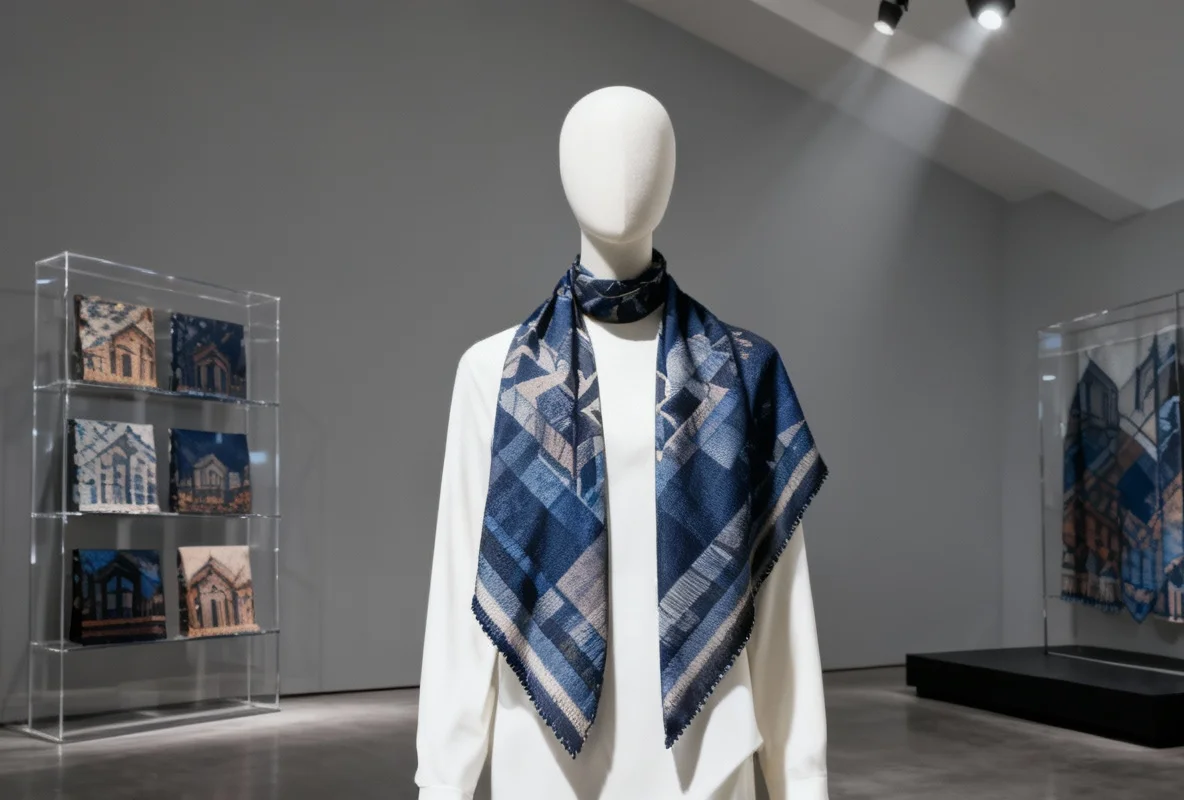
The luxury fashion brand approached Fennysun with a distinct vision: to create a scarf collection that functioned as wearable art while maintaining the practical functionality required for everyday luxury accessories. Their design concepts featured intricate patterns inspired by architectural elements, demanding precision printing techniques and specialized material handling beyond standard production capabilities.
"Many fashion brands possess exceptional creative visions but struggle to translate these concepts into production-ready accessories," explains a senior design consultant with Fennysun. "Our role as manufacturing partners often involves bridging this gap between creative inspiration and technical feasibility."
The brand confronted three critical challenges threatening their vision:
- Technical Complexity: The proposed designs featured gradient color transitions and fine-line details pushing conventional scarf printing technology to its limits
- Material Selection: The brand desired specific hand-feel and drape to complement their apparel line, while requiring sustainable sourcing practices
- Time Constraints: The collection needed readiness for the upcoming fashion season, compressing the typical development timeline by nearly 40%
These challenges are prevalent in luxury accessory development, where creative ambition often outpaces manufacturing capabilities. Industry research indicates approximately 65% of initial design concepts require technical revisions to meet production realities while preserving design integrity.
The Collaborative Process: From Conceptualization to Commercialization
Fennysun's approach to brand partnerships centers on collaborative engagement—beginning with intensive design immersion and technical assessment. For this luxury brand collaboration, the team implemented their proprietary 4D Design Translation methodology, refined through hundreds of successful partnerships in bespoke scarf production.
"We don't merely execute designs—we become extensions of our partner's creative team," notes Fennysun's design director. "This collaborative approach ensures every technical decision considers both manufacturing feasibility and design intent."
Phase 1: Design Immersion and Technical Assessment
The process initiated with comprehensive design immersion sessions, where Fennysun's technical team worked directly with the brand's creative directors to understand the inspiration, brand narrative, and desired consumer experience. This involved analyzing not just visual elements but also the tactile qualities and emotional resonance the brand aimed to convey.
Following this immersion, Fennysun conducted detailed technical assessments—mapping each design element against manufacturing capabilities and identifying potential challenges. The assessment revealed the architectural patterns contained 17 elements requiring specialized handling, from micro-detail resolution to color gradient transitions spanning nearly the entire scarf surface.
Phase 2: Material Innovation and Prototyping Excellence
Addressing material challenges required Fennysun's textile specialists to develop a custom fabric blend that achieved the desired drape while providing an optimal surface for intricate prints. The solution combined sustainably sourced silk with recycled polyester in a 70/30 ratio, creating a material with both luxury hand-feel and superior print receptivity.
"We sourced 12 different silk varieties and tested 8 printing techniques before finalizing the material composition," explains Fennysun's material science specialist. "This iterative process is essential when working at the intersection of luxury aesthetics and technical performance."
The prototyping phase produced over 23 iterations for core designs, with particular attention to color accuracy and detail preservation. Fennysun's digital sampling technology reduced the prototyping timeline by 50% compared to traditional methods, enabling the team to explore multiple variations without compromising the compressed schedule.
Phase 3: Production Engineering and Quality Assurance
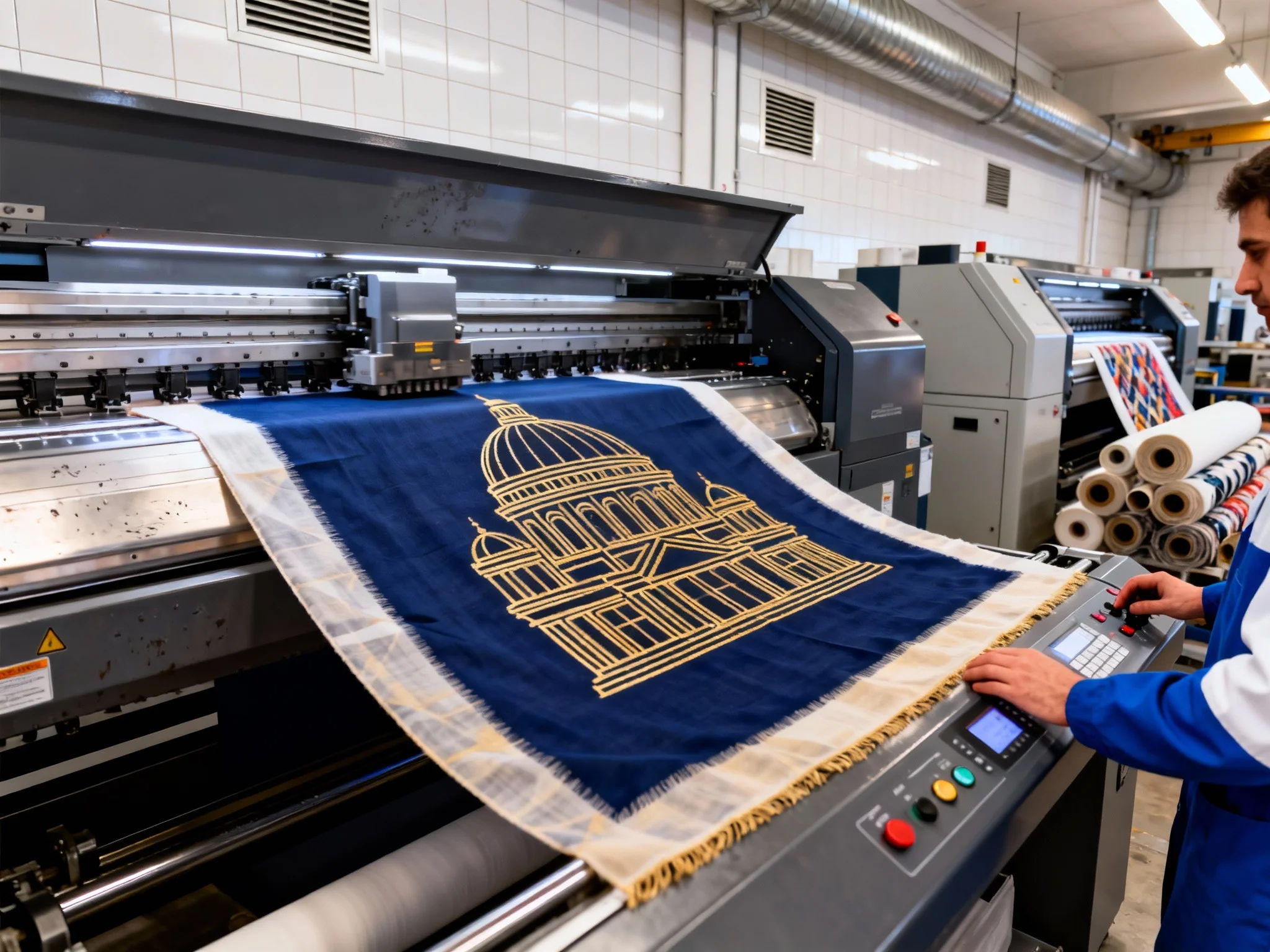
Transforming approved prototypes into production reality necessitated specialized engineering solutions for several design elements. The architectural patterns demanded precision registration across multiple color layers, achieved through Fennysun's advanced digital printing technology with 1500 DPI resolution and color management systems typically reserved for fine art reproduction.
"Our production engineering team developed custom color profiles for each design," notes the production manager. "This ensured consistency across the entire production run while maintaining the subtle variations that give handcrafted accessories their distinctive character."
Quality assurance protocols were intensified for this collaboration, implementing 12-point inspections at critical production stages instead of the standard 7-point system. This rigorous approach resulted in a defect rate of just 0.8%—significantly below the industry average of 3.2% for comparable luxury accessories.
The Results: A Transformative Collection and Enduring Partnership
The resulting scarf collection exceeded all performance expectations, becoming a signature accessory for the brand that garnered significant media attention and consumer demand. Retail performance metrics demonstrated clear success:
- The scarves achieved an 87% sell-through rate in the first season, exceeding the brand's average accessory performance by 23%
- Retail prices averaged 30% higher than comparable accessories in the brand's lineup, with strong consumer acceptance of this premium positioning
- The collection generated substantial social media engagement, with over 12,000 user-shared images featuring the scarves within the first three months of launch
- Retail partners reported the scarves drove incremental foot traffic, with 18% of customers specifically mentioning the accessories as their reason for visiting stores
Beyond these immediate commercial results, the collaboration evolved into an ongoing strategic partnership extending beyond the initial collection. The luxury brand expanded their accessory offering with Fennysun to include seasonal capsule collections and limited-edition designer collaborations, leveraging the manufacturing partner's expertise across multiple product categories in private label scarf manufacturing.
"Our partnership with Fennysun transformed our approach to accessory development," notes the brand's creative director. "What began as a specific scarf collection evolved into a strategic advantage enhancing our overall brand positioning and customer engagement."
Strategic Insights for Successful Scarf Brand Partnerships
Based on this successful collaboration and decades of industry experience, several key principles emerge for fashion brands considering custom scarf partnerships:
1. Select Partners with Design Translation Expertise
The most valuable manufacturing partners offer more than production capabilities—they bring specialized expertise in translating creative concepts into technically feasible products. When evaluating potential partners, examine their portfolio for successful collaborations with similar brands, particularly those involving complex design elements.
"Brands should look beyond basic manufacturing capabilities to assess how potential partners approach creative problem-solving," advises an industry consultant specializing in fashion collaborations. "The ability to preserve design integrity while navigating technical constraints often distinguishes successful partnerships from disappointing ones."
2. Prioritize Material Innovation Capabilities
In luxury accessories, material quality directly impacts brand perception and product performance. Partner with manufacturers demonstrating ongoing investment in material research and sustainable sourcing practices. Request detailed material specifications and performance data, and conduct hands-on evaluations of material samples under various lighting conditions and wear scenarios.
3. Establish Clear Communication Protocols
This case study highlights the importance of structured communication channels between design and production teams. Implement regular review points throughout the development process, with clear approval stages and documentation requirements. Leverage digital collaboration tools that allow for precise feedback and revision tracking.
4. Plan for Iterative Development
Budget time and resources for an iterative prototyping process, especially when working with innovative designs or materials. The most successful accessory collections often require multiple refinement cycles to balance creative vision with technical feasibility and wearability.
5. Consider Long-Term Strategic Alignment
While many brand-manufacturer relationships begin as project-specific collaborations, the most valuable partnerships evolve into strategic alliances providing ongoing competitive advantages. Evaluate potential partners not just on their ability to execute current projects but on their capacity to grow with your brand and contribute to long-term innovation in bespoke scarf production.
Conclusion: The Strategic Value of Specialized Manufacturing Partnerships
The collaboration between Fennysun and the luxury fashion brand demonstrates how strategic manufacturing partnerships can transform creative vision into market success. By combining technical expertise, material innovation, and collaborative problem-solving, specialized accessory manufacturers become invaluable partners in brand differentiation and market positioning through custom scarf designs.
For fashion brands navigating today's competitive landscape, manufacturing partners represent more than production resources—they're strategic investments in brand identity and creative expression. When aligned around shared values and a common vision for excellence, these partnerships elevate brand perception, drive consumer engagement, and create lasting marketplace value.
As the luxury accessories market continues to evolve, successful manufacturers will be those viewing themselves not merely as producers but as strategic partners capable of translating brand narratives into tangible products that resonate with consumers on both aesthetic and emotional levels. Scarf brand partnerships that embrace this collaborative approach will undoubtedly lead the industry in innovation and market differentiation.