In the fast-paced world of fashion accessories manufacturing, maintaining consistent quality across bulk scarf production remains a significant challenge. With decades of industry expertise, I've witnessed how variability in materials, printing processes, and production environments can compromise product integrity. FENNYSUN has pioneered solutions to these challenges through its proprietary automated inspection systems, establishing new benchmarks for quality assurance in the textile industry.
The Imperative for Automated Quality Control in Scarf Production
The fashion accessories market demands both aesthetic perfection and consistent quality, making scarf production particularly challenging. Unlike apparel with structured designs, scarves feature expansive, often intricate patterns that leave minimal room for error. Traditional manual inspection methods struggle to maintain consistent standards across large production runs, typically achieving only 70-80% defect detection rates according to industry benchmarks.
Bulk production introduces additional complexities, including material variations, printing inconsistencies, and environmental factors that affect product quality. Research on textile manufacturing challenges reveals that 85% of quality issues in scarf production stem from inconsistent pattern alignment, color variation, and fabric defects—precisely the areas where automated systems excel.
The limitations of human inspection become even more apparent when considering the precision required for digital printing verification. The human eye struggles to detect subtle color variations or pattern misalignments that become glaringly obvious when scarves are displayed side by side in retail environments. This is where FENNYSUN's approach to automated quality control represents a transformative advancement in textile quality control.
FENNYSUN's Technological Approach: A Multi-Layered Inspection Solution
FENNYSUN has developed a sophisticated multi-layered inspection system that integrates advanced computer vision technology with specialized textile quality control algorithms. At the core of this innovative approach is a high-resolution imaging system that captures intricate details across the entire scarf surface, examining both macro and micro characteristics with exceptional precision.
The system employs advanced lighting techniques to highlight potential defects that might otherwise remain invisible to standard inspection methods. This includes specialized illumination for detecting fabric irregularities, pattern misalignments, and color inconsistencies—three of the most common quality issues in scarf production identified by industry research.
What truly distinguishes FENNYSUN's approach is its proprietary analysis software, specifically calibrated for the unique characteristics of scarf materials and designs. Unlike generic textile inspection systems, this solution accounts for the distinctive properties of luxury fabrics like silk and cashmere, as well as the complex patterns and color gradients typical in high-end scarf designs.
The 12-Point Inspection Protocol: Comprehensive Quality Verification
Central to FENNYSUN's quality assurance process is its proprietary 12-Point Inspection System, which addresses the full spectrum of quality considerations in scarf production. This structured methodology ensures that no aspect of quality is overlooked, from material integrity to final product presentation.
The protocol initiates with material inspection, verifying fabric quality before any printing or production processes commence. This critical first step identifies potential issues like weave irregularities, thickness variations, or foreign matter contamination that could compromise the final product.
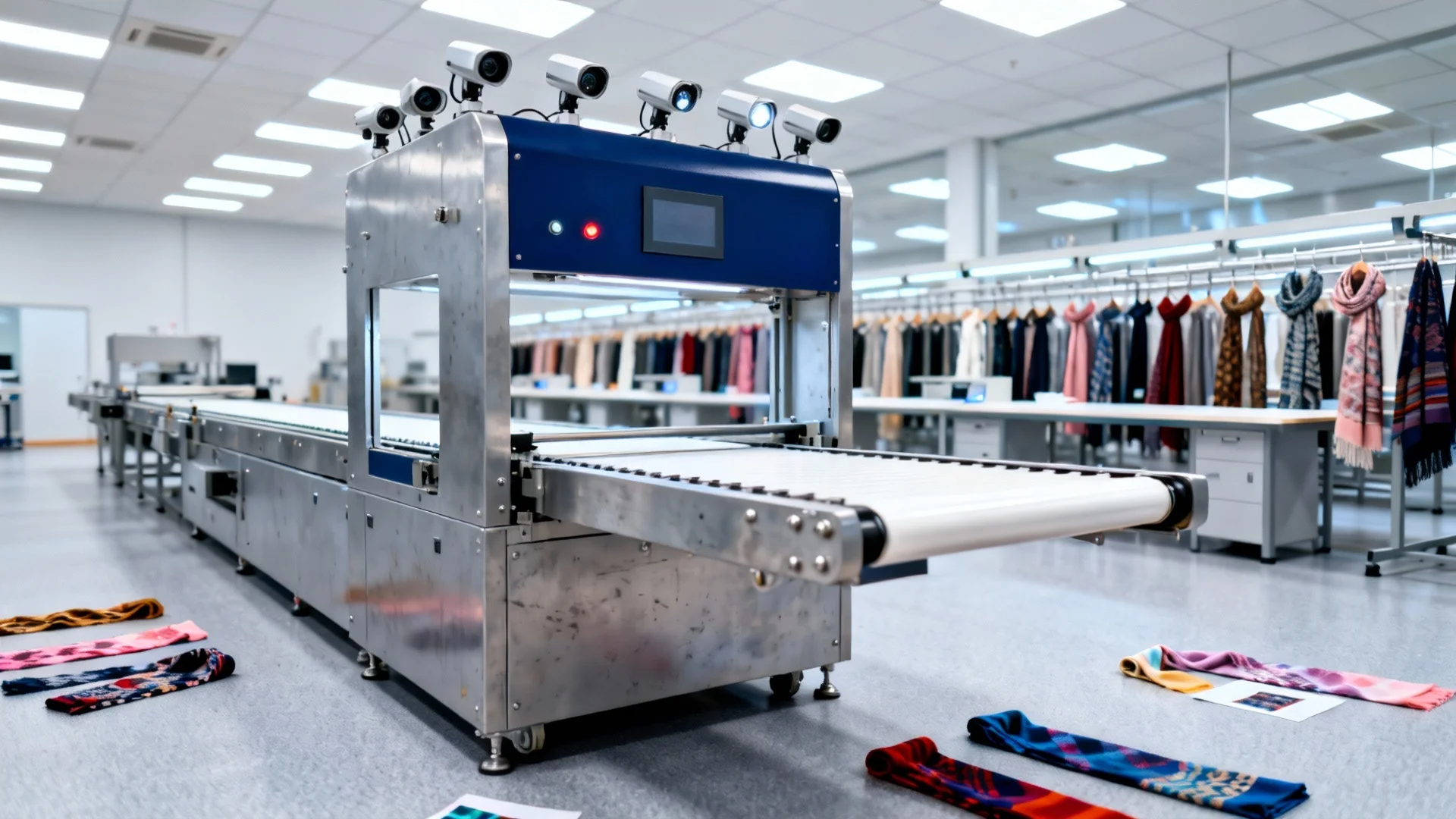
Following digital printing, the system conducts pattern verification checks, ensuring precise alignment and registration across the entire scarf surface. Advanced algorithms compare the printed output against the original design files, detecting even minute deviations that could affect the visual integrity of the product.
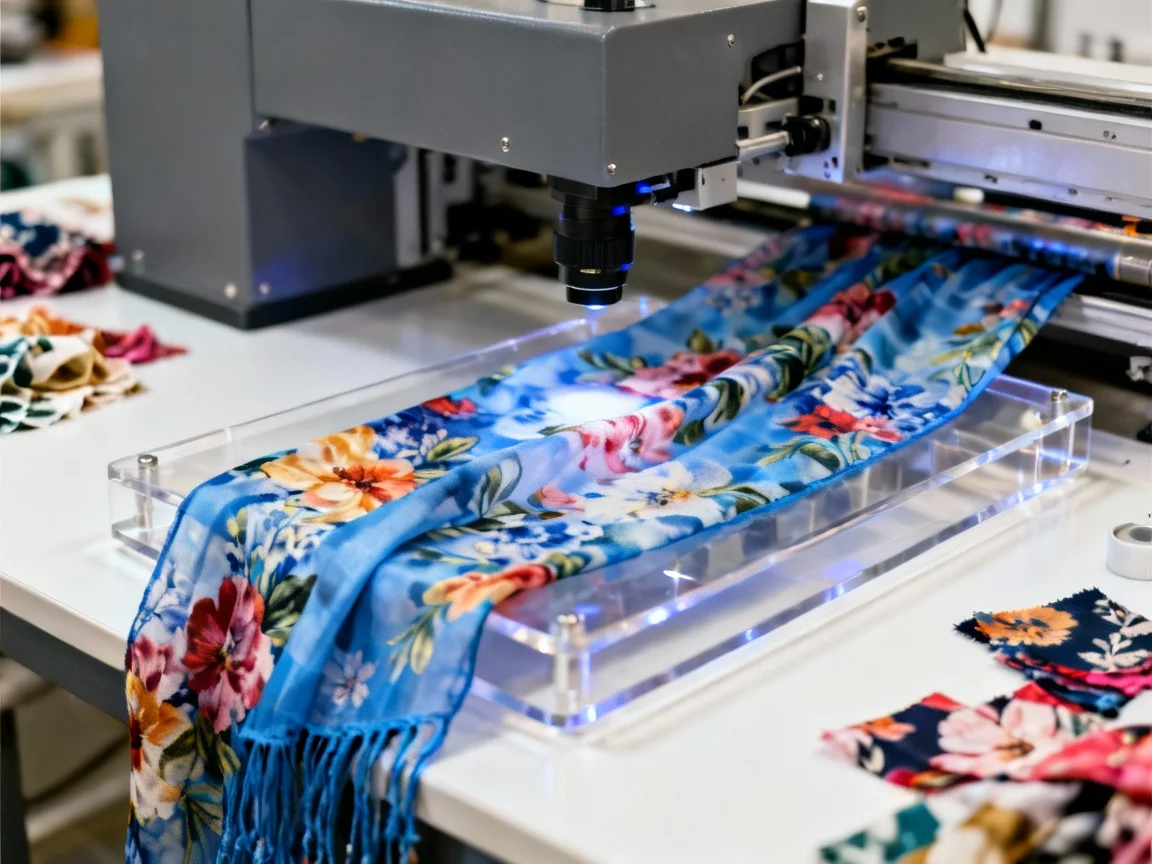
Color consistency analysis represents another key component of the 12-point protocol. Using spectrophotometric measurements, the system verifies that color values match the approved standards, accounting for factors like fabric type, dye absorption, and lighting conditions that can affect color perception.

The inspection process concludes with final product assessment, evaluating parameters like hemming quality, dimensional accuracy, and overall presentation. This comprehensive approach ensures that only products meeting the highest standards proceed to market.
AI and Machine Learning: Driving Continuous Improvement
FENNYSUN's automated inspection systems leverage artificial intelligence and machine learning to continuously enhance detection capabilities and adapt to new quality challenges. The system's neural networks are trained on thousands of scarf samples, enabling it to recognize both common and rare defect patterns with exceptional accuracy.
This adaptive learning capability ensures the inspection system evolves alongside changing production requirements and design trends. As new fabrics, printing techniques, or design elements are introduced, the system can be updated to address these innovations without requiring complete overhauls or extensive retraining.
The AI component also enables predictive quality analytics, identifying potential quality issues before they manifest in finished products. By analyzing patterns in inspection data, the system can alert production managers to emerging trends, such as increased defects in specific color ranges or pattern types. This allows for proactive adjustments to manufacturing processes, significantly reducing waste and improving efficiency.
Addressing Industry-Specific Quality Challenges
Scarf manufacturing presents unique quality challenges that demand specialized inspection approaches. FENNYSUN's system addresses these challenges through targeted inspection protocols designed for the distinctive characteristics of scarf production.
Pattern continuity represents a significant challenge in scarf manufacturing, particularly for designs that wrap around the entire product. The automated system employs panoramic imaging to ensure pattern elements flow seamlessly across the entire scarf surface without disruption or misalignment.
For luxury fabric inspection, the system incorporates specialized algorithms to detect fabric-specific defects. Cashmere scarves, for example, require detection systems sensitive to fiber alignment and pilling potential. Silk scarves demand precise color measurement and print definition analysis.
The inspection system also addresses the challenges of digital printing verification, ensuring that printed designs match digital specifications with pixel-level accuracy. This capability is particularly valuable for complex designs featuring gradients, fine lines, or intricate details that push the boundaries of digital printing technology.
Enhancing Sustainability Through Quality Control Automation
As sustainable manufacturing practices become increasingly important in the fashion industry, FENNYSUN's automated inspection systems play a crucial role in supporting eco-friendly production methods. By minimizing waste through precise defect detection, the system reduces the environmental impact of scarf manufacturing.
The inspection process contributes to sustainability by:
- Reducing material waste through early defect detection
- Optimizing resource utilization by identifying process inefficiencies
- Supporting the use of sustainable materials through specialized inspection protocols
- Minimizing carbon footprint by reducing the need for rework and transportation
These sustainability benefits align with the growing consumer demand for environmentally responsible fashion products, providing FENNYSUN with a competitive advantage in the marketplace.
Operational Advantages of Automated Inspection Implementation
Implementing FENNYSUN's automated inspection systems delivers significant operational benefits beyond quality assurance. Production data from manufacturing facilities indicates that automated inspection has increased throughput by up to 30% while simultaneously improving quality standards.
The systems also provide valuable production intelligence through detailed quality metrics and defect analysis. This data enables manufacturers to identify bottlenecks, optimize processes, and make informed decisions about equipment maintenance and upgrades.
From a labor perspective, automated inspection systems complement rather than replace human expertise. By handling repetitive, detail-oriented inspection tasks, the systems free quality control personnel to focus on more complex quality assessment and process improvement activities.
Conclusion: Transforming Scarf Quality Assurance Standards
FENNYSUN's automated inspection systems represent a significant advancement in textile quality control, specifically tailored to the unique challenges of scarf manufacturing. By integrating advanced imaging technology, artificial intelligence, and a comprehensive inspection protocol, these systems ensure consistent quality across large production runs while supporting operational efficiency and sustainability goals.
For fashion brands and retailers seeking reliable scarf suppliers, FENNYSUN's commitment to quality through technology offers assurance that products will meet the highest standards of excellence. The automated inspection systems provide the foundation for consistent quality, enabling businesses to build trust with consumers and differentiate themselves in a competitive market.
As the fashion industry continues to evolve, FENNYSUN's investment in quality assurance technology positions the company at the forefront of manufacturing innovation. It demonstrates how advanced inspection systems can transform production processes and set new standards for quality in textile manufacturing.