In the realm of luxury fashion accessories, digital textile production has revolutionized how high-quality printed scarves are designed, manufactured, and brought to market. With extensive experience implementing textile technology, I've witnessed firsthand how this innovative approach has transformed production workflows, delivering unprecedented design flexibility, sustainability improvements, and quality precision that meets the exacting standards of today's boutique owners and fashion brands.
The Evolution of Scarf Production: Digital vs. Traditional Methods
The textile industry stands at a technological crossroads where traditional craftsmanship meets cutting-edge digital innovation. For decades, luxury scarf production relied heavily on screen printing—a method that produces beautiful results but comes with inherent limitations that digital technology now effectively addresses.
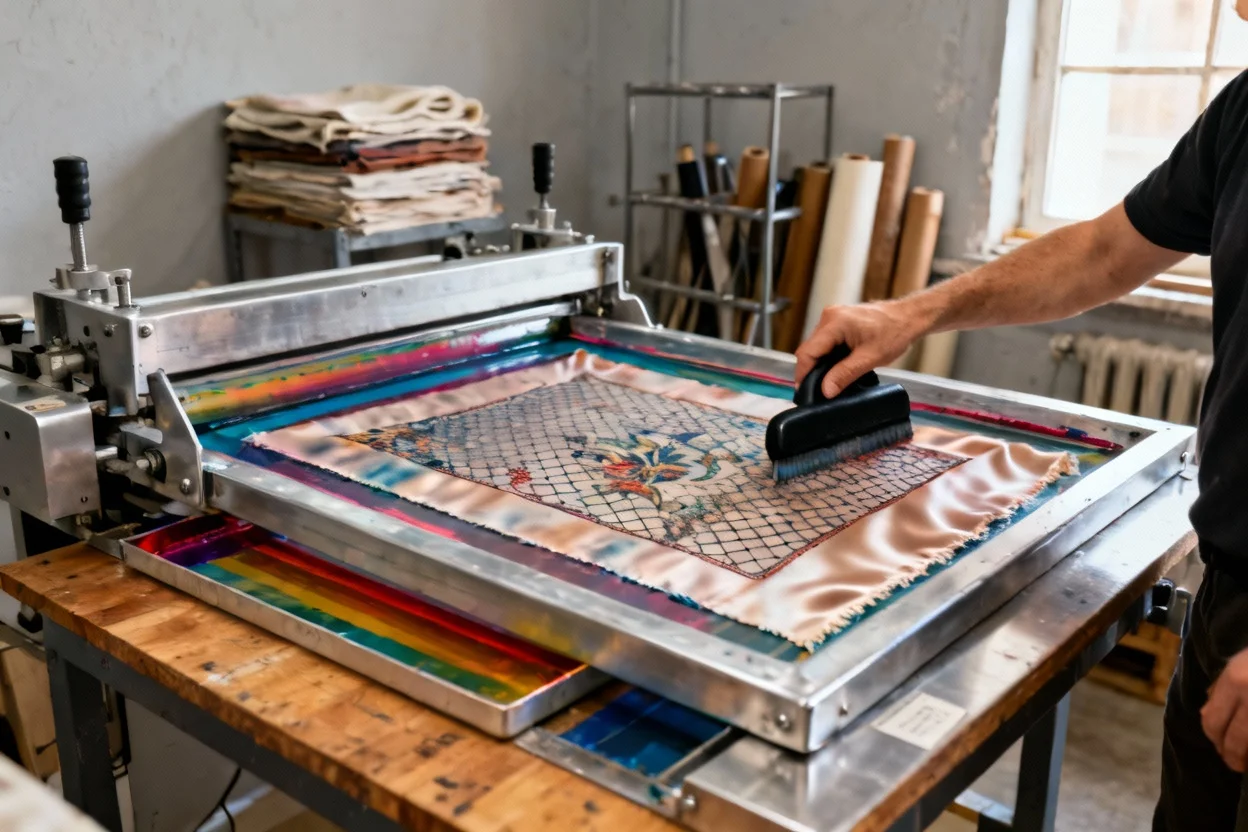
Traditional screen printing requires physical screens for each color in a design, demanding significant setup time and material costs. This becomes particularly inefficient for small production runs or designs with multiple colors, as each additional hue necessitates a new screen and separate printing pass. Manufacturers have long faced challenging trade-offs between design complexity, production volume, and cost efficiency.
Digital textile printing eliminates these constraints by transferring designs directly from digital files to fabric using specialized inkjet technology. This direct-to-fabric approach removes the need for physical screens entirely, reducing setup times from days to hours and enabling cost-effective production even for small batches. A 2025 industry analysis confirmed that digital printing can reduce lead times by up to 70% compared to traditional screen printing for custom orders—a game-changing advantage in today's fast-paced fashion market.
Beyond production efficiency, technical differences abound. Digital printing systems employ advanced color management technologies that achieve exceptional color accuracy, with leading operations like FENNYSUN demonstrating over 98% color matching precision in their luxury scarf production. This level of consistency ensures uniform results across production runs while enabling the reproduction of intricate designs with gradients, fine details, and complex color transitions that would be challenging or impossible to achieve with traditional methods.
The Digital Textile Printing Workflow: A Step-by-Step Process
Understanding the digital textile printing workflow is essential for evaluating potential manufacturing partners and ensuring quality outcomes. This sophisticated process harmonizes technology, materials science, and artisanal craftsmanship to transform digital designs into tangible luxury accessories.
Design Development and Pre-Press Preparation
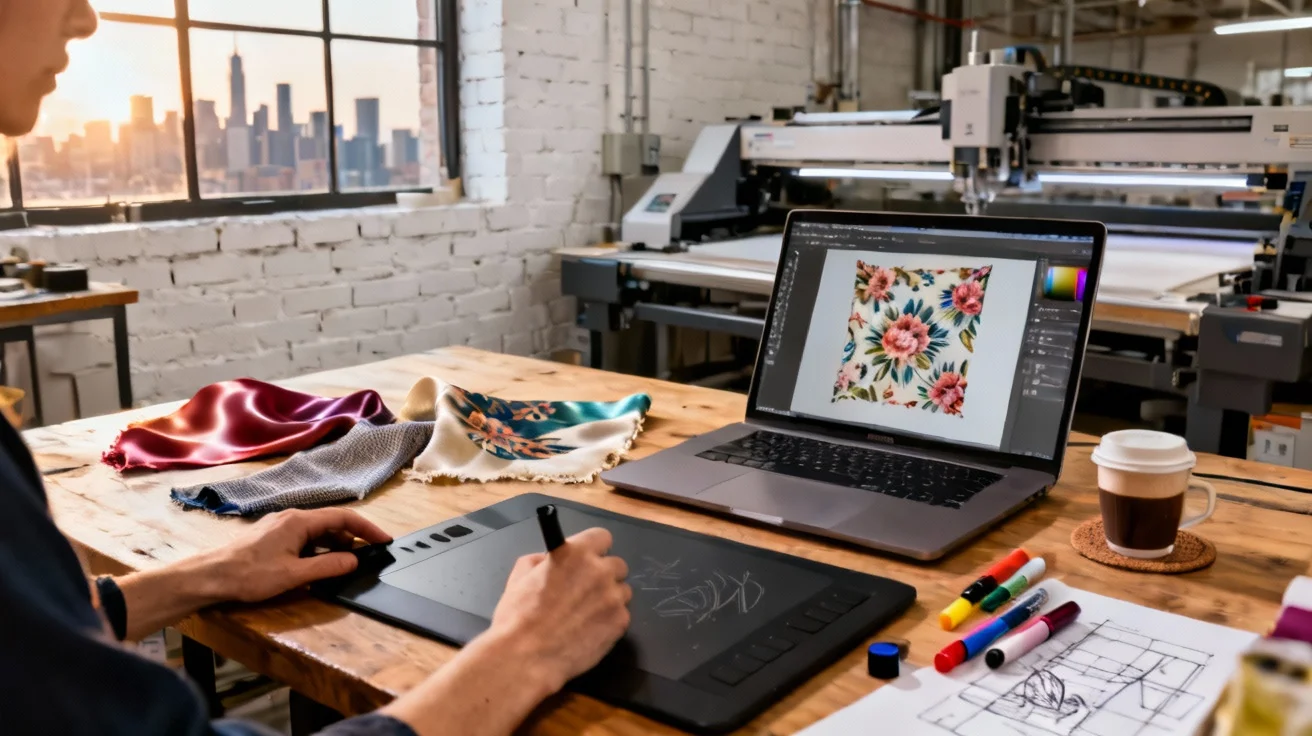
The process commences with design creation using specialized textile design software, such as Adobe Textile Designer or CAD systems tailored for repeat patterns. These tools empower designers to create seamless repeats, adjust colorways, and simulate how designs will appear on different fabrics—capabilities that prove critical for luxury scarf production where pattern alignment and scale are paramount.
Once finalized, designs undergo meticulous pre-press optimization, a crucial step that includes:
- Color separation and adjustment to match the target printing system's color gamut
- Resolution enhancement to maintain detail at final print size (typically 300-600 DPI for silk scarves)
- File format conversion to industry-standard formats compatible with digital printing equipment
- Application of color management profiles specific to the target fabric and ink combination
This digital preparation phase leverages advanced software algorithms that automatically detect and correct potential printing issues like color banding or resolution problems, significantly reducing production errors.
Fabric Preparation and Printing
Fabric choice and preparation directly impact final printed results. While digital textile printing performs optimally on natural fibers with minimal surface treatment, advancements in pre-treatment chemicals have expanded compatibility to include various fabric blends. For luxury silk scarves, fabric undergoes specialized pre-treatment involving:
- Removal of residual oils or impurities
- Application of a receptive coating for optimal ink absorption
- Stabilization to prevent shrinkage during printing
Prepared fabric is then loaded onto digital printing machines—sophisticated equipment that varies significantly in configuration based on production requirements. Modern digital textile printers for high-end applications typically feature:
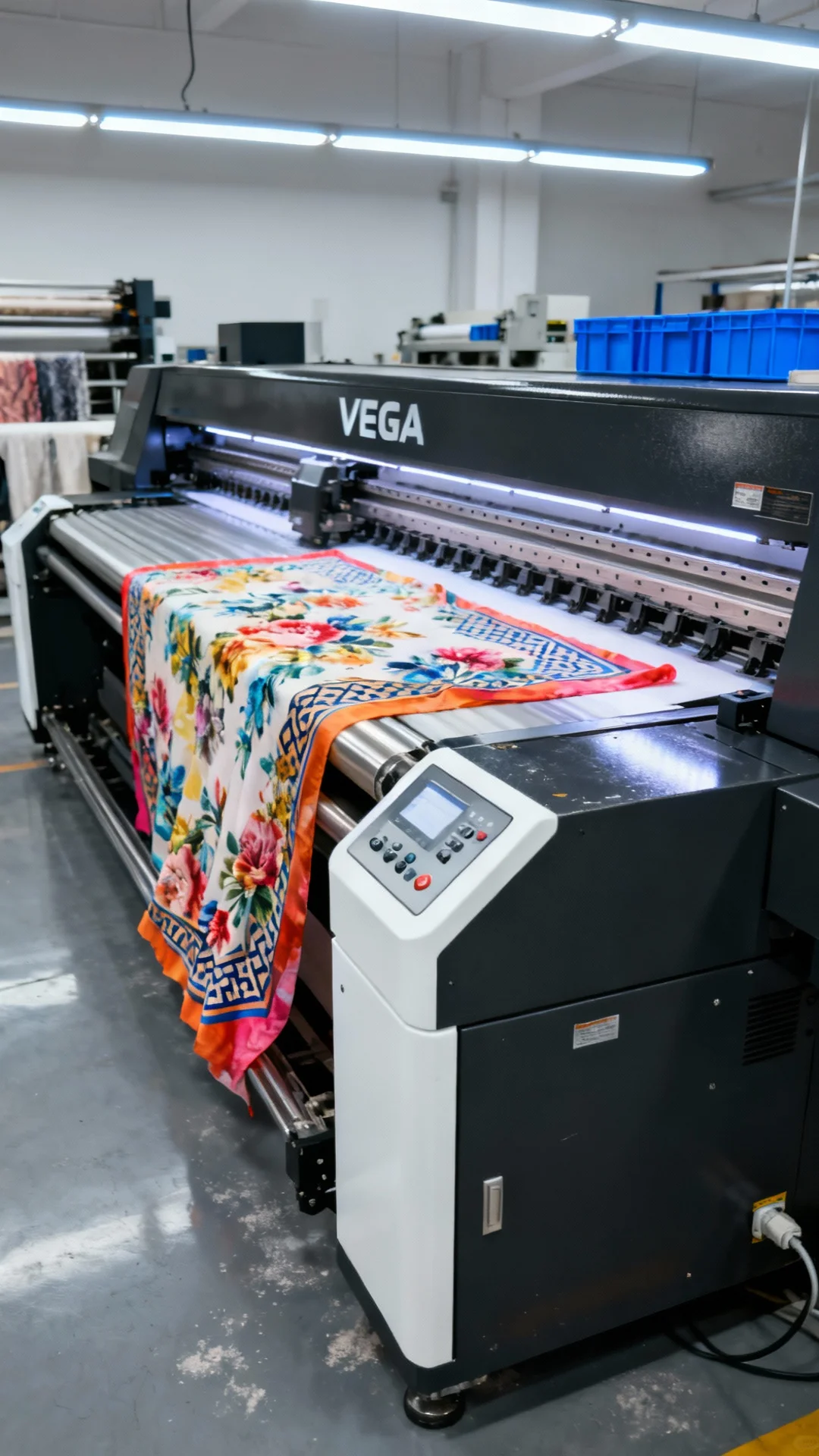
- Multiple print heads (often 8-16) for precise color layering
- Advanced ink delivery systems depositing minute droplets (as small as 4 picoliters)
- Integrated fabric tensioning systems to ensure flatness during printing
- Inline drying systems to prevent ink migration between color layers
The printing process involves precise deposition of pigmented or reactive inks onto fabric. For silk scarves, reactive inks are commonly preferred for their excellent color fastness and ability to penetrate fiber structures effectively, resulting in vibrant colors with a natural hand feel. The printer interprets the digital design file and positions each ink droplet according to specified color values, building the image pixel by pixel across the fabric surface.
Post-Printing Processing and Quality Control
After printing, the fabric undergoes several post-processing steps to fix inks and prepare the scarf for final finishing:
- Steaming: Sets the inks for maximum color fastness
- Washing: Removes excess dyes and chemicals through gentle washing
- Drying: Careful drying maintains dimensional stability
- Finishing: Specialized treatments enhance hand feel, drape, or wrinkle resistance
Quality control is implemented throughout the entire process with multiple inspection points, utilizing both automated systems and human expertise to identify issues. Advanced facilities employ computer vision systems to detect printing defects, color inconsistencies, or fabric imperfections, ensuring only products meeting strict quality criteria proceed to final production.
The final step involves cutting the printed fabric into individual scarf shapes, with edges hemmed (typically by hand for luxury products) before a final quality inspection. This meticulous attention to detail at every stage ensures finished scarves meet the exacting standards expected by discerning fashion brands and customers.
Material Considerations in Digital Scarf Production
The relationship between materials and digital printing technology is fundamental to achieving exceptional results in scarf production. Not all fabrics perform equally well with digital printing, making material understanding essential for manufacturers and brands seeking optimal outcomes.
Fabric Selection Criteria
When evaluating fabrics for digital printing, consider these key characteristics:
- Fiber composition: Natural fibers like silk, cotton, and linen perform exceptionally well, while modified polyester blends have significantly improved print receptivity
- Fabric structure: Tight weave constructions with smooth surfaces typically yield the sharpest image definition
- Weight: Lighter weight fabrics (30-80 GSM for scarves) require careful handling but offer excellent drape
- Pre-treatment compatibility: The fabric must accept pre-treatment chemicals that prepare surfaces for ink absorption
Industry guidelines suggest fabrics with minimum 70% natural fiber content produce optimal results with standard digital printing processes, though specialized pre-treatments can extend compatibility to more fiber blends. For luxury silk scarves, ideal materials are pure mulberry silk with tight plain weave or twill construction, providing both excellent print definition and desirable drape qualities.
Ink Technologies and Their Applications
Specialized inks have been instrumental in advancing digital textile printing capabilities, with different ink types offering distinct advantages based on target fiber, desired aesthetic, and performance requirements:
Reactive Inks
- Form chemical bonds with cellulose fibers (silk, cotton, linen)
- Deliver excellent color vibrancy and wash fastness
- Work exceptionally well for silk scarves due to superior penetration and hand feel
- Require steaming and washing post-printing
Pigment Inks
- Form a thin film on fabric surfaces
- Offer broad fiber compatibility including blends and synthetics
- Generally require heat curing
- Provide excellent light fastness but may slightly alter fabric hand feel
Acid Inks
- Form ionic bonds with protein fibers like wool and silk
- Produce bright colors effectively on protein fibers
- Require specific pH control during application
Ink selection significantly impacts both production processes and final product characteristics. Luxury scarf manufacturers like FENNYSUN typically utilize reactive inks for silk applications, prioritizing color depth, natural hand feel, and long-term durability—essential qualities for premium accessories expected to maintain their appearance over years of wear.
Sustainability Metrics: Environmental Advantages of Digital Printing
As sustainability becomes increasingly critical for fashion brands and consumers, digital textile printing offers significant environmental benefits compared to traditional production methods. The industry has developed comprehensive sustainability metrics quantifying these advantages across multiple environmental impact categories.
Resource Conservation
Water consumption represents one of digital printing's most significant environmental advantages. Traditional screen printing can require up to 200 liters of water per kilogram of fabric processed, while digital printing systems typically use less than 50 liters for the same quantity—a remarkable 75% reduction. This difference stems primarily from eliminating the water-intensive screen preparation and washing steps associated with traditional methods.
Energy consumption tells a similar story, with modern digital printing facilities reporting 30-40% lower energy usage compared to conventional screen printing operations of equivalent capacity. Efficiency gains result from:
- Reduced material handling and transportation
- Eliminated energy-intensive screen drying processes
- More precise control of heating and curing systems
- Integration of energy recovery technologies in newer equipment
Waste Reduction and Chemical Management
Digital printing fundamentally transforms production from mass manufacturing to on-demand, enabling significant textile waste reductions. Industry data indicates digital production can reduce fabric waste by up to 30% through more precise production planning and eliminating large minimum order quantities.
Chemical footprints are similarly reduced through:
- Lower ink and chemical consumption (precise deposition minimizes over-application)
- Elimination of screen preparation chemicals
- Use of more environmentally benign inks and pre-treatments
- Reduced wastewater generation requiring treatment
A 2025 life cycle assessment comparing digital and traditional printing for silk scarves found digital production resulted in:
- 62% reduction in water pollution potential
- 45% reduction in greenhouse gas emissions
- 58% reduction in hazardous waste generation
These sustainability advantages position digital printing as a preferred production method for eco-conscious brands, aligning with corporate sustainability goals and increasing consumer demand for environmentally responsible luxury products.
Cost Analysis: Investment and Return Considerations
Understanding the economic implications of digital textile printing helps brands evaluate manufacturing options and production partners effectively. Cost dynamics differ significantly from traditional methods with important implications for different business models and production requirements.
Capital Investment vs. Operational Costs
Digital textile printing involves higher initial capital investment in equipment compared to screen printing setups but offers lower operational costs for many production scenarios. A 2025 cost comparison analysis for mid-sized scarf production facilities found digital printing equipment requires approximately 30-40% higher initial investment than equivalent screen printing capabilities. This difference is often offset within 1-3 years through operational savings, depending on production volume and product mix.
The operational cost structure favors digital printing in several ways:
- Labor savings: Reduced need for skilled screen makers and multiple machine operators
- Material efficiency: Lower ink and chemical consumption
- Waste reduction: Less fabric waste and spoiled production
- Storage savings: Elimination of physical screen storage requirements
Volume Sensitivity and Cost Efficiency
Digital printing's cost per unit remains relatively consistent across production volumes, making it particularly cost-effective for small to medium production runs. Traditional screen printing, by contrast, shows significant economies of scale and becomes more cost-effective than digital methods for very large production runs (typically exceeding 500-1000 units of the same design).
This volume sensitivity creates an optimal application profile for digital printing:
- Custom designs and limited editions
- Seasonal collections requiring quick turnaround
- Personalized or monogrammed products
- Test runs and design iterations
- Small-batch luxury items
Producing 100 units of a custom-designed silk scarf might cost 40-50% less with digital printing compared to traditional methods, while producing 10,000 units of a basic design might be more economical with screen printing. This flexibility makes digital printing particularly attractive for boutique brands and designers needing production agility and frequent design changes.
Technology Integration: AI and Digital Printing Innovations
Artificial intelligence integration is rapidly transforming digital textile printing, creating new possibilities for design optimization, production efficiency, and sustainability improvements. These innovations are reshaping industry standards and setting new benchmarks for quality and performance.
AI-Driven Design and Production Optimization
AI applications span the entire digital textile printing production chain, beginning with design development. Advanced AI systems analyze design elements and suggest optimizations for printability, color efficiency, and material utilization. These intelligent design assistants reduce production issues while maintaining the designer's creative intent—a balance that previously required extensive technical expertise and trial-and-error.
During production, AI-powered systems monitor printing parameters in real-time, making micro-adjustments to ensure consistent quality. These adaptive control systems compensate for variables such as:
- Fabric tension fluctuations
- Environmental conditions (temperature, humidity)
- Ink viscosity changes
- Print head performance variations
The result is significantly improved production consistency and reduced waste, with leading manufacturers reporting defect rates below 1% in optimized AI-integrated systems.
Predictive Maintenance and Supply Chain Optimization
Beyond production, AI revolutionizes maintenance scheduling and supply chain management for digital printing operations. Predictive maintenance algorithms analyze equipment sensor data to identify potential issues before they cause production disruptions, increasing overall equipment effectiveness (OEE) by an average of 15-20% according to 2025 industry reports.
AI-driven demand forecasting and inventory management systems optimize material usage and reduce waste by aligning production schedules with actual market demand. These intelligent planning tools prove particularly valuable for digital printing operations serving the fashion industry, where demand can be highly variable and seasonal.
Selecting a Digital Textile Production Partner: Key Considerations
Fashion brands and boutiques evaluating potential digital textile production partners should consider several critical factors beyond basic cost. These criteria address technical capabilities, quality systems, and operational practices that distinguish exceptional manufacturing partners.
Technical Capabilities Assessment
When evaluating a digital printing facility, brands should thoroughly assess technical capabilities including:
- Equipment specifications: Print resolution capabilities (minimum 600 DPI for luxury scarves), color management systems, and compatibility with specialized inks
- Material expertise: Experience with specific fabrics (particularly silk for luxury accessories) and ability to provide guidance on optimal material selection
- Design handling capacity: Software capabilities, file format compatibility, and ability to work with complex designs
- Production flexibility: Minimum order quantities, lead times for rush orders, and capacity for design iterations
Requesting sample productions forms an essential part of this assessment process, allowing brands to evaluate color reproduction quality, detail resolution, and overall craftsmanship firsthand.
Quality Management and Sustainability Practices
A robust quality management system ensures consistent results, with leading manufacturers implementing comprehensive quality control protocols including:
- Pre-production material testing and approval
- In-process inspection at critical stages
- Final inspection against established standards
- Documented quality records for traceability
Sustainability credentials have become key differentiators, with progressive digital printing facilities demonstrating environmental commitment through:
- Third-party certifications (ISO 14001, GOTS, etc.)
- Transparent sustainability metrics reporting
- Continuous improvement programs targeting environmental performance
- Innovation in sustainable materials and processes
Case Study Analysis: Luxury Scarf Production Excellence
FENNYSUN's digital printing operations exemplify excellence in luxury scarf production, with their advanced technology implementation yielding impressive results:
- 98% color accuracy across production runs
- 30% reduction in water consumption compared to industry averages
- 70% faster lead times than traditional manufacturing
- Near-zero defect rates through AI-assisted quality control
This commitment to technological innovation and quality has positioned them as a preferred manufacturing partner for discerning fashion brands seeking both excellence and sustainability in their accessory lines.
Future Trends and Industry Evolution
The digital textile printing landscape is evolving rapidly, driven by technological innovations, changing market demands, and sustainability imperatives. Understanding these emerging trends helps brands maintain competitive advantage and make informed manufacturing decisions.
Equipment and Process Innovations
The next generation of digital textile printing equipment promises greater capabilities, with manufacturers developing systems offering:
- Higher production speeds without sacrificing quality
- Expanded color gamuts approaching theoretical limits
- Improved energy efficiency and reduced environmental impact
- Enhanced connectivity with design and supply chain systems
These advancements will further blur the cost-effectiveness boundary between digital and traditional methods, making digital printing viable for increasingly broad production scenarios.
Material Science Advancements
Material innovations prove equally important, with research focusing on:
- Developing more sustainable ink formulations from renewable resources
- Creating advanced pre-treatment chemicals enabling digital printing on previously challenging fabrics
- Integrating smart textile capabilities, allowing printed electronics and interactive elements
- Enhancing performance characteristics (wrinkle resistance, stain repellency, etc.) during printing
These material innovations will expand digitally printed textiles' application possibilities beyond traditional accessories into technical and functional fashion categories.
Market Transformation
The digital textile printing market is projected to grow at a compound annual rate of 7.32% through 2030, reaching an estimated value of $4.06 billion according to industry analysts. This growth will be driven by:
- Increasing demand for customization and personalization
- Growing consumer awareness of sustainability issues
- Fashion industry's shift toward more agile, demand-driven production models
- Expansion into new application areas beyond traditional apparel and accessories
As these trends converge, digital textile printing is positioned to become the dominant production method for high-value textile products, fundamentally transforming manufacturing paradigms across the fashion industry.
Conclusion: Making Informed Production Decisions
Adopting digital textile printing represents a strategic decision impacting production processes, product development capabilities, sustainability performance, and market responsiveness. For boutique owners and fashion brands evaluating manufacturing options, several key considerations should guide this decision:
- Align production methods with business model: Digital printing offers distinct advantages for brands emphasizing customization, limited editions, and rapid response to trends.
- Evaluate total value, not just cost: While per-unit costs remain important, consider the total value equation including lead time reductions, waste minimization, and sustainability benefits.
- Assess technical capabilities thoroughly: Look beyond basic specifications to understand a manufacturer's expertise with your specific materials and design requirements.
- Prioritize sustainability credentials: Verify environmental claims through certification and transparent reporting metrics.
- Consider future scalability: Select partners with technology roadmaps that align with your brand's growth trajectory and innovation needs.
By carefully evaluating these factors, fashion brands can leverage digital textile production to create high-quality printed scarves that meet evolving consumer expectations for both luxury and sustainability, while gaining operational advantages in an increasingly competitive market.