In today's competitive fashion accessories market, selecting the ideal bespoke scarf production partner is a strategic decision that directly impacts your brand's reputation, product quality, and profitability. As an industry professional with extensive experience in fashion accessory manufacturing, I've guided numerous brands through this complex selection process. The 2025 market landscape demands more than just exceptional craftsmanship—it requires agility, sustainability, and technological innovation. These elements have become essential differentiators in an era of conscious consumerism and rapidly evolving fashion trends.
This comprehensive guide outlines five critical factors that should form the foundation of your evaluation process. Each factor draws from practical industry experience and aligns with 2025 market trends, empowering your brand to make informed decisions that balance quality, cost-effectiveness, and brand integrity in the realm of custom scarf designs and private label scarf manufacturing.
1. Material Expertise and Quality Control Standards
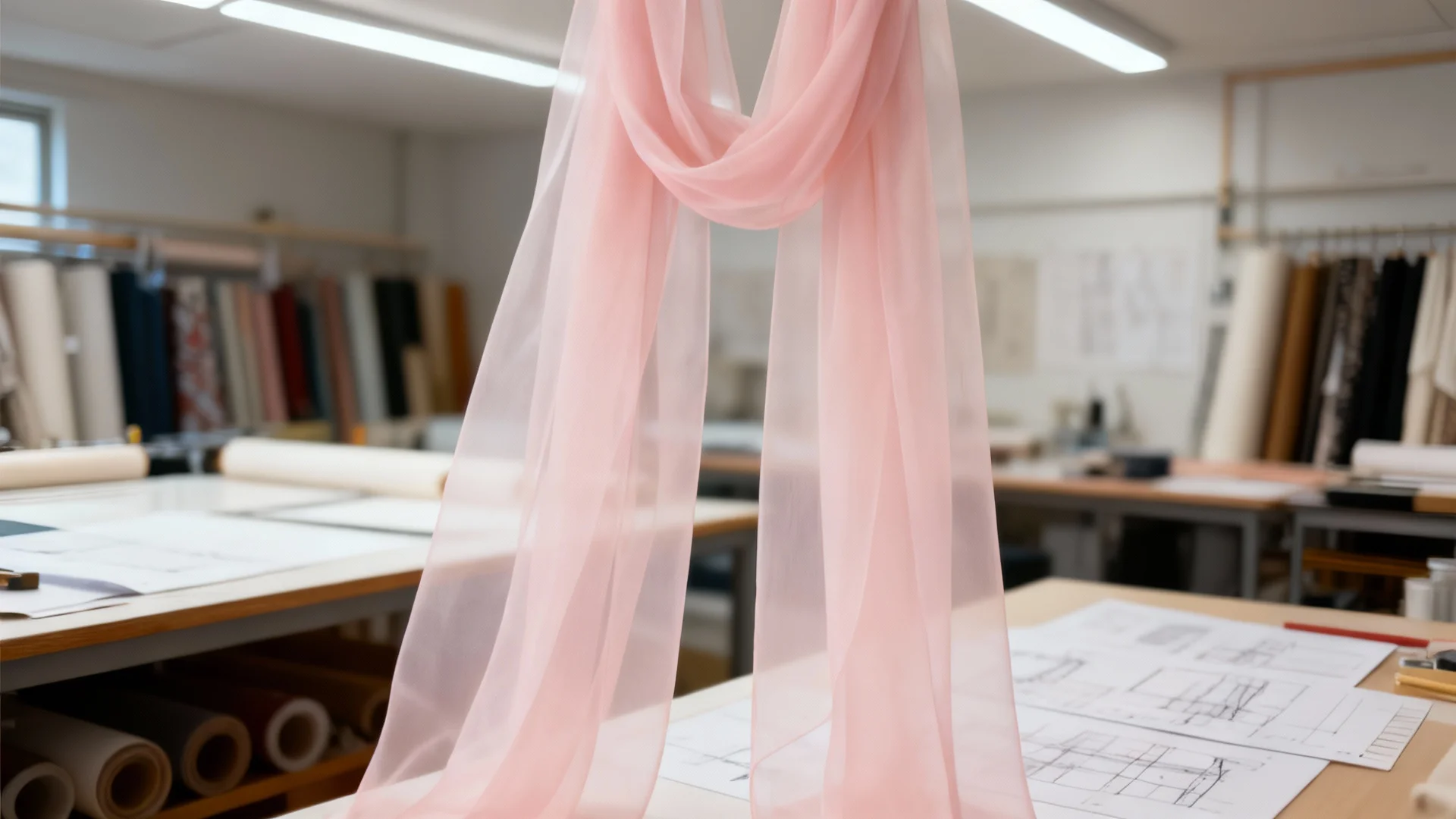
The foundation of any exceptional scarf lies in its materials. When evaluating potential production partners for your bespoke scarf production, their material expertise and commitment to quality control should be your primary consideration. A reputable manufacturer should demonstrate comprehensive knowledge of both traditional and innovative textile options, guiding your brand toward materials that align with your design vision, target price point, and sustainability goals.
Key evaluation criteria include:
- Material Sourcing Transparency: Request detailed information about raw material origins, including certification for organic or sustainable sources when applicable. The most reliable manufacturers maintain direct relationships with fiber producers, ensuring traceability from farm to finished product. For instance, silk suppliers should verify their silkworm farming practices, while wool providers should demonstrate animal welfare compliance.
- Quality Testing Protocols: Inquire about specific testing procedures implemented throughout production. Industry standards typically require at least 10% of finished scarves to undergo rigorous inspection, checking for colorfastness, shrinkage, pilling resistance, and tensile strength. Leading manufacturers utilize automated testing equipment that detects imperfections invisible to the human eye, ensuring consistent quality across production runs.
- Material Innovation Capabilities: The 2025 scarf market necessitates manufacturers who stay ahead of material trends, including performance fabrics with UV protection, moisture-wicking properties, and temperature regulation. Ask about their experience with sustainable alternatives like recycled polyester, Tencel, and innovative blends that reduce environmental impact without compromising quality.
- Certification Verification: Ensure your production partner adheres to the latest international standards, including OEKO-TEX® 2025 regulations, which introduced stricter BPA limits and enhanced organic cotton certification requirements. Manufacturers should readily provide compliance documentation, demonstrating their commitment to both quality and sustainability.
When evaluating material quality, request samples of both raw materials and finished products, and conduct your own testing when possible. A manufacturer's willingness to provide detailed material specifications and certification reflects confidence in their sourcing practices and quality control systems—essential considerations for successful scarf brand partnerships.
2. Technological Capabilities and Production Flexibility
Scarf production technology is evolving at an unprecedented pace, with digital innovation transforming design possibilities, production efficiency, and customization capabilities. When comparing manufacturing partners for private label scarf manufacturing, their technological infrastructure and production flexibility reveal their ability to meet your brand's unique needs and adapt to market trends.
Key technological factors to assess:
- Digital Printing Capabilities: Modern digital printing offers greater design freedom, color accuracy, and production efficiency than traditional methods. Evaluate their printing equipment's resolution capabilities (ideally 1200 DPI or higher), color management systems, and ability to reproduce complex custom scarf designs. Leading manufacturers invest in advanced inkjet technology that minimizes water usage and chemical waste while achieving vibrant, long-lasting colors. For small-batch custom orders, digital printing typically offers a more cost-effective solution with lower minimum order quantities (often starting at 50 units), while traditional screen printing may be more economical for large production runs exceeding 500 units.
- Design Collaboration Tools: Efficient production partners offer digital design collaboration platforms that streamline the approval process, allowing real-time design modifications and providing accurate digital proofs. These should integrate color matching tools that account for different fabric characteristics, reducing the need for multiple physical sample iterations.
- Production Process Integration: Evaluate how technology integrates throughout their manufacturing process, from design to shipping. Advanced manufacturers utilize ERP (Enterprise Resource Planning) systems that provide transparency into production schedules, inventory levels, and quality control checkpoints, enabling more accurate lead time estimates and better communication throughout production.
- Flexibility in Production Runs: The ability to handle both small-batch custom designs and larger production runs grows more important each year. Ask about minimum order quantities (MOQs) for different fabrics and printing techniques, as well as their capacity to scale production during peak seasons. Leading manufacturers typically offer tiered pricing structures that reward larger orders while still supporting smaller boutique collections.
- Prototyping Capabilities: Rapid prototyping has become essential for meeting tight design deadlines and market responsiveness. Inquire about their sample production timeline, costs, and revision processes. The most innovative partners use 3D simulation technology to provide virtual samples before physical production, significantly reducing development time and costs.
When visiting potential production facilities, observe their technology in action and inquire about their investment in research and development. A manufacturer's commitment to technological advancement demonstrates their ability to deliver innovative solutions and adapt to evolving market demands, keeping your brand competitive in the fast-changing fashion landscape of bespoke scarf production.
3. Sustainability Practices and Ethical Production
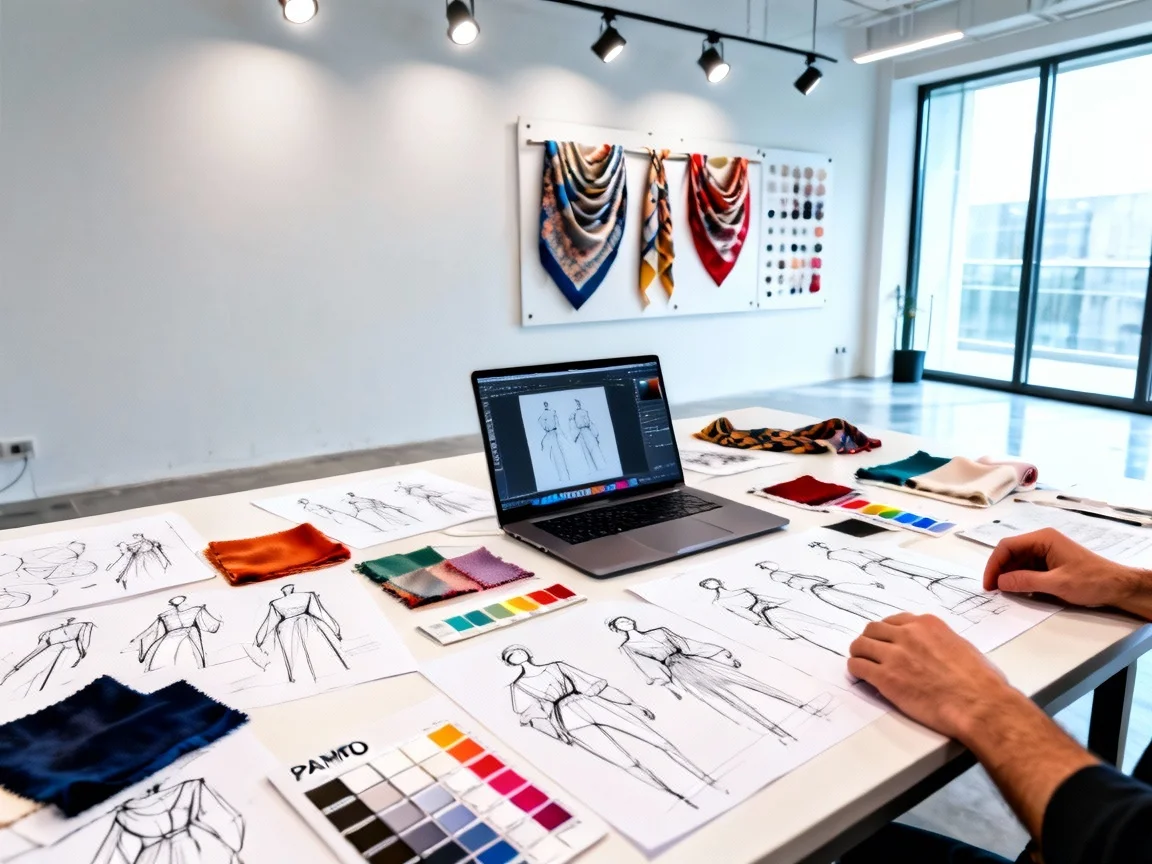
As consumer awareness of environmental and social issues expands, sustainability has evolved from a niche concern to a core business requirement in fashion. When selecting a bespoke scarf production partner, their commitment to sustainable practices and ethical production directly impacts brand reputation, customer loyalty, and long-term profitability. This consideration has transcended corporate responsibility to become a critical business imperative.
Key sustainability factors to evaluate:
- Material Sustainability: Assess their approach to sustainable material sourcing, including the availability of organic, recycled, and biodegradable fabric options. Leading manufacturers now offer innovative materials like recycled silk made from post-consumer waste, organic cotton certified by the Global Organic Textile Standard (GOTS), and fabrics treated with eco-friendly dyes and finishes. Inquire about their waste reduction strategies throughout the material selection process, including pattern optimization to minimize fabric waste.
- Production Process Innovations: Evaluate the environmental impact of their production methods, focusing on water and energy usage, chemical management, and waste reduction. Digital printing technology typically uses 30-50% less water than traditional screen printing and eliminates toxic chemical solvents. Look for manufacturers with closed-loop water systems, renewable energy sources, and comprehensive waste recycling programs.
- Ethical Labor Practices: A truly sustainable production partner demonstrates commitment to fair labor practices throughout their supply chain. Ask about their factory certification status, including compliance with SA8000 standards or participation in the Fair Trade program. Reputable manufacturers should provide transparency into wage structures, working hours, and safety protocols, and should be willing to arrange facility visits to verify conditions firsthand.
- Certification and Compliance: The 2025 sustainability landscape demands adherence to the latest certification standards. Verify potential partners comply with updated OEKO-TEX® 2025 regulations, which introduced stricter limits on harmful substances and enhanced transparency requirements. Ask about their progress toward science-based targets for carbon reduction and their overall sustainability roadmap.
- Circular Economy Initiatives: Forward-thinking manufacturers embrace circular economy principles, offering take-back programs for end-of-life products, designing for recyclability, and exploring innovative upcycling techniques for production waste. These initiatives reduce environmental impact while creating new revenue streams and enhancing brand differentiation.
When evaluating sustainability credentials, look beyond marketing materials and request specific, measurable data on environmental and social performance. A genuine commitment to sustainability integrates throughout operations, from material sourcing to final shipping, and is validated through third-party certifications and continuous improvement initiatives. Prioritizing sustainability in your scarf brand partnerships positions your brand for long-term success in an increasingly conscious marketplace.
4. Design Collaboration and Customization Capabilities
In the competitive fashion accessories sector, translating creative vision into distinctive, high-quality products is what differentiates successful brands. When selecting a bespoke scarf production partner, their design collaboration process and customization capabilities directly affect your ability to create unique, on-trend products that resonate with your audience. The ideal partner functions as an extension of your design team, bringing technical expertise, creative problem-solving, and production insights to the process.
Key design and customization factors to assess:
- Collaborative Design Process: Evaluate their approach to design collaboration, including communication protocols, feedback mechanisms, and approval workflows. Leading manufacturers provide dedicated design specialists who serve as your primary contact throughout development, ensuring clear communication and efficient decision-making. Look for partners using collaborative digital platforms that allow real-time design reviews, modification tracking, and version control.
- Technical Design Expertise: Assess their ability to transform conceptual designs into production realities. The most valuable partners offer technical guidance on fabric selection, print techniques, and construction methods that enhance both aesthetic appeal and functional performance. For example, their design team should recommend appropriate fabric weights based on intended use, suggest printing techniques that optimize design details, and advise on finishing options that enhance durability and luxury.
- Customization Range: Inquire about the full range of customization options available for custom scarf designs, including fabric composition, weave structure, printing techniques, edge treatments, and packaging solutions. The 2025 market demands versatility, with manufacturers offering everything from hand-rolled hems and hand-painted details for luxury lines to innovative digital printing for complex patterns and small-batch runs. Also assess their ability to incorporate unique brand elements like custom labels, hangtags, and packaging that enhance brand recognition and perceived value.
- Sample Development Process: The sample development phase ensures design integrity and production feasibility. Evaluate their sample creation process, including timeline, cost, and revision protocols. Leading manufacturers typically offer multiple sample stages, from initial prototypes to pre-production samples, allowing refinement of design details, color matching, and fabric selection before full production begins. Ask about their digital sampling capabilities, which can significantly reduce development time and costs by allowing virtual evaluation of design concepts.
- Intellectual Property Protection: Ensure your design concepts and brand elements are protected through clear intellectual property agreements. Reputable manufacturers should be willing to sign non-disclosure agreements and guarantee that custom designs won't be reproduced for other clients. Ask about their design档案管理 approach to ensure consistency across production runs and facilitate future reorders.
When evaluating design collaboration capabilities, consider a small test project to assess the working relationship firsthand. This pilot can reveal insights into their communication style, responsiveness, attention to detail, and ability to translate your creative vision into a finished product. Choosing a production partner with strong design collaboration capabilities helps your brand consistently deliver innovative, high-quality scarves that capture market attention and build customer loyalty in private label scarf manufacturing.
5. Production Capacity, Lead Times, and Quality Assurance
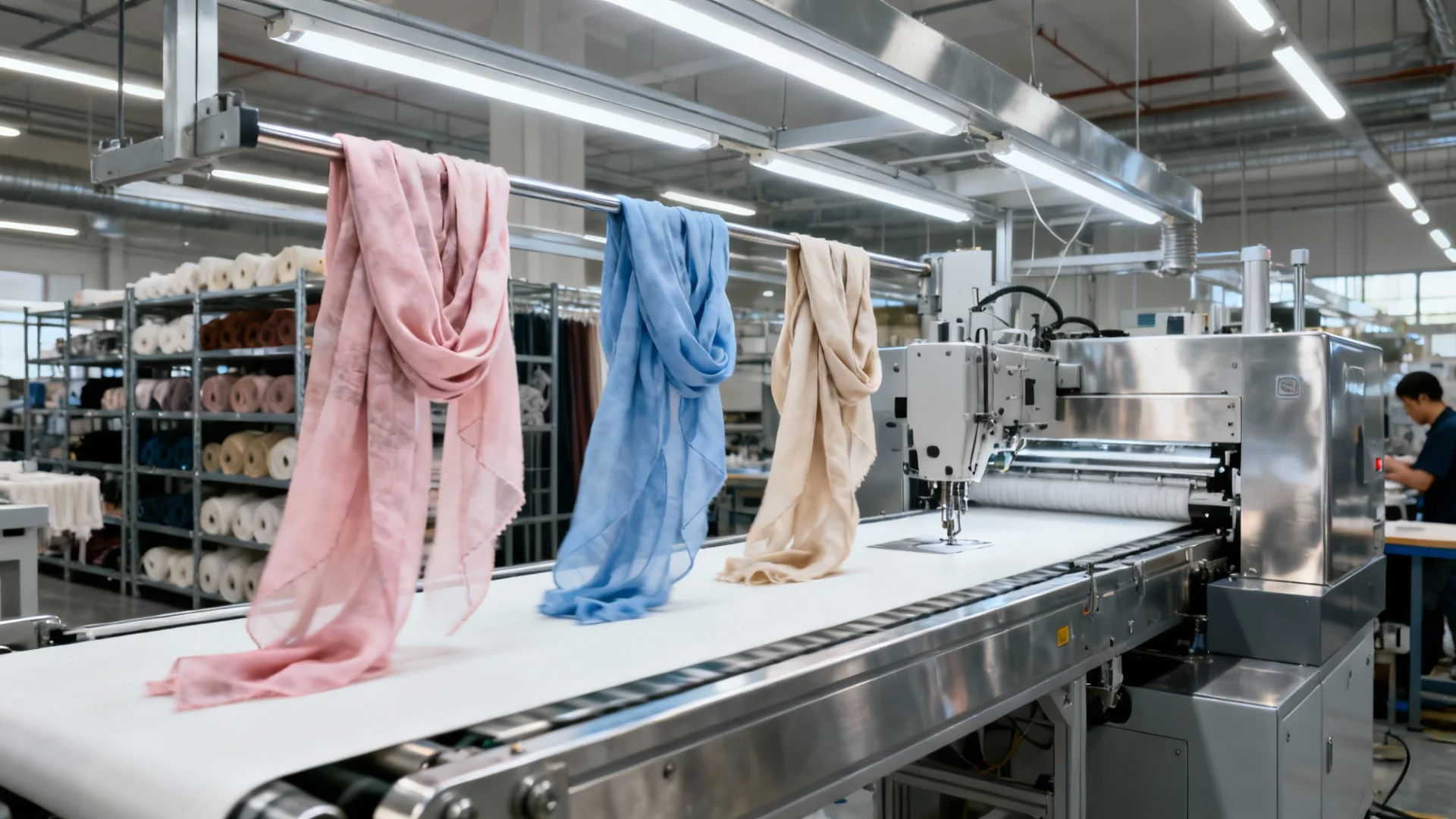
Your scarf production partner's operational capabilities directly affect your ability to meet market demand, maintain consistent quality, and respond to fashion trends. When evaluating manufacturers for scarf brand partnerships, their production capacity, lead times, and quality assurance protocols determine their reliability as a long-term business partner. In an industry where timing is critical, selecting a partner with robust operational capabilities provides a significant competitive advantage.
Key operational factors to evaluate:
- Production Capacity and Scalability: Assess their manufacturing capacity in units per month and their ability to scale production for seasonal demands or unexpected order increases. Leading manufacturers maintain flexible production lines that handle both small-batch custom orders and large-scale production runs, with clear minimum order quantity (MOQ) requirements for different product categories. For example, digital printing technology has enabled many manufacturers to offer MOQs as low as 50 units for custom designs, while traditional production methods may require minimums of 300 units or more. Ask about their capacity planning process and how they prioritize orders during peak seasons to ensure your timeline is respected.
- Lead Time Management: Evaluate their standard lead times for sample development, production, and shipping, as well as their ability to accommodate rush orders when necessary. The 2025 market demands greater agility, with leading manufacturers offering production lead times of 4-6 weeks for standard orders and 2-3 weeks for expedited production. Inquire about their production scheduling system and how they communicate delays or issues that may impact delivery timelines. A reliable partner should provide transparent tracking systems that let you monitor production progress in real-time.
- Quality Assurance Protocols: Comprehensive quality assurance is essential for maintaining brand reputation and customer satisfaction. Evaluate their quality control processes at every production stage, from raw material inspection to finished product testing. Leading manufacturers implement statistical process control methods, with dedicated quality control personnel inspecting products at multiple checkpoints throughout production. Ask about their defect tolerance levels (typically measured as a percentage of acceptable defects per production run) and their process for handling quality issues when they arise.
- Supply Chain Resilience: Recent disruptions have highlighted the importance of supply chain resilience. Assess their approach to supply chain management, including material supplier relationships, backup production capabilities, and contingency planning for unexpected disruptions. Leading manufacturers maintain relationships with multiple material suppliers and may have production facilities in different geographic regions to mitigate risks. Ask about their inventory management practices for critical materials and their ability to source alternatives when needed.
- Compliance and Certification: Ensure your production partner meets all relevant industry standards and regulatory requirements for your target markets, including product safety regulations, labeling requirements, and country-specific import restrictions. Reputable manufacturers maintain comprehensive compliance programs and can provide documentation of compliance with standards such as ISO 9001 for quality management, ISO 14001 for environmental management, and the latest OEKO-TEX® 2025 requirements.
When evaluating operational capabilities, request references from current clients who produce similar products or target similar markets. These references provide insights into the manufacturer's reliability, communication style, and ability to consistently meet quality and delivery requirements. Consider an on-site facility audit to observe production processes firsthand and verify their claimed capabilities for private label scarf manufacturing.
Selecting Your Ideal Production Partner: A Strategic Decision
Choosing the right bespoke scarf production partner shapes more than your product offerings—it defines your brand identity and market position. In today's competitive landscape, this partnership extends beyond manufacturing to become a strategic alliance that drives innovation, ensures quality, and supports sustainable growth.
The five critical factors outlined in this guide—material expertise, technological capabilities, sustainability practices, design collaboration, and operational reliability—provide a comprehensive framework for evaluation. By systematically assessing each factor, you can identify a production partner that aligns with your brand values and business objectives, positioning your company for success in the dynamic 2025 fashion accessories market.
Remember that strong scarf brand partnerships build on mutual understanding, shared values, and clear communication. As you evaluate manufacturers, look beyond technical capabilities to assess cultural fit and long-term strategic alignment. The ideal partner should demonstrate not just manufacturing expertise but a genuine understanding of your brand vision and commitment to helping you achieve your business goals.
In an industry where differentiation is key, your production partner choice can become a significant competitive advantage, enabling you to deliver distinctive, high-quality scarves that capture market attention and build customer loyalty. Investing time in this decision process lays the foundation for a successful, sustainable business that can adapt to changing market conditions and capitalize on new opportunities.
As you move forward, consider creating a weighted scoring system based on these factors, tailored to your specific business priorities. This objective approach ensures a data-driven decision that balances quality considerations with practical business requirements, leading to a partnership that drives long-term brand success in bespoke scarf production.
For fashion brands seeking a production partner that excels in all these critical areas, FENNYSUN stands out as an industry leader, offering comprehensive capabilities in custom scarf designs, sustainable manufacturing practices, and strategic brand partnerships. With state-of-the-art production facilities and a commitment to innovation, FENNYSUN provides the technical expertise and collaborative approach needed to transform creative visions into market-leading scarf collections.